911 Porsche Hybrid Cars Historia
The heart of the 911: a journey through 6 decades of the six-cylinder boxer engine
 Óscar Sanz
11 July 2024
3 min.
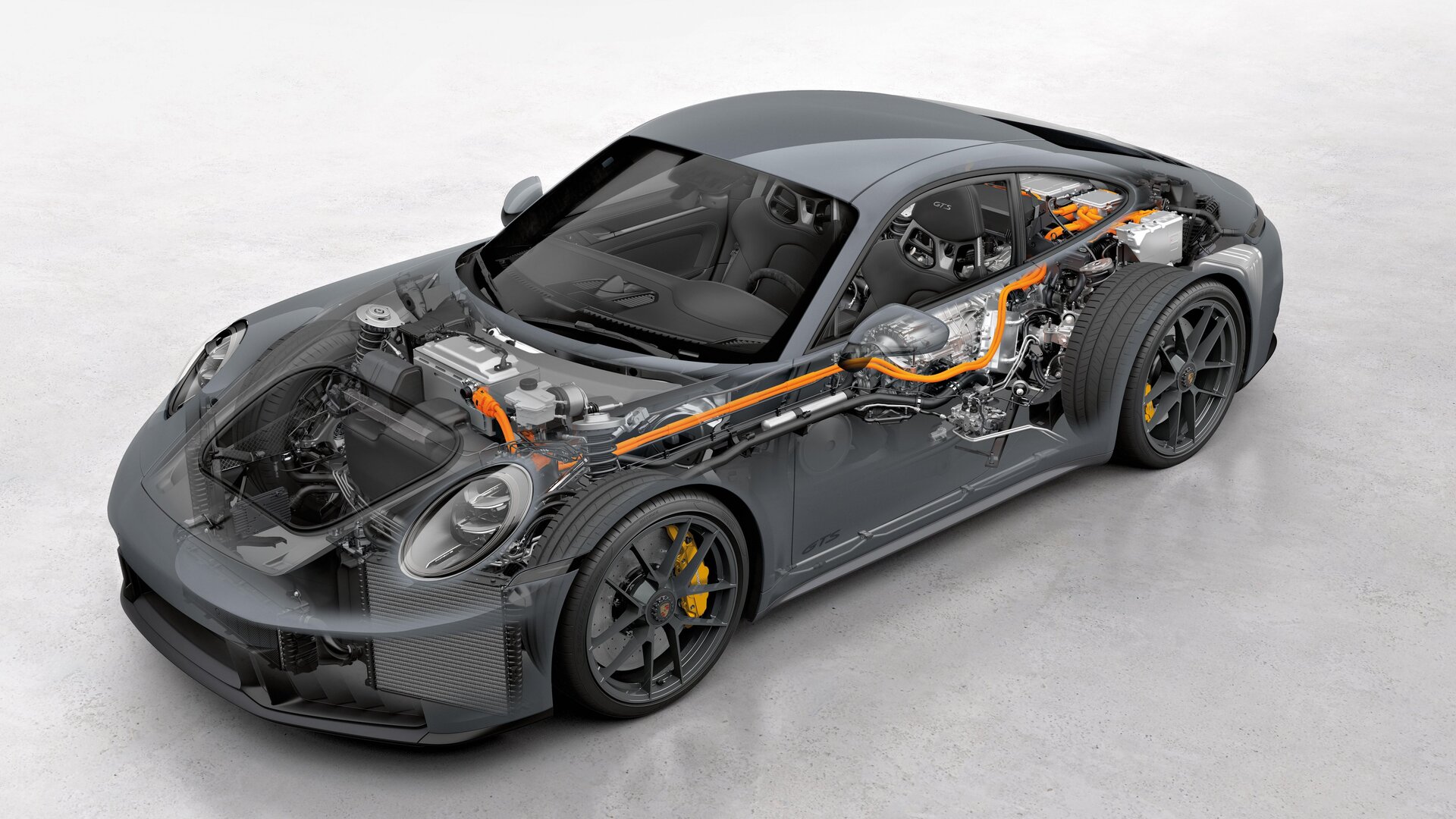
In this article we tell you how the boxer engine has evolved from 1963 to the partial hybridisation of the 992 generation
Over six decades, the six-cylinder boxer engine of the Porsche 911 has been a benchmark in the automotive industry since its debut in 1963. The 911 and its engine have gradually incorporated improvements and modifications until arriving at one of the best engines available on the market today. The introduction of the turbocharger in 1974 revolutionised the world of combustion engines, while the transition to water cooling in the 1990s opened the door to greater efficiency and power. More recently, high-performance hybridisation with the electric turbocharger system offers incredible characteristics befitting this hybrid sports car.
An engine in constant evolution: Dr Thomas Krickelberg, Director of Operational Excellence for the 911/718 ranges, states: “We are repeatedly surprised by how improvable and adaptable the six-cylinder boxer engine is“. Over its history, the displacement has doubled, the power has quadrupled and the basic concept has remained unchanged, demonstrating its versatility and its ability to adapt to new demands and its endless customisable features.
The turbocharger era: The introduction of the turbocharger in the 911 Turbo (930) in 1974 marked a before and after. This model, with 260 CV of power, outperformed its rivals in performance and efficiency, laying the foundations for the future development of turbocharged engines.
Water cooling: A crucial change came in the 1990s with the introduction of water cooling in the fifth generation of the 911 (996). This technology improved performance, increased efficiency and helped meet increasingly strict emissions and noise regulations.
Variable geometry turbine (VTG): In 2006, the 911 Turbo (997) incorporated the variable geometry turbine (VTG), a technology unique in the world that optimised turbocharger efficiency across a wider range of engine speeds. This advance marked a milestone in turbo technology for petrol engines.
The era of hybridisation: The current generation of the 911 (992) has taken a further step towards electrification with the introduction of the electric turbocharger system in the 911 Carrera GTS. This high-performance hybrid system not only increases power and acceleration, but also prepares the vehicle for future emissions standards.
The future: The path of innovation for the 911’s engine is far from over. Porsche is already working on developing an electric exhaust gas turbocharger to further increase power and thrust, and reduce emissions. In addition, electrification will continue to play an important role in the future of the 911, with the possibility of plug-in hybrid and even fully electric models in the coming years.
Technical specifications of this car
 Peugeot E-208 GTi: a battery-powered toy that revives the spirit of the 1980s sports cars
 New Lexus ES: luxury grows and goes electric
 First contact with the Dacia Sandero Hybrid 155: power and efficiency from €19,890
Deja un comentario