The Lotus Evija arrives with four electric motors and a power output of almost 2,000 CV
 Mónica Redondo @MonicaRedondoD
17 July 2019
4 min.
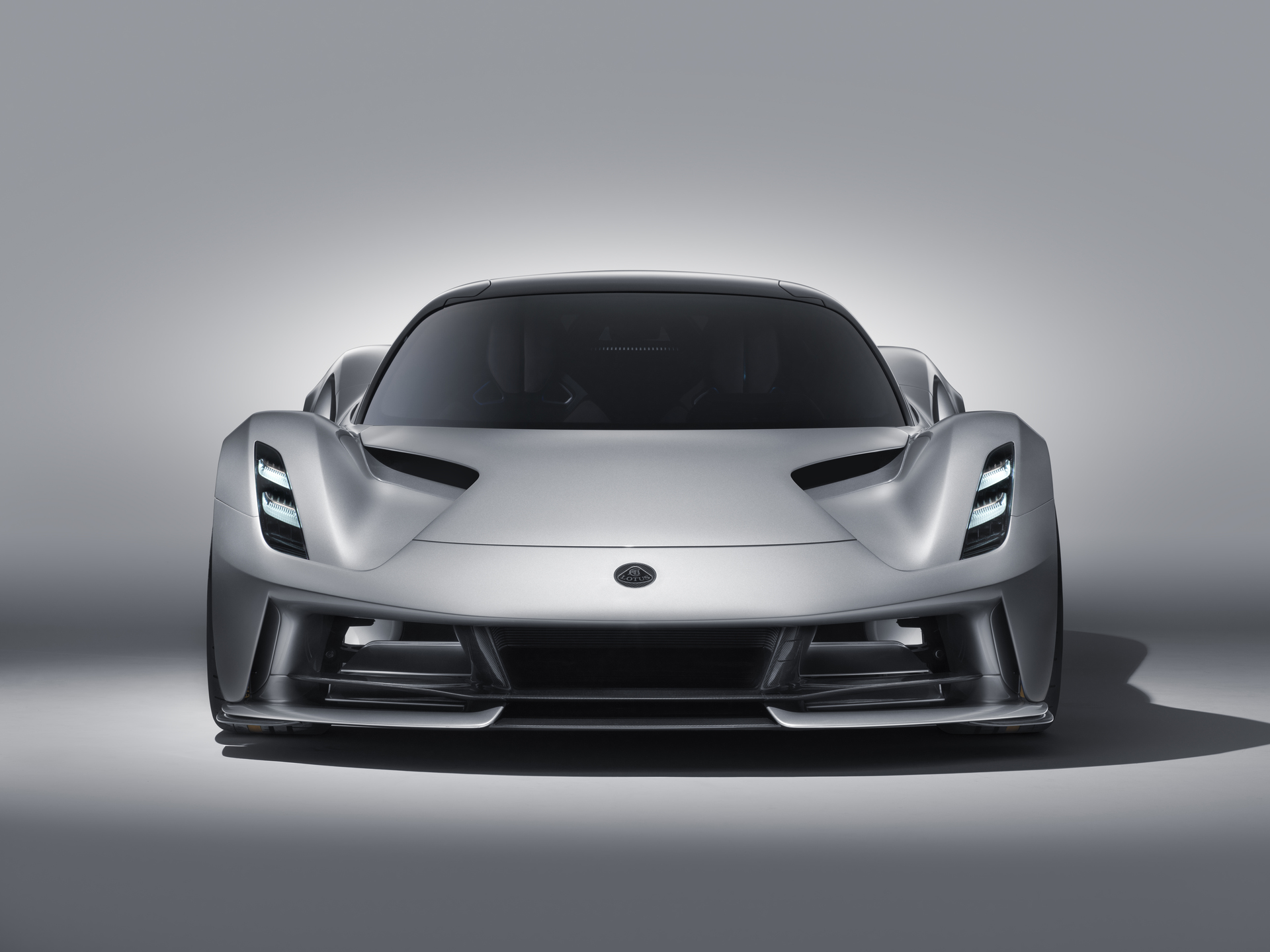
The British brand has unveiled its new all-electric supercar, called the Lotus Evija, which features four electric motors and almost 2,000 CV.
Following a brief teaser published earlier this July, the British brand has officially unveiled the new Lotus Evija. The new supercar from Lotus will become the “most powerful production road car in the world.” It features four electric motors designed to produce a combined output of almost 2,000 CV and a peak torque of 1,700 Nm.
The manufacturer claims these figures should allow the supercar to accelerate from 0 to 100 km/h in under three seconds. With enough room, the car could reach a top speed of more than 320 km/h.
The four electric motors are powered by a lithium-ion battery mounted in the middle, which should allow the car to travel up to 400 km on a single charge. When it runs out, owners will be pleased to know the model features the “fastest charging battery in the world.” It can accept a charge of 800 kW, although charging units with that capacity are not yet commercially available. However, once they reach the market, the Lotus Evija will be able to recharge fully in just nine minutes.
As things currently stand, the fastest charger offers a capacity of 350 kW. Using one of these will allow the new Evija to reach 80% charge in 12 minutes and a full charge in 18.
https://www.youtube.com/watch?v=_91pXnhdRcc
Lotus Evija finally sees the light of day
Part of the Evija’s impressive performance comes from its ultra-light carbon fibre monocoque chassis. It features a one-piece design, the first for the British brand, and weighs 129 kilograms. This should help make the lightest version of the supercar tip the scales at just 1,680 kg.
The good news doesn’t stop there, as the brand says the car has been designed to deliver an “optimal combination of extreme track performance and road comfort.” As part of this mission, the supercar has been fitted with a “derived engine.” Suspension featuring three adaptive spool-valve dampers per axle. The model also includes magnesium alloy wheels measuring 20 and 21 inches, wrapped in Pirelli Trofeo R tyres. They are backed by an AP Racing braking system with forged aluminium calipers and carbon-ceramic discs.
While electric cars are not ideal for the track, Lotus says the Evija has been equipped with four radiators that help keep the battery at an optimal temperature. As a result, the car can be “driven flat out, without derating, for at least seven minutes in Track mode.”
Evija, a new ‘world’ for Lotus
As seen in the Lotus lineup, the Evija “signals the start of a new contemporary design language” for the company. The front is dominated by a twin-plane front diffuser, bulging wings and slim headlights. The latter were created by Osram, and Lotus says they are the first to use laser lights for both the main and dipped beams.
Moving towards the rear, there is an elegant windscreen and a flowing carbon-fibre bodywork. The wing mirrors are conspicuously absent, having been replaced by cameras that deploy automatically when the vehicle is unlocked. Images from the cameras, including one integrated into the roof, are displayed on three screens spread across the cabin.
Given the car’s mission, it is no surprise that the Lotus Evija has been equipped with active aerodynamics. It includes an active rear wing and an F1-style drag reduction system. The model also features Venturi tunnels that optimise airflow by channelling it through the bodywork. Other highlights include the rear diffuser, LED lights inspired by fighter jets, a hidden rear charging port, and a brand logo that lights up when reversing.
Once owners open the dihedral doors, they will be greeted by a futuristic cabin with exposed carbon fibre and a “floating wing” dashboard. There is also a digital instrument cluster and an Alcantara steering wheel. The Lotus Evija promises a “matchless level of personalisation.” In addition to custom paint and the usual interior finishes, the company will allow customers to personalise the car to the fullest extent. Staff can “inlay metal elements directly into the carbon fibre bodywork, so that the plate sits completely flush with the body.”
Production will be limited to 130 units, and the company is accepting orders with a deposit of €276,718. The first models will be built next year, and each will cost €1.9 million.


 Kia offers an electric range of 10 models, 50 versions and 400 possible combinations
 The seven finalists for the 2027 European Car of the Year (COTY) are exclusively electric
 Peugeot E-208 GTi: a battery-powered toy that revives the spirit of the 1980s sports cars
Deja un comentario