The queen of campers, Mercedes-Benz Marco Polo, turns 40 years old
 Óscar Sanz
14 February 2024
3 min.
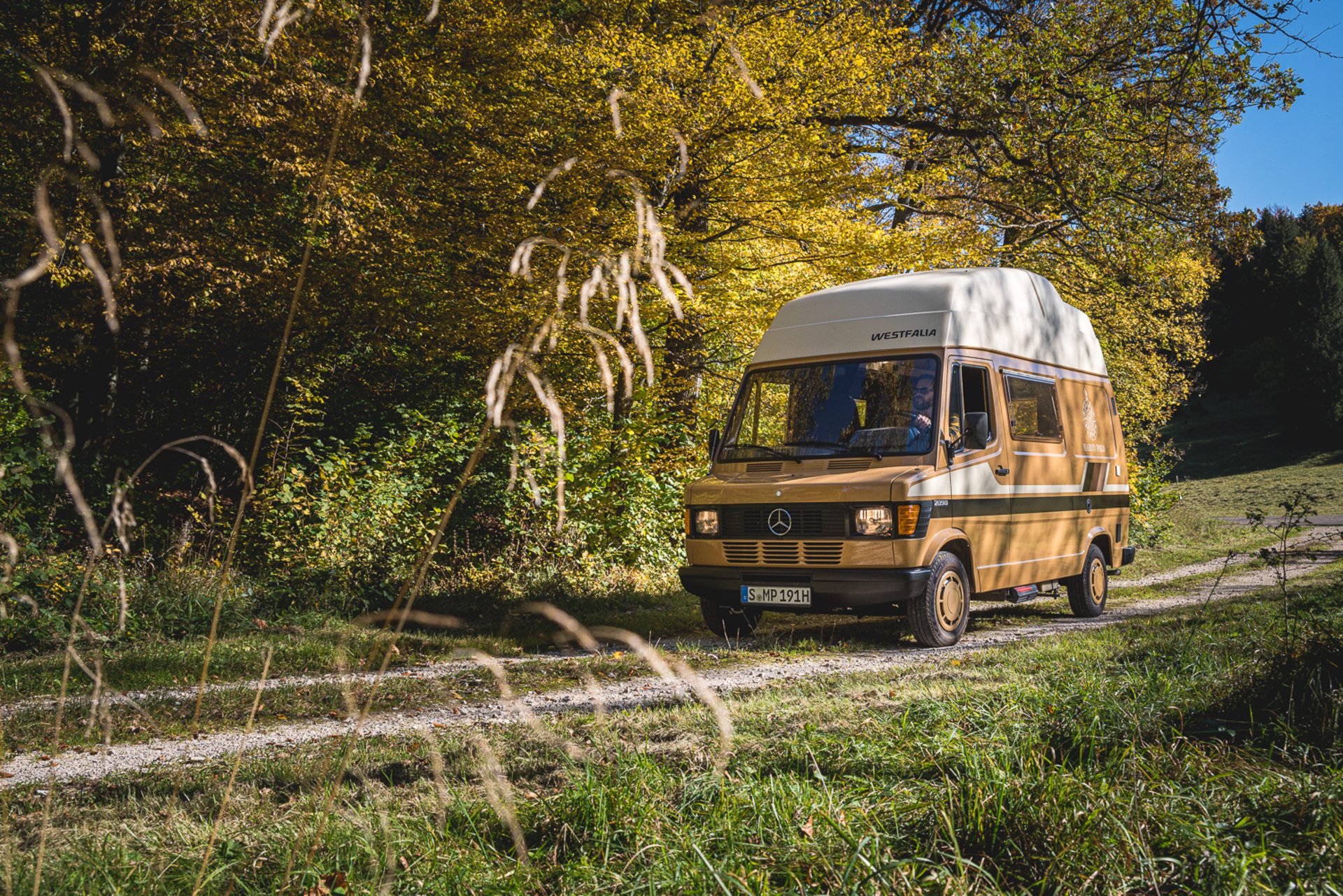
Forty years ago, a legend was born on European roads: the Mercedes-Benz Marco Polo, a model that from its humble beginnings in 1984 used the sturdy “Bremer Transporter” van as its base, witnessing countless travel stories, from the winding roads of the Alps to an incredible transition of improvements and adaptations. Over time, it has evolved to meet the changing needs of the market, both in technological terms and in design and performance.
From the Bremer Transporter to the Clase V
In the 1980s, the first Marco Polo stood out as a pioneer in the compact camper segment, featuring a stubby bonnet, Bahama beige paint and an beige-brown interior. This vehicle was named Bremer Transporter because it was produced in the town of Bremen.
With a height of 2.97 metres, the current model still keeps the roof bed, a combination of bench seat / bunk at the rear, swivel seats for the driver and front passenger, and a kitchen with sink and fridge. Since then, it has gone through eras and generations, adapting and improving with each iteration.
Pioneer in adventures based on the Vito
Its next model, which received an update in 1996, was based on the famous Vito, so its height dropped below two metres, making it easier to enter garages. Its interior also received new features, from the introduction of a pop-up roof in the second generation to an interior based on the Clase V, but the most distinctive feature was the incorporation of a parking brake located next to the pedals, operated by foot, until it received another update in 1999.
Marco Polo derived from the Viano
The third generation of the Marco Polo, derived from the Viano in 2003, marked a milestone in the evolution of camper vans, standing out for its greater functionality and sophistication. It introduced an electric pop-up roof, a comfortable roof bed with spring elements awarded for their ergonomic design, and a rear bench with electrically folding backrests and air cushions for optimal lateral support. This version was updated in 2010.
Features of the Clase V
Since 2015, the fourth generation of the Marco Polo, based on the Clase V, has raised the bar even higher in terms of elegance and comfort. Its interior becomes an exclusive lounge, with details such as floors that emulate a yacht deck, ambient LED lighting and expanded customisation options.
In addition, advanced technologies have been incorporated, such as the MBUX multimedia system and the MBAC camper control unit, turning the vehicle into a smart home for digital travellers. The new Clase V Marco Polo, presented in 2023, takes these improvements even further with an enhanced design and new features, such as intelligent control of the AIRMATIC level in camper mode, offering a unique “glamping” experience.
Marco Polo Module
Later, in 2013, Mercedes Benz introduced the Marco Polo Module, which expands the Marco Polo family by turning vehicles such as the Citan and the Class T into microcampers in a matter of seconds. It is a module installed in the boot and secured with eyelets, which includes a standard bed for two people and an optional kitchen with sink and gas hob. Other optional features include a fridge, auxiliary battery, sleeping pack with curtains and ventilation grilles with mosquito nets, as well as a camping table and chairs.
A journey that continues
The future of the Marco Polo points towards electromobility, with the planned introduction of the VAN. EA, a fully electric modular version from 2026. This paves the way for the Marco Polo range of leisure vehicles to also be electrified, offering fully electric options in the future.


 Peugeot E-208 GTi: a battery-powered toy that revives the spirit of the 1980s sports cars
 New Lexus ES: luxury grows and goes electric
 First contact with the Dacia Sandero Hybrid 155: power and efficiency from €19,890
Deja un comentario