Camaro Chevrolet Sports Cars Range / versions
The sixth generation of the Chevrolet Camaro is here
 Daniel Valdivielso @valdi92
18 May 2015
3 min.
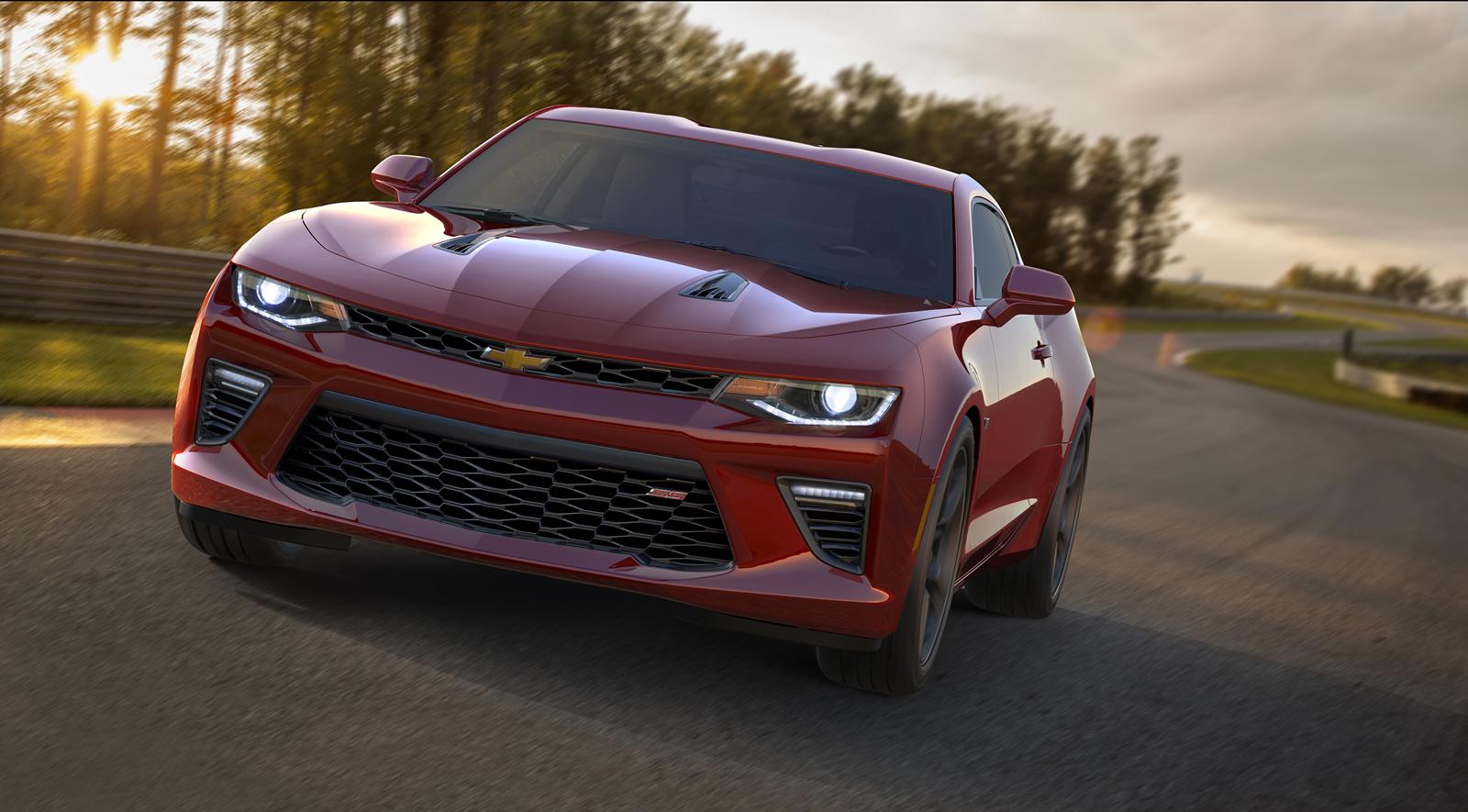
The Chevrolet Camaro has always been one of the most iconic American models in the automotive world, no matter which generation we are talking about.
With this sixth generation we have just met, the folks at Chevy did not want to disappoint anyone, and they have created one of the best Camaros to date.
We are talking about a completely new model, and on the outside that is evident, with a design that, as a whole, has gained aggressiveness thanks to sportier and sharper lines than ever. The front end has a very striking look, with large air intakes, necessary for the proper cooling of the mechanical components. It keeps the small horizontal grille with the headlights “recessed” and smaller than ever.
The side gains presence thanks above all to the new, much more pronounced wheel arches, and a smaller glass area, which gives the Camaro’s body greater sturdiness. The rear of the Camaro continues the line set by the front, minimizing the light clusters and widening the angles and corners, improving its overall stance.
Inside, the Camaro’s biggest leap is found in build quality. The cabin has been created using a higher proportion of soft-touch plastics and upholstered surfaces, which are much more pleasant to the touch. The overall design will be familiar to those who know the immediately previous generation, although there is now more technological content than ever, with multiple surfaces featuring ambient lighting, a fully digital instrument cluster and new connectivity options.
Mechanically, the Camaro has made a first-rate qualitative leap. Based on a new, completely redesigned chassis, the Camaro loses an average of 90 kg compared to its predecessor, a more than notable figure. Rigidity has increased by 28%. The suspension has been redesigned: the front axle uses a MacPherson strut system assisted by a multi-link setup. At the rear there is also a five-link multi-link independent suspension, of course.
The braking system has been strengthened with four-piston fixed calipers and 320 mm discs on the front axle, rising to six-piston calipers and 345 mm discs signed by Brembo on the Camaro SS.
This generation also debuts new engines. The entry-level version of the range (the Camaro LT) will feature a turbocharged four-cylinder engine with two liters of displacement, following the trend started by one of its main rivals, the Ford Mustang. In the Camaro’s case the displacement is even smaller (2.0 liters versus 2.3), as is the output, which in the Camaro reaches 275 CV. It can be combined with a six-speed manual gearbox (standard) or an eight-speed automatic.
There is also a new 3.6 V6 naturally aspirated engine producing 335 CV (also completely new), while the top-of-the-range Camaro SS will continue to be powered by a 6.2 V8 producing 455 CV and 617 Nm, paired with a six-speed manual gearbox with Active Rev Match or an eight-speed automatic with steering-wheel paddles.
All engines will feature different driving modes, which will also affect other systems such as steering and suspension. There will be three: Snow/Ice, Tour and Sport, with a fourth, Track mode, reserved exclusively for the Camaro SS.
The new Camaro will come from the American Michigan plant and will most likely reach dealerships at the end of this same year, joining the MY2016 range, with a price not far from that of its well-known rival, the Mustang. Now a clear question arises: who will win the Camaro-Mustang battle?
Source | Chevrolet


 Peugeot E-208 GTi: a battery-powered toy that revives the spirit of the 1980s sports cars
 New Lexus ES: luxury grows and goes electric
 First contact with the Dacia Sandero Hybrid 155: power and efficiency from €19,890
Deja un comentario