Toyota plans to market talking vehicles in the USA in 2021
 Guillermo Lopez
18 April 2018
3 min.
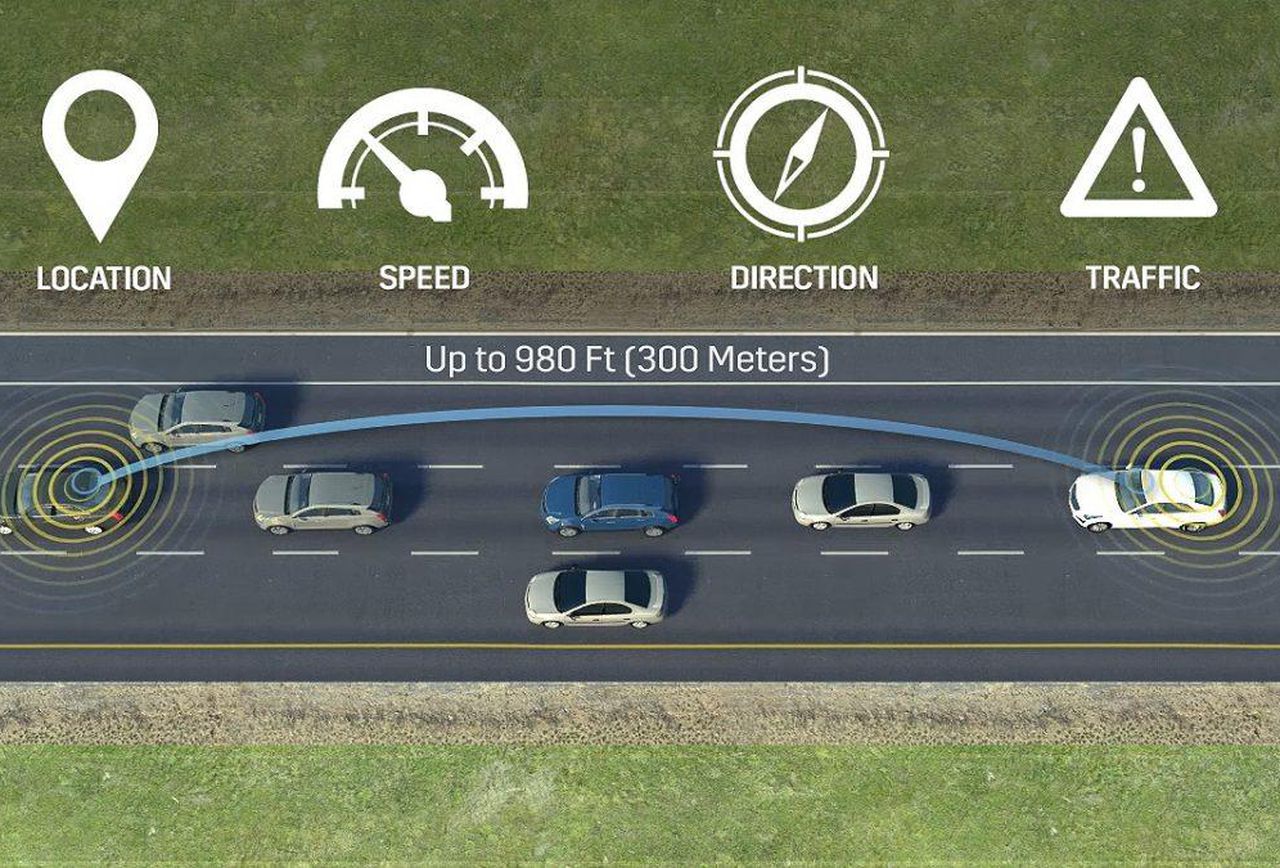
Toyota aims to be a pioneer in commercializing V2V and V2R technologies in its cars so that they can “talk” to each other using short-range technology
In order to prevent thousands of accidents every year, Toyota plans to use short-range wireless technology from 2021 onwards in the United States across most models in its range so that its cars can communicate with each other.
Toyota thus wants to push forward the proposal that the Obama administration made in December 2016 to require car manufacturers to incorporate this technology into all their new models, to ensure that all vehicles “speak the same language through a standard technology common to all of them”.
According to the NHTSA, the North American body equivalent to Spain’s DGT, in 1999 the US administration granted car manufacturers a block of the radio spectrum in the 5.9 GHz band so that they could develop vehicle-to-vehicle communications (V2V) and those that take place between the vehicle and the infrastructure (V2R and V2I).
Data exchange between nearby vehicles takes place up to 10 times per secondFor almost a decade, manufacturers have studied and developed the technology needed for this, although its use remains very limited, to the extent that some US politicians are beginning to suggest that the reserved spectrum be opened up to other possible uses. However, car manufacturers have asked the US Government to speed up the regulation of the systems and establish the conditions of use for this technology as soon as possible, and not only to protect the radio spectrum already reserved but also to foresee a possible expansion of it given the strong growth that its use in traffic could bring.
Data exchange between vehicles takes place up to 10 times per second between nearby vehicles. This will make it possible to identify risks and provide warnings to avoid possible accidents, especially those occurring at intersections, thanks to the new alert and driving assistance systems that are already operating in many vehicles on sale.
According to NHTSA data, the introduction of V2V or V2R technology in cars, which will anticipate and contribute to the arrival of autonomous driving, will help significantly reduce vehicle accidents. Regulating its operation could entail a cost of between 135 and 300 dollars per new vehicle, which would mean an investment of more than 5 billion dollars, a trifle if we consider that its application would make it possible to reduce some 600,000 accidents a year, which would allow savings of 71 billion in repairs annually once the technology is fully developed.
Toyota now wants to promote the use of this technology and is considering, as General Motors already did in 2017 with the Cadillac CTS (the only model sold so far with the system), starting to offer V2V connections. These new short-range communication systems have been tested in various pilot projects and test cars on the road for a decade to transmit data on distance, speed, direction and velocity from the test unit to other vehicles located 300 metres away.
Toyota has been implementing this technology in the models it sells in Japan since 2015, where more than 100,000 units already circulate with V2V and V2R connections. It now plans to introduce this technology in the models it will put on sale in the United States in a couple of years.


 Peugeot E-208 GTi: a battery-powered toy that revives the spirit of the 1980s sports cars
 New Lexus ES: luxury grows and goes electric
 First contact with the Dacia Sandero Hybrid 155: power and efficiency from €19,890
Deja un comentario