Volkswagen introduces an LFP battery pack in the ID.3 for the first time
 Javier Cantagalli
5 March 2025
3 min.
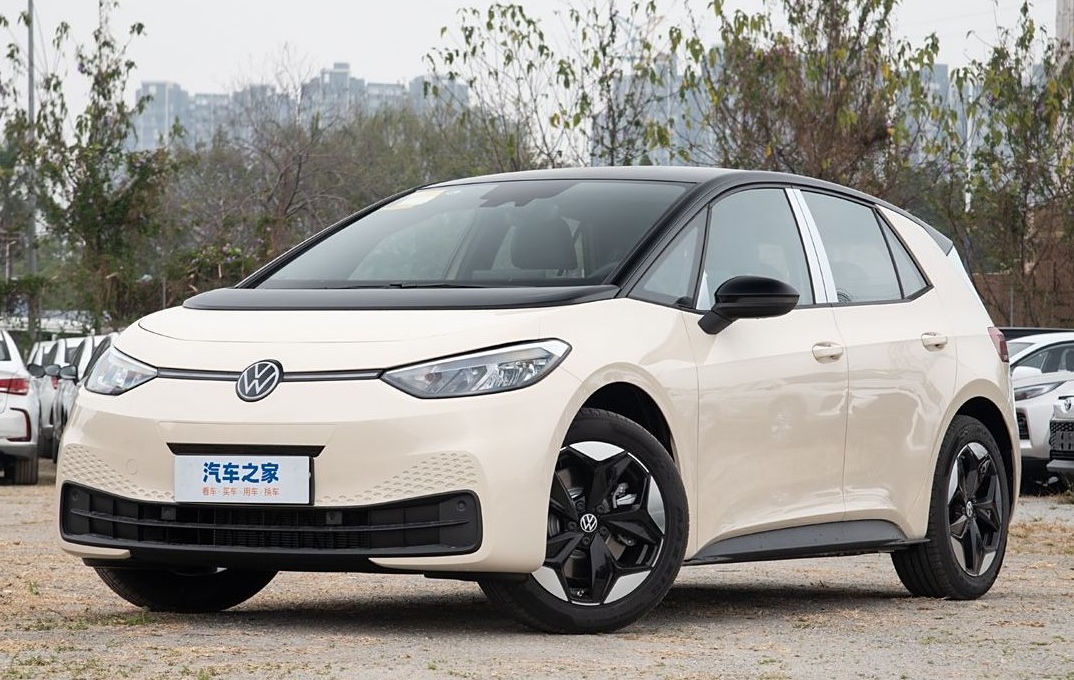
The possible use of an LFP battery pack in the entry-level version of the ID.3 sold in Europe would allow the German manufacturer to reduce the price of the vehicle and thus boost its sales.
Volkswagen has just launched a renewed version of the ID.3 for the 2025 model year on the Chinese market, and one of the novelties that has caught our attention most in this new model is the introduction, for the first time, of a lithium iron phosphate (LFP) battery pack. A decision by the German manufacturer that suggests, perhaps, the possible launch in the European market in the near future of a version of the ID.3 with an LFP battery pack.
Let us recall that one of the main obstacles for many customers in Europe when choosing the ID.3 is not other than its price, in an increasingly competitive market with cheaper vehicles from other brands or that offer more for the same price. The launch of a version of the ID.3 with an LFP battery pack would reduce production costs and, therefore, its retail selling price.
In China, the renewed ID.3 is now offered with two battery packs to choose from, both with similar capacities. The German manufacturer continues to offer the same 52.8 kWh NMC battery pack that came integrated in this model, but also adds the option of a new LFP battery pack with cells produced by CATL, whose capacity is 53.6 kWh. Volkswagen promises with this latter one 451 km of CLTC range.
The Achilles’ heel of this new LFP battery pack appears to be, however, the charging power supported. Thus, while with the NMC battery pack it takes 42 minutes to increase the charge percentage from 30 to 80 percent, according to the manufacturer; with this new LFP battery pack it takes 48 minutes. That said, we must remember that the most affordable Pure version of the European ID.3 supports a charging power of 145 kW and is capable of increasing the charge percentage from 10 to 80 percent in just 25 minutes.
The propulsion system, on the other hand, does not vary between markets. This means that, both in China and Europe, the ID.3 uses the same APP310 motor of 125 kW with 310 Nm of torque.
Its external appearance is the same
It is also striking that Volkswagen has not modified the exterior design of the ID.3 with this renewal of its electric model, unlike what already happened here in Europe in 2023. In China, the German manufacturer has decided not to make any change to its exterior design, probably to reduce costs in an increasingly competitive market.
The ID.3 has been sold in China since late 2021 through SAIC-Volkswagen. At first, sales were modest, but in 2023, thanks to discount campaigns, they soared to reach 13 thousand units per month, making it one of the German manufacturer’s most successful electric cars in that market. However, after a 2024 in which sales remained stable, the start of 2025 has been far from good, with only 2,623 units sold last January and a 65 percent drop compared with the same month of the previous year.
The launch of this new version with an LFP battery pack could perhaps boost sales again, although the price of the ID.3 in China was already quite competitive. So perhaps other factors explain the drop in demand for this model in that market.
Technical specifications of this car
 Peugeot E-208 GTi: a battery-powered toy that revives the spirit of the 1980s sports cars
 New Lexus ES: luxury grows and goes electric
 First contact with the Dacia Sandero Hybrid 155: power and efficiency from €19,890
Deja un comentario