What to do if your car battery runs flat
 Victor Alós Yus @sepelaci
7 April 2019
4 min.
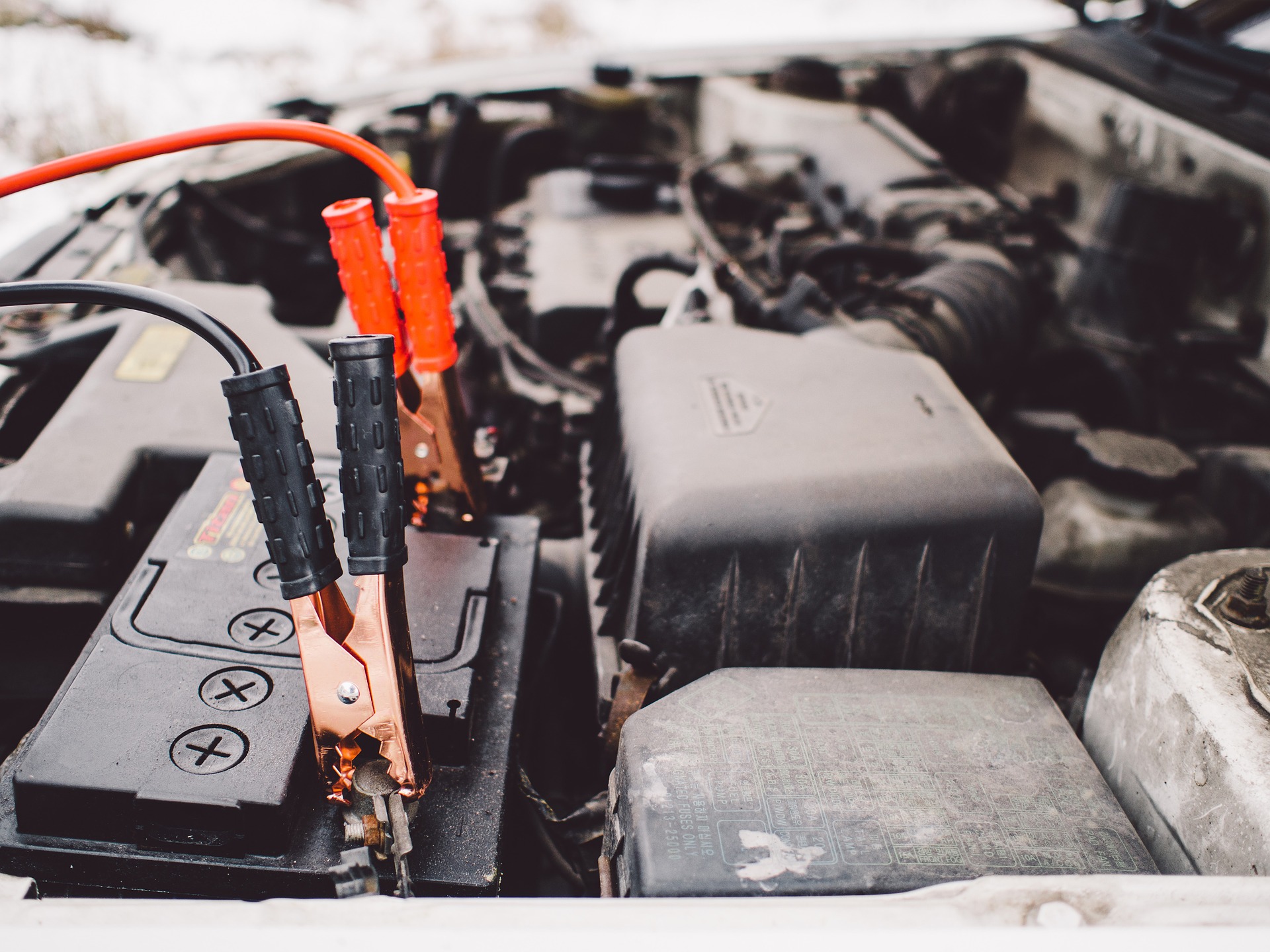
The battery is essential for the car to work and, although it is not common, it can run out of charge; it needs to be recharged and taken to the workshop for a check-up
You got up early to go to work. You showered, had breakfast and got dressed quickly. You’re ready to face the world and the day ahead. You sit behind the wheel, turn the key and… nothing. The engine shows no signs of life. The radio stays silent. The dashboard warning lights are on, but nothing else happens. I’m sorry, your battery has gone flat. And now what?
The battery is the component that powers the entire electrical system of the car when the engine is not running and the alternator is not working. It is what powers the starter motor of a combustion-engine car and allows it to start. It also powers the rest of the electrical devices in the car, so it is essential for their normal operation. It is normally recharged while the engine is running, since the electrical systems are then powered by the alternator. This provides enough energy to make the car run and is what allows everything to work properly.
Cars use up the battery’s energy when they are not running, which is why it can go flat at any given moment. What happens then is that there is not enough electricity in the battery to allow the starter motor to turn over. The radio won’t work either, and it will lose its settings. The infotainment system won’t be able to switch on either, and the car will be useless.
Although this is not the time to look for the causes of the battery going flat, it is advisable to check, especially in older cars, whether we have left the lights on, the indicators, or whether we have not started the car for quite some time. These can be the most common causes, leaving aside the obvious problem with the alternator, for why we may have been left with a flat battery.
How to start the car if your battery has gone flat
To solve it, you have to forget about the starting methods we have heard about for a long time. Pushing the car in second gear and releasing the clutch to get it going is not advisable. It can cause serious damage and it is best to forget about it. One of the simplest solutions is to ask another driver for help who has jump leads with clamps. The correct way to use them is as follows:
- Bear in mind that the batteries of both cars must have the same voltage. In newer cars, the electronics are very important, so the operation must be carried out correctly to avoid faults in this area. The clamps must be in good condition, with thick, well-maintained cables. Normally, the red clamp is the positive pole and the black clamp represents the negative pole.
- Both cars must be switched off and you must first attach the red clamp, which represents the positive pole, to the positive terminal of the flat battery. Then connect the positive pole of the car providing the charge. The negative clamp is then attached to the charged car and finally the negative pole clamp is connected to the car to be charged. This process must be carried out with both cars switched off and always with care. Electricity is dangerous and a circuit can be created unintentionally, resulting in a spark.
- Once the clamps are in place, start the charged car. Once it is running, start the car to be charged, which will borrow the energy generated by the alternator of the other car, and the starter motor will engage. Once running, the alternator will start working and you can drive the car. However, do not stop the car and head to a workshop so they can assess the condition of the battery and see whether it is advisable to replace it with a new one. The cables must be disconnected in the reverse order to how they were connected. That is, first the negative terminal of the charged car, then the negative terminal of the helper car. Then disconnect the positive clamp from the charged car and finally the one from the car that was helped.
If you have a jump starter booster, you don’t need another car. Attach the clamps and then activate the charger booster. If the clamps are not properly connected, it won’t work, so the risk of damage is eliminated.
Another way to solve this problem is, of course, to call your insurer to send a tow truck through the roadside assistance service. In this way the tow truck mechanic will carry out the operation with all the safety measures. The end result will be the same, though. In other words, you will still have to go to the workshop to check the battery and make sure it will keep working.


 Kia offers an electric range of 10 models, 50 versions and 400 possible combinations
 The seven finalists for the 2027 European Car of the Year (COTY) are exclusively electric
 Peugeot E-208 GTi: a battery-powered toy that revives the spirit of the 1980s sports cars
Deja un comentario