Winter tyres: can they be used in summer?
 Antonio Roncero @roncero_antonio
18 January 2021
8 min.
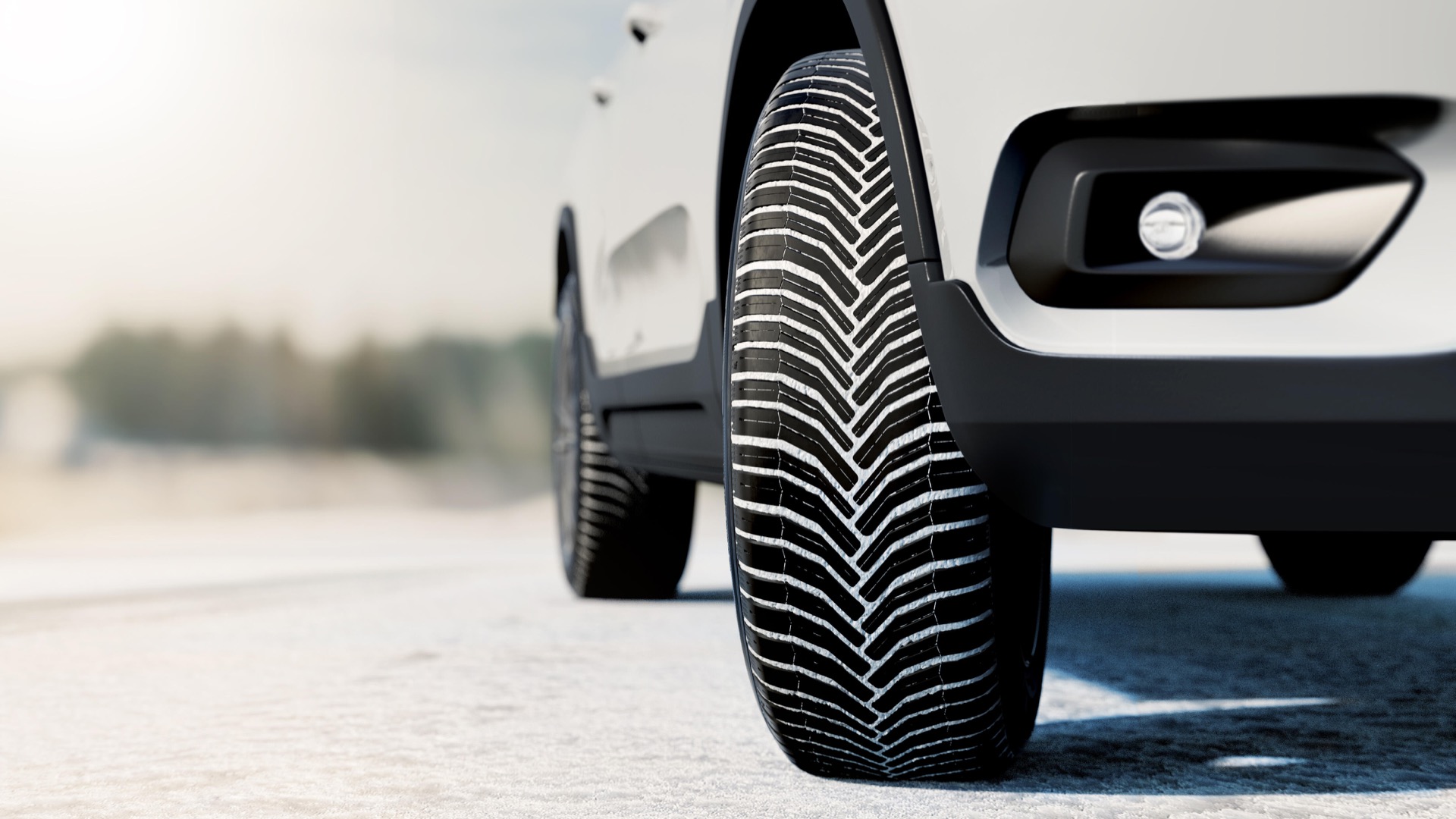
Although, legally and for MOT purposes, you could use winter tyres in summer, it is not advisable. Here we tell you the reasons.
The temporal Filomena and its consequences have sparked interest in winter tyres. However, there is a lot of misunderstanding about them among users, who until now have not relied on this solution to ensure mobility during an unexpected snowfall and improve safety when driving in bad weather.
In fact, in 2020, only 2% of the new tyres sold in Spain were winter tyres. As for All Season tyres, also known as All-Weather or four-season tyres, which are gaining somewhat more popularity, their share stood at 5%.
What does this mean? That more than 90% of the vehicles travelling on Spanish roads and in its cities do so fitted with summer tyres. In this regard, Michelin, which has some authority on the subject, insists that drivers need to be made aware that summer tyres are unsuitable for driving in winter.
The reasoning is the same as why you wear flip-flops or trainers to walk on the beach, but not Gore-Tex boots, with a sole and an inner lining designed to grip the ground better in difficult conditions and keep our feet warm in low temperatures. With tyres it is exactly the same: we need to fit our vehicle with the right “footwear” for each season.
Tyres with winter certification: winter and All Season
And here we come to the first thing you need to know. There are winter tyres… and All Season tyres. Both have winter certification, which is recognised by the M+S marking on the sidewalls and by a pictogram of a three-peaked mountain inside.
Both differ from summer tyres in that they are manufactured using more flexible rubber compounds, which allow them to maintain their properties better at low temperatures. All manufacturers agree that these tyres perform noticeably better than summer tyres when the outside temperature is below 7 degrees Celsius.
In addition, the tread design is deeper and has a series of grooves or sipes that allow the tyre to maintain traction on snow, something summer tyres cannot offer, without the need for snow chains. Here you can read more about how winter tyres grip on snow.
In turn, the difference between winter tyres and All Season tyres also lies in the compounds used and the design of the tread. Winter tyres are more flexible and have many more grooves or sipes than summer tyres, so they are designed for regions with very adverse climates, and offer better performance than All Season tyres in heavy snow or ice.
So far, so clear. Even simpler than you might have thought at first. In summary: winter or All Season tyres are safer for driving in winter than summer tyres. And if you are one of those who quickly fitted winter tyres to your car to “escape” Filomena, or if you are considering it so that a storm doesn’t catch you off guard again, you are probably now asking yourself the question in reverse.
Can I use winter tyres for driving in summer?
The answer here requires a nuance. You can, but you shouldn’t. What I mean is that, in Spain, it is legally permitted to drive on tyres with winter certification, whether winter or All Season tyres, in summer. No, you will not have problems passing the MOT.
However, all tyre manufacturers recommend, if you use their winter tyres, alternating them with a set of summer tyres. That is, using winter tyres from roughly October to March and switching to summer tyres for the remaining months. These are the reasons, all related to their design, mentioned earlier.
- Safety: with outside temperatures above 12 degrees Celsius, a winter tyre has a longer braking distance than a summer tyre.
- Durability: winter tyres wear faster than summer tyres at high temperatures, due to their more flexible compounds.
- Precision: with a higher number of grooves and greater tread depth, the larger rubber blocks on the tread mean they cannot offer the same steering precision as a summer tyre.
- Consumption: their compounds usually offer greater rolling resistance in summer climates, which increases fuel consumption.
- Comfort: the road noise of a winter tyre is usually higher than that of a summer tyre. This is becoming especially important now that there are more and more hybrid and electric cars.
So keep this in mind regarding winter tyres: winter tyres are not just for snow. You will be safer in winter with these tyres as soon as the thermometer starts to register temperatures below 7 degrees, or in the rain (more grip and greater resistance to aquaplaning). But likewise, in summer you will be safer with summer tyres, even though it is legally permitted to drive on winter tyres.
All Season tyres: for winter and summer
An intermediate option is All Season or All-Weather tyres with winter certification. Most manufacturers already offer tyres of this type, such as the Michelin CrossClimate or the Goodyear 4 Seasons.
We have already said that these All-Weather tyres are equally certified for use on snow without the need for chains, also maintaining a certain degree of traction even on ice. Not as much as “pure” winter tyres. But they do guarantee mobility on snow and allow you to keep driving, for example, when a road is closed and chains are required. Here you can see the types of snow chains that exist, how much they cost, and their advantages and disadvantages.
Furthermore, in winter these All Season tyres offer more safety than a summer tyre… and they do not need to be replaced when temperatures rise, maintaining grip, consumption and durability levels similar to those of a summer tyre.
As a reference comparison, the following table shows an evaluation carried out by Michelin comparing the different performance characteristics (dry performance, wet performance in summer and winter conditions, snow performance, and durability) of its most popular summer tyre, the Michelin Primacy 4, an All-Weather tyre such as the Michelin CrossClimate+, and a winter tyre such as the new Michelin Alpin 6, which summarises very well everything explained above.
Which tyres should I fit: summer, winter or All Season?
So, which tyres do I need to fit? Well, the best option is to adapt to the climate of the area where you live or usually drive, to the type of vehicle, and to your driving style. Remember that, in some European countries, winter tyres are compulsory all year round, in others they are compulsory under certain conditions, and there are countries where they are compulsory depending on the season.
In Spain, our recommendation is to consider alternating summer and winter tyres if you live in the northern part of the peninsula and frequently face situations where you may encounter snow on the road, although All Season tyres could also serve you well here.
For the central-northern area, All-Weather tyres are an excellent option that ensure mobility even when it snows, and greater safety in winter, at the cost of a slightly higher price (around 15 euros per tyre, for a standard size) and slightly lower performance than summer tyres when the heat arrives. But much better than that of winter tyres; take another look at the comparison table above and it will become clearer.
And for coastal areas or southern Spain, where winters are not so cold, the best option remains summer tyres… and there is always the occasional or emergency solution of chains.
Related information of interest


 Peugeot E-208 GTi: a battery-powered toy that revives the spirit of the 1980s sports cars
 New Lexus ES: luxury grows and goes electric
 First contact with the Dacia Sandero Hybrid 155: power and efficiency from €19,890
Deja un comentario