Audi BMW e-tron EV6 EV9 Hyundai IONIQ Ioniq 5 iX3 KIA Macan Porsche Q6 e-tron Electric Cars Rankings SUV
2026 Ranking: the 5 electric premium SUVs with the most efficient fast charging on the Spanish market
 Dani Montesinos
14 September 2026
5 min.
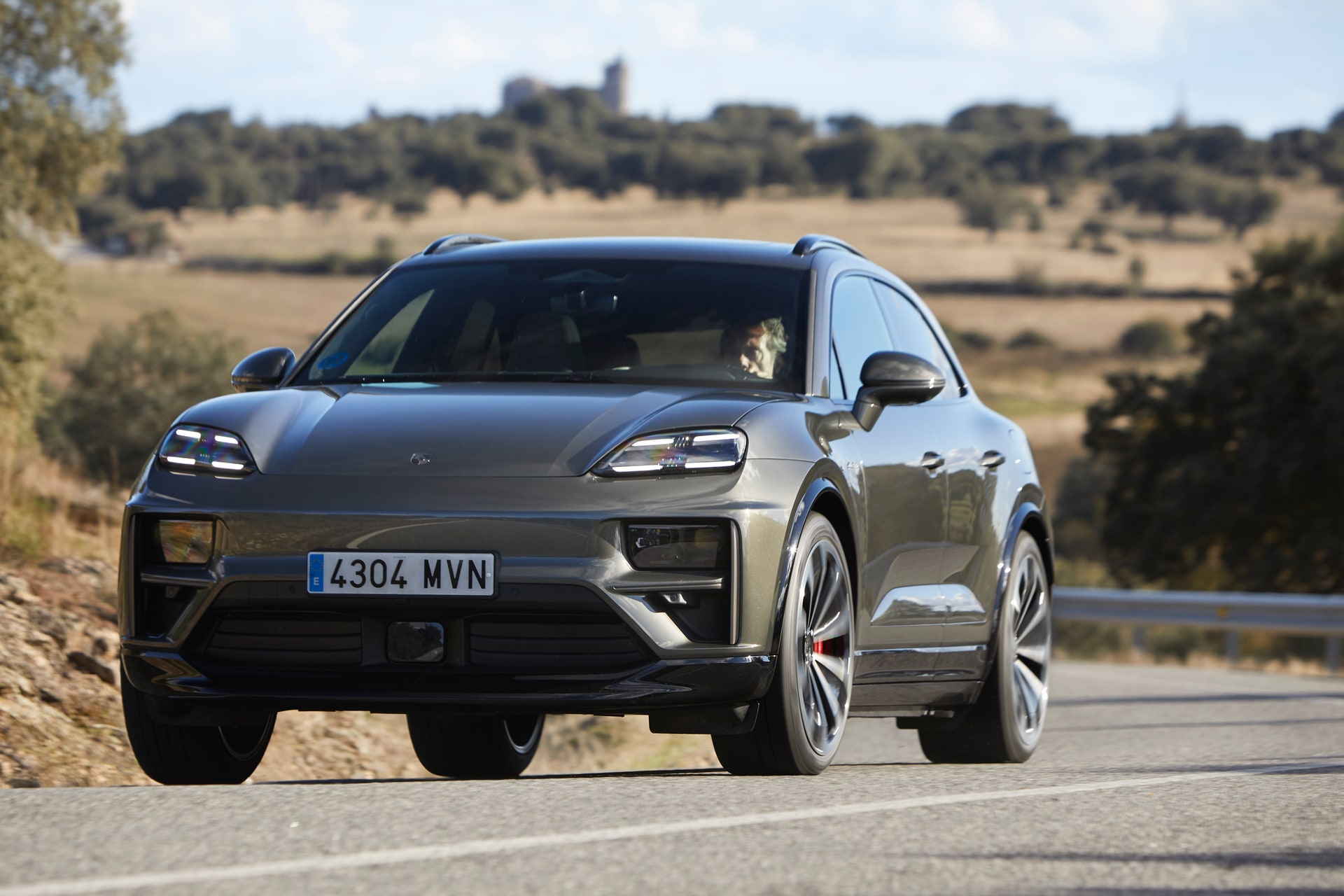
We analyse the five premium EV SUVs that best manage fast charging in 2026, using sustained kW curves, 10-80% charging times and 800V architecture as criteria
Fast charging has become the new battlefield for the electric premium SUV. Range is no longer enough: what really makes the difference on a long journey is how long the car takes to go from 10 to 80% without the power curve collapsing after ten minutes. In 2026, the Spanish market offers a handful of models that do this outstandingly, and others that—despite the marketing—still fall short at the real plug.
From the initial list of candidates we have discarded BYD and Nissan for different reasons. BYD remains a global reference in electrification, but in our view, the premium buyer in 2026 has alternatives with more advanced architectures and a better-resolved interior. In the case of Nissan, the technical equation holds on paper; however, we consider that in finish, soundproofing and software it sits a step below its direct rivals in this range. With that clarified, let’s move on to the ones that do make it.
Why fast-charging efficiency matters more than kW peaks
The easy headline is “350 kW maximum power”. The reality is different: what counts is how many minutes the car sustains a high power before dropping to 100 or 70 kW. An SUV that hits 270 kW for 90 seconds and then falls to 120 kW is, in practice, slower on a real journey than one that holds 220 kW steadily for fifteen minutes.
The electric premium SUVs fast charging on this list share one trait: an 800V architecture—barring justified exceptions—and a flat charging curve. That is what translates into going from 10 to 80% in under twenty minutes with a 350 kW charger in real conditions.
1. Porsche Macan — from €83,296
The electric Macan is, in my view, the technical reference for fast charging in the segment. Its PPE platform with 800V architecture allows a sustained peak of 270 kW with a linearity few rivals match. The 10-80% is completed in about 21 minutes on a high-power charger and—this is what matters—the curve barely degrades between 40 and 70%, the zone where other models start to flag.
| Power kW | Power CV | Top speed | Range | Consumption | Label | Fuel |
|---|---|---|---|---|---|---|
| 250 kW | 340 CV | 220 km/h | 641 km | 17.9 kWh/100 km | ZERO | Electric |
Audi Q62. Audi Q6 e-tron — from €71,650
It shares the PPE platform with the Macan and inherits much of its plug-side virtues. The Q6 e-tron accepts a 270 kW peak and maintains a very refined curve, with a 10-80% in the region of 21 minutes. Compared with the Porsche, it wins on space and practicality; it loses on dynamic purity. Charging efficiency is practically identical, which is logical given the shared hardware.
| Power kW | Power CV | Top speed | Range | Consumption | Label | Fuel |
|---|---|---|---|---|---|---|
| 285 kW | 387 CV | 210 km/h | 641 km | 18.9 kWh/100 km | ZERO | Electric |
BMW iX33. BMW iX3 — from €71,850
The new iX3 debuts the Neue Klasse platform and, with it, an 800V architecture that lets it play in the top league. It accepts up to 400 kW peak under optimal conditions—a figure that a year ago seemed reserved for the Ioniq 5 N and little else—and completes the 10-80% in about 21 minutes. In our road test of the new iX3 we already highlighted that the curve remains surprisingly stable past 60%. For us, it is the most pleasant surprise of the year.
| Power kW | Power CV | Top speed | Range | Consumption | Label | Fuel |
|---|---|---|---|---|---|---|
| 345 kW | 469 CV | 210 km/h | 805 km | 15.0 kWh/100 km | ZERO | Electric |
KIA EV94. Kia EV9 — from €63,340
The EV9 was the first affordable large premium SUV with the 800V architecture inherited from the EV6. Its 210 kW peak may seem modest next to the iX3, but its curve is among the most sustained in the segment: the 10-80% is dispatched in about 24 minutes even with the large battery. A seven-seat SUV that charges like this—and with the real efficiency it shows on the motorway—is, quite simply, a positive anomaly.
| Power kW | Power CV | Top speed | Range | Consumption | Label | Fuel |
|---|---|---|---|---|---|---|
| 282 kW | 384 CV | 185 km/h | 563 km | 20.2 kWh/100 km | ZERO | Electric |
Hyundai IONIQ5. Hyundai IONIQ 5 — from €48,540
Yes, the Ioniq 5 is not a pure SUV and its price places it outside traditional premium. But technically it plays in this league: E-GMP at 800V, 233 kW peak and a 10-80% in about 18 minutes that remains a reference. In the 2024 update it gained an 84 kWh battery and an even flatter charging curve. The comparison between the Ioniq 5 and the Kia EV6 already made clear that these two Korean platforms still set the pace in DC charging. It is the most affordable in the ranking and, in practice, the one that loses the least time on a long journey.
| Power kW | Power CV | Top speed | Range | Consumption | Label | Fuel |
|---|---|---|---|---|---|---|
| 168 kW | 228 CV | 185 km/h | 570 km | 16.0 kWh/100 km | ZERO | Electric |
Summary table and editorial score
| Model | Architecture | Peak kW | 10-80% | Range | Price from | Score /10 |
|---|---|---|---|---|---|---|
| Porsche Macan Electric | 800V | 270 kW | ~21 min | 641 km | €83,296 | 9.4 |
| Audi Q6 e-tron | 800V | 270 kW | ~21 min | 641 km | €71,650 | 9.1 |
| BMW iX3 | 800V | 400 kW | ~21 min | 805 km | €71,850 | 9.3 |
| Kia EV9 | 800V | 210 kW | ~24 min | 563 km | €63,340 | 8.7 |
| Hyundai IONIQ 5 | 800V | 233 kW | ~18 min | 570 km | €48,540 | 9.0 |
Anyone looking for public aid to amortise the investment should check the current Plan Auto+ and consult the updated amount on the official website before signing.
Frequently asked questions
Which electric premium SUV charges fastest in Spain in 2026?
The BMW iX3 leads on peak power with 400 kW, although on real 10-80% time it is very close to the Porsche Macan Electric and the Audi Q6 e-tron, all around 21 minutes.
Is it worth paying for an SUV with 800V architecture?
On long journeys, yes. The difference compared with an equivalent 400V is between 10 and 15 minutes per charging stop, and the curve stays more stable in the mid-section.
Is the Hyundai IONIQ 5 considered an electric premium?
Technically it competes in charging and performance with premium models thanks to the 800V E-GMP platform, although its price positioning and finish place it on an intermediate step.
How much does temperature affect fast charging in these SUVs?
Quite a lot. In severe cold without preconditioning, power can drop by between 30 and 50%. All models in the ranking have automatic battery preheating when a charger is set as the destination.
Technical specifications of the cars in this article
 Peugeot E-208 GTi: a battery-powered toy that revives the spirit of the 1980s sports cars
 New Lexus ES: luxury grows and goes electric
 First contact with the Dacia Sandero Hybrid 155: power and efficiency from €19,890
Deja un comentario