A5 Audi BMW Serie 3 Convertibles Photos Tests
Audi A5 Cabrio and BMW Serie 3 Cabrio, put to the test (Engine and performance)
 Diego G. Moreira
18 September 2012
5 min.
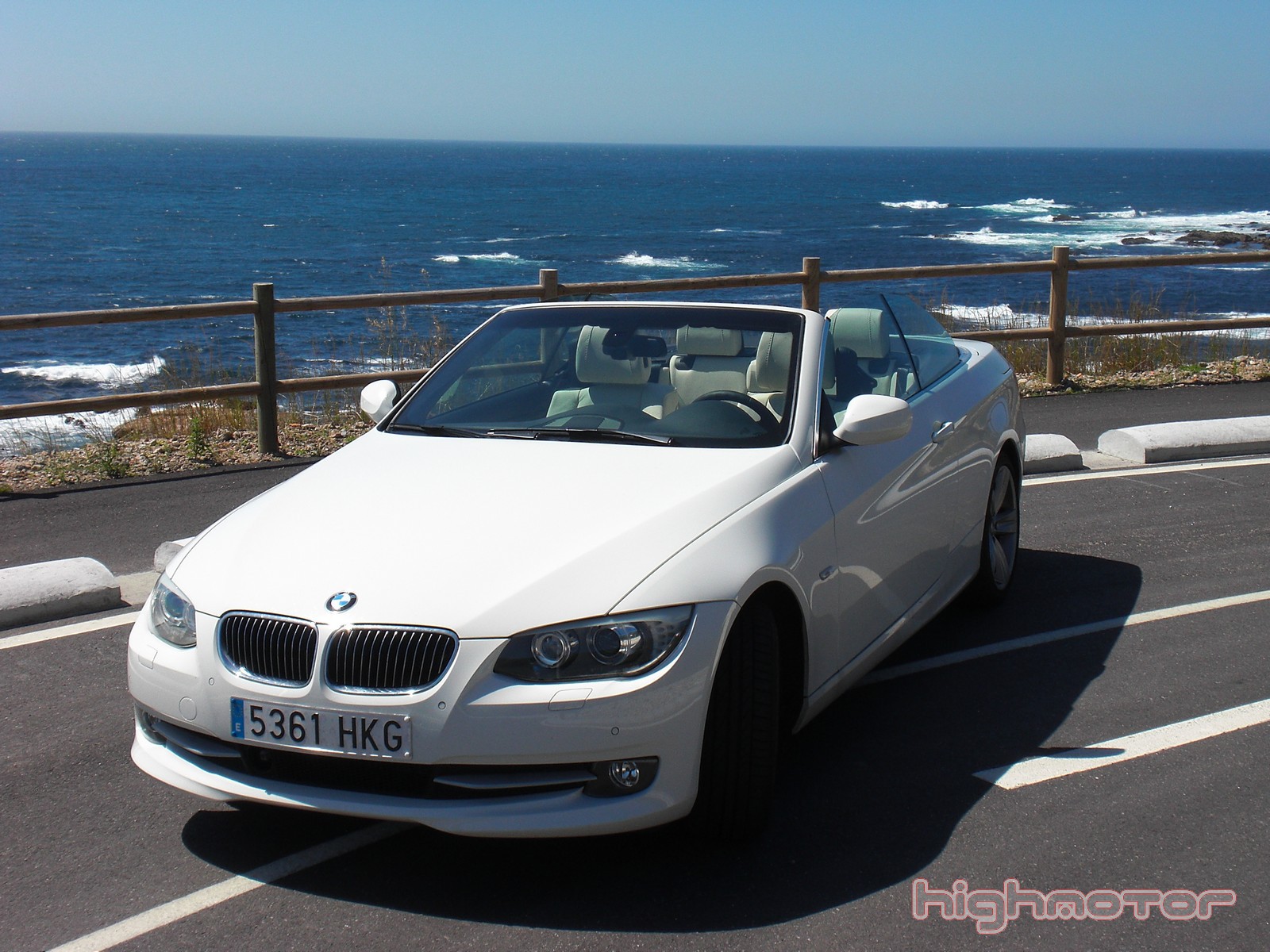
First part of this double test, of the Audi A5 Cabrio with its 204 hp 3.0 V6 TDI engine and the BMW Serie 3 with its three-litre 218 hp engine. In this section we turn to the engine, performance, handling and fuel consumption.
Let’s start the engines of our two protagonists in this comparison or test squared. On one side we have the traditionalist camp, a nod to the most classic style of the Audi A5 Cabrio with its fabric roof. And on the other side, the BMW Serie 3 Cabrio which opts for a retractable hard top.
The engine range is different: the Audi comes with the 204 hp 3.0 V6 TDI, a smooth and refined diesel that doesn’t neglect performance. But the BMW’s three-litre, six-cylinder inline engine, capable of producing 218 hp, also offers plenty of smoothness. Diesel or petrol?
Our intention in this test, rather than making a strict comparison, is to compare two different options with two well-balanced engines that are more than enough to move these two convertibles with ease. On one hand, the diesel is the typical choice, while the petrol is perhaps the more emotional option.
Engine and performance
In strict alphabetical order, we start with the Audi A5 Cabrio and its three-litre V6 engine. This is an old acquaintance of the range, a powerplant previously known as the 2.7 V6 TDI, which after receiving the appropriate updates now sits as the entry point to the V6 diesel engines, below the powerful and high-performance 240 hp 3.0 V6 TDI.
The eight-speed automatic gearbox fitted to this Audi keeps the car normally very low in revs (between 1,200 and 1,500 rpm), delivering its strongest response from 1,800 rpm up to 4,000 rpm.
That said, the smoothness of the V6 engine is very present, making it a very pleasant powerplant to drive. The gearbox (eight speeds) is not a dual-clutch unit, but it performs its job correctly. It also has Sport mode, which keeps the engine revving higher for a quicker response.
On the other hand, under the well-known and historic designation of 325i, lies a modern three-litre, naturally aspirated six-cylinder inline engine producing 218 hp. Perhaps it isn’t the most rational variant, but it is certainly a joy to drive this convertible with this engine.
A powerplant of measured temperament, which always pushes with force and smoothness until reaching high revs, where the beast shows its power and its 218 hp. This engine begins to wake up gradually from 2,000 rpm, but pulls strongly up past 6,000 rpm (with more push from 3,500 rpm onwards), and it is also very smooth and progressive in acceleration.
The gearbox in the BMW was also automatic, but on this occasion with six ratios and a Sport mode that stood out for its engine braking and for holding the revs high. It also shifted gears more quickly than the eight-speed transmission of the Audi.
Handling
Here the Audi surprised us, because I personally was somewhat prejudiced and took for granted a better response from the chassis of the BMW, but in fact it was the A5 Cabrio that surprised. The Serie 3 Cabrio is stable, but it is more playful (it is rear-wheel drive, let’s not forget) and the suspension also struck me as slightly softer than the Audi’s.
On the same mountain road, with fast bends and constant changes of grip (a route that is now typical in our tests), I noticed a certain agility from the A5 Cabrio, with a slightly firmer suspension. That said, the feel of the steering is a point in favour of the BMW, since it remains just as direct as in other models in the range, something that is appreciated on country roads or when we decide to drive more sportily.
We also cannot overlook the five-mode driving system of the Audi A5 (Drive Select), which lets you choose between: Efficiency (which cuts back accelerator response and climate control), Comfort, Dynamic, Individual (a custom setup) and Auto. That said, all these modes only affected accelerator, steering and gearshift response, not the suspension, which remained standard.
Comfort on board both convertibles was remarkably high, and on this point we cannot find fault with either. Whether it’s the fabric roof, which superbly insulated the cabin from noise, or the hard top, which also did its job.
Fuel consumption
In this section the undisputed winner is the Audi, although the gap between the two engines is smaller than one might initially think. On motorway the Audi settles at 6.5 litres per 100 km, compared with the 7.5 litres per 100 km of the BMW Serie 3 Cabrio, on the same Madrid–Vigo–Madrid route (1,200 km).
On country roads the figures are also fairly close: the Audi averaged 7 litres per 100 km (and could even reach 6.5 litres per 100 km), compared with 8.5–9 litres per 100 km for the BMW.
Finally, in town the figure rose to 9 litres in the case of the fabric-roof convertible, compared with 11 litres for the hard-top convertible. For two different engines, with similar displacement but one turbocharged and the other conventional, the petrol engine’s consumption is quite competitive against the turbocharged V6 diesel.
In the second part of the test we will discuss the design of both models, comparing the exterior details that set them apart as well as the interiors, analysing the quality of the finishes and the space offered by these two premium convertibles.
Photos | Diego G. Moreira
Technical specifications of this car


 Peugeot E-208 GTi: a battery-powered toy that revives the spirit of the 1980s sports cars
 New Lexus ES: luxury grows and goes electric
 First contact with the Dacia Sandero Hybrid 155: power and efficiency from €19,890
Deja un comentario