Bentley puts the brakes on the electrification of its vehicle range
 Javier Cantagalli
25 September 2025
3 min.
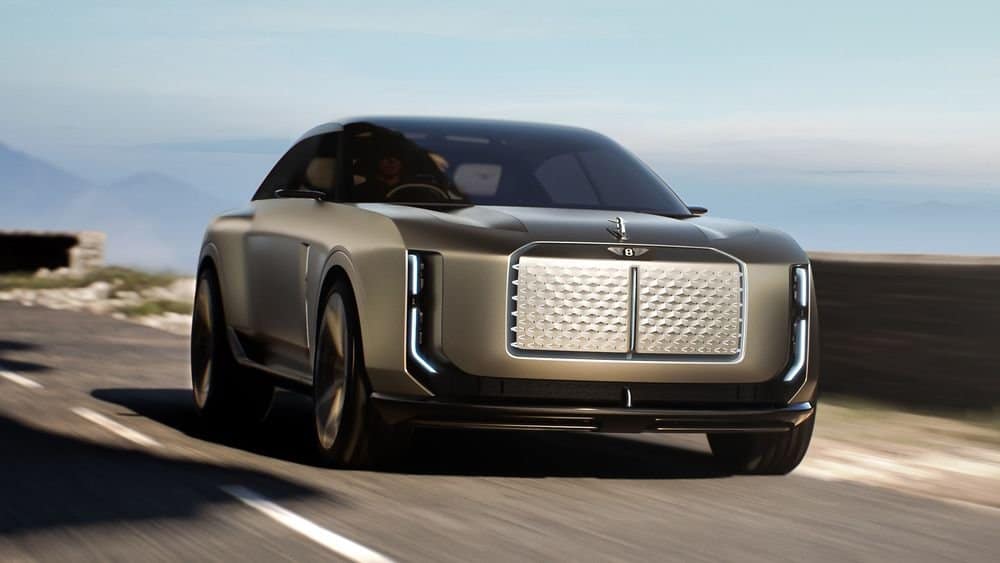
Bentley has finally decided to strike a balance between innovation and tradition, maintaining its commitment to electrification but without rushing into the switch in a market where many customers still prefer combustion-engined vehicles.
Bentley, the renowned British luxury vehicle manufacturer, has decided to ease off the accelerator on the electrification of its range, readjusting its initial strategy. As a result, the company now plans to prioritise combustion engines in the short and medium term, while keeping its commitment to electric mobility over the longer term.
As a consequence, Bentley has removed 2030 from its timeline as the year by which all vehicles in its range should be fully electric, bidding farewell to the combustion engine once and for all. According to Frank-Steffen Walliser, the head of the British brand, this decision is a response to the current state of the luxury vehicle market and the real demand from its customers.
Originally, following the Beyond 100 initiative, Bentley had planned to electrify its entire luxury vehicle range by 2030, a target that had already been pushed back five years in 2024. However, the current level of demand in some of its main markets, such as the United States and the Middle East, has led the British brand to rethink this approach.
The company has explained that the full electrification of its range remains a goal to be achieved, but this must be done together with its customers, not without them. That is why Bentley will continue to offer petrol-engined models and plug-in hybrid systems in the short and medium term, maintaining a balance between tradition and evolution towards the future.
Bentley is not alone
This strategic shift aligns with similar decisions by other luxury brands in the Volkswagen group, such as Porsche and Audi. Porsche, for example, recently announced that its new flagship seven-seat SUV, known as the K1, which was initially planned as a pure electric, will finally debut with large-capacity petrol engines and plug-in hybrids, with the electric version left for later.
The Stuttgart firm also plans to invest 3.100 million euros in extending the life cycle of its iconic sports car line with combustion engines. Likewise, Audi also abandoned shortly before summer its intention to sell only electric vehicles from 2033 onwards.
Bentley’s first electric car will arrive
this coming year, and in 2026 we will see its first fully electric vehicle on the streets and roads. Meanwhile, iconic models such as the Bentayga, the Flying Spur and the Continental GT, whose electrification had already been planned, will remain available with combustion engines for some time due to high demand in key markets.
§h23§
In short, with this new strategy, Bentley has chosen to adapt to the current preferences of a significant percentage of luxury vehicle buyers, who still value the power and sound produced by large-displacement petrol engines.
 The seven finalists for the 2027 European Car of the Year (COTY) are exclusively electric
 Peugeot E-208 GTi: a battery-powered toy that revives the spirit of the 1980s sports cars
 New Lexus ES: luxury grows and goes electric
Deja un comentario