BMW Sedans SUV Technology Videos
BMW shows video of the internal workings of the triple-turbo diesel
 Fernando Alvarez
26 February 2012
1 min.
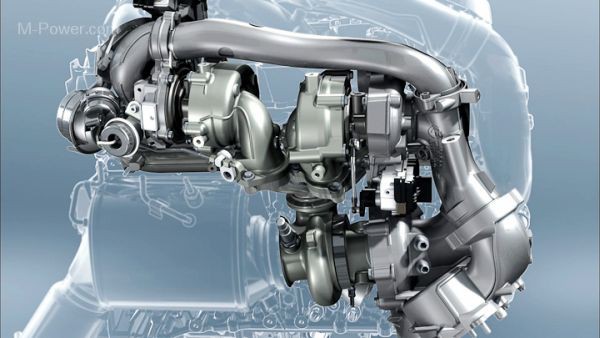
BMW shows the internal workings of its new triple-turbo diesel engine, which will be fitted to four upcoming models: the BMW M550d xDrive Sedan, the BMW M550d xDrive Touring, the BMW X5 M50d and the BMW X6 M50d.
In a few more days, BMW at the Geneva Motor Show the usual presentations will be made for its M line of diesel models, equipped with the six-cylinder triple-turbo engine. Of the four models that will carry this engine: the BMW M550d xDrive Sedan, BMW M550d xDrive Touring, BMW X5 M50d and BMW X6 M50d, the first two will go on sale in May in Germany, while the last two will be available in the summer, with the starting price of the M550d averaging 82,000 euros.
But what concerns us here is the use of the diesel engine with triple-turbo technology. To refresh your memory, these engines have a displacement of 3 litres, 381 CV and a maximum torque of 740 Nm, coupled to an 8-speed automatic gearbox. The top speed will be set at 250 km/h for all four models.
Below is a demonstration video of how the three turbos work, a true marvel of German technology in action:
http://www.youtube.com/watch?feature=player_embedded&v=cKc30-1xPZ4#!
Via | Bimmer Post


 Peugeot E-208 GTi: a battery-powered toy that revives the spirit of the 1980s sports cars
 New Lexus ES: luxury grows and goes electric
 First contact with the Dacia Sandero Hybrid 155: power and efficiency from €19,890
5 comentarios
Deja un comentario
No mencionaré el atentado a la deportividad que es esto del M diésel (un quiero y no puedo en toda regla), pero si he visto bien, ¿sólo llega hasta 5500 rpm?
¿te parecen pocas 5500rpm para un diésel? Si no me equivoco es el diésel de calle que tiene el régimen de giro mas alto.
Interesante el vídeo. Aunque no termino de entender el que empleen dos turbocompresores de geometría variable teniendo el motor dos.
Si no entendí mal tu duda, digamos que el primer turbo actúa ayudando al segundo en la entrada de aire, mientras que lo que hace el tercero es liberar más rápidamente a regímenes más altos. En suma, el que más importa de los tres es el segundo turbo.
Saludos
No me refería a eso.
Los turbos de geometría variable tienen un mayor régimen de utilización que los fijos, pero a cambio de ser mas complejos y menos fiables. Por eso no entiendo que en un motor con tres turbos, se hayan decantado por usar dos tgv.
Me parecen bastantes rpm para un diésel y pocas para un coche de carácter deportivo, pero es que había leído en otros blogs que iba a estirarse más. Sólo eso.