Dacia launches the “ADN” plan: more technology and electrification… and prices that are hard to beat
 Ramiro Mansanet @RamiroMansanet
4 May 2026
3 min.
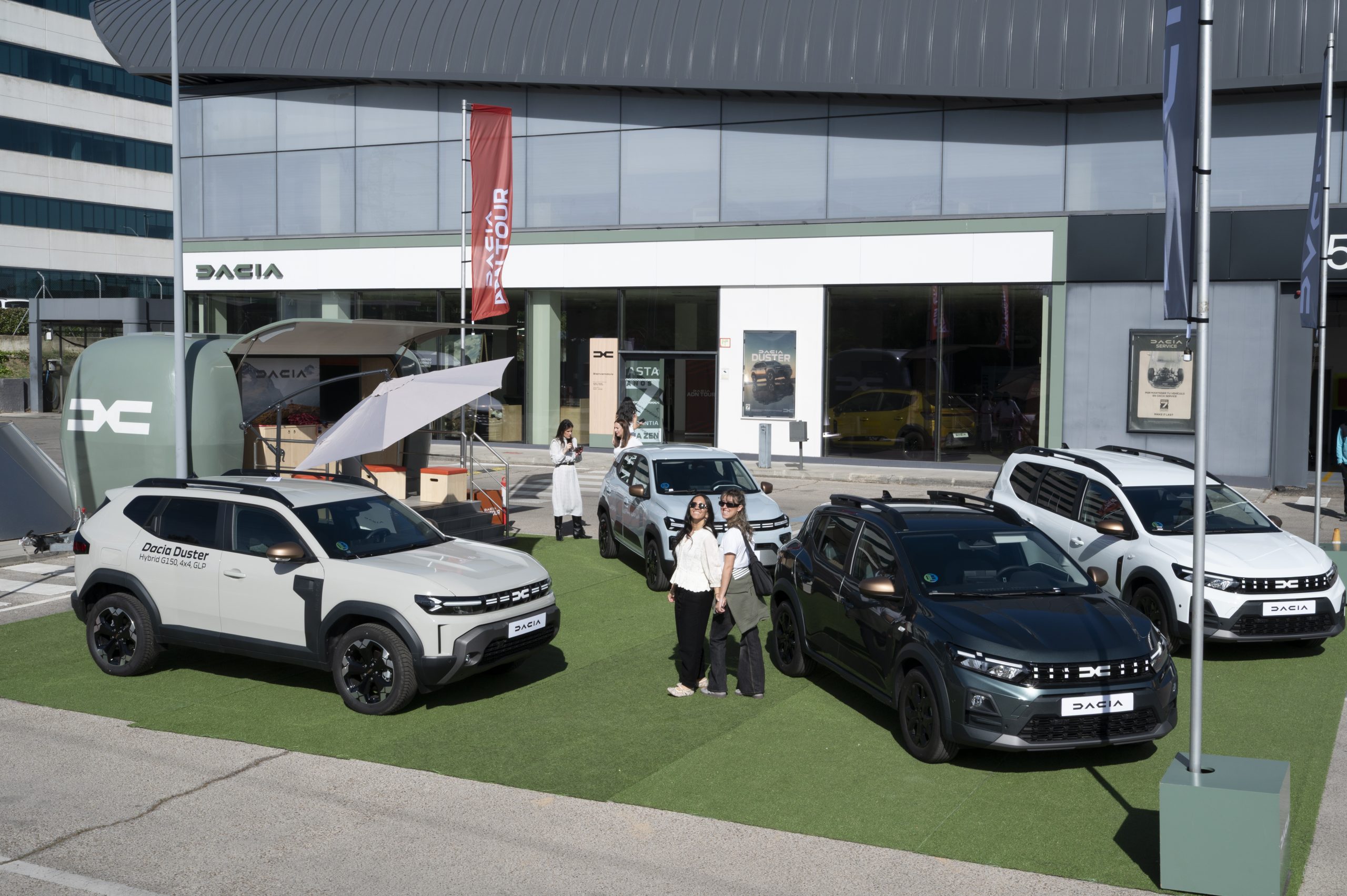
The brand presented this strategy in Madrid, kicking off a tour of 15 cities that will end in Valencia on June 9. And the message is clear: growing, yes, but without losing its essence. If anything defines Dacia it is its value for money, and that does not change. In fact, it is the axis of everything. The range is strengthened with well-known models such as Sandero, Sandero Stepway or Jogger, which remain pillars of the brand. The Sandero, for example, starts at 13,520 euros and remains one of the best-selling cars in Spain, while on the electric side the Spring remains one of the great selling points as a 100% electric city car with monthly payments from around 65 euros. The idea is that the customer pays only for what they need, and at Dacia they offer different levels of technology so everyone can choose exactly what they want, from using their phone as the multimedia system to the most complete screens.
More engine options and plenty of range
Another key to the plan is mechanical variety. Dacia does not commit to a single technology and bets on petrol, LPG, hybrids… and electric. LPG remains one of its great allies, with ranges of up to 1,590 km. Yes, you can cross half of Europe without stopping to refuel. Moreover, in the coming months we will see hybrid versions of models such as the Sandero or Stepway, further expanding the offer. At the top of the range, the Duster and Bigster aim high as the largest, most capable SUVs and, as always, with aggressive prices. In fact, Dacia claims it can be positioned up to 10,000 euros below some rivals. And keep an eye on one of the most striking points, because its 4x4s remain among the most affordable on the market, with options below 300 euros per month.
Technology also speaks Spanish
Behind all this there is a great deal of technological development, and a good part of it is done in-house. Specifically in Valladolid, where HORSE, the company in charge of propulsion systems and much more, employs more than 1,000 engineers. This is where the engines, gearboxes and hybrid systems are developed, which then go into models such as the Duster or Bigster. “The secret is in the powertrain”, they explained during the presentation. And it is not just a nice phrase: we are talking about complete hybrid systems, with combustion engine, electric motors, battery and electronics, that allow performance to be improved and consumption reduced. For example, some models already manage around 4.7 l/100 km, with power improvements of up to 10% compared with previous generations. And there is more thanks to the new bifuel petrol-LPG engines, electric rear systems to improve traction on snow or mud… and ranges exceeding 1,500 km.
Electrification, Dacia style
Dacia is also accelerating in electrification, but at its own pace. No rush, but no pause. The idea is clear: to offer technology when it is truly affordable, electrification at the right moment and at a fair price. The goal is that, in the coming years, two out of every three cars sold by the brand will be electrified (hybrid or electric). The “ADN” plan does not stop at the product: behind it is a very powerful sales network with more than 540 points in Spain, after-sales programmes such as Dacia Zen, which include up to 7 years of warranty, and customer loyalty exceeding 60%. Dacia is not changing its formula and remains faithful to the concept of more technology, more electrification and more options, while keeping what has made it strong: practical cars, sometimes simple, with prices that continue to make the difference.
Image gallery
 The seven finalists for the 2027 European Car of the Year (COTY) are exclusively electric
 Peugeot E-208 GTi: a battery-powered toy that revives the spirit of the 1980s sports cars
 New Lexus ES: luxury grows and goes electric
Deja un comentario