Everything points to Hyundai planning to produce the IONIQ 3 in Turkey
 Javier Cantagalli
13 September 2025
2 min.
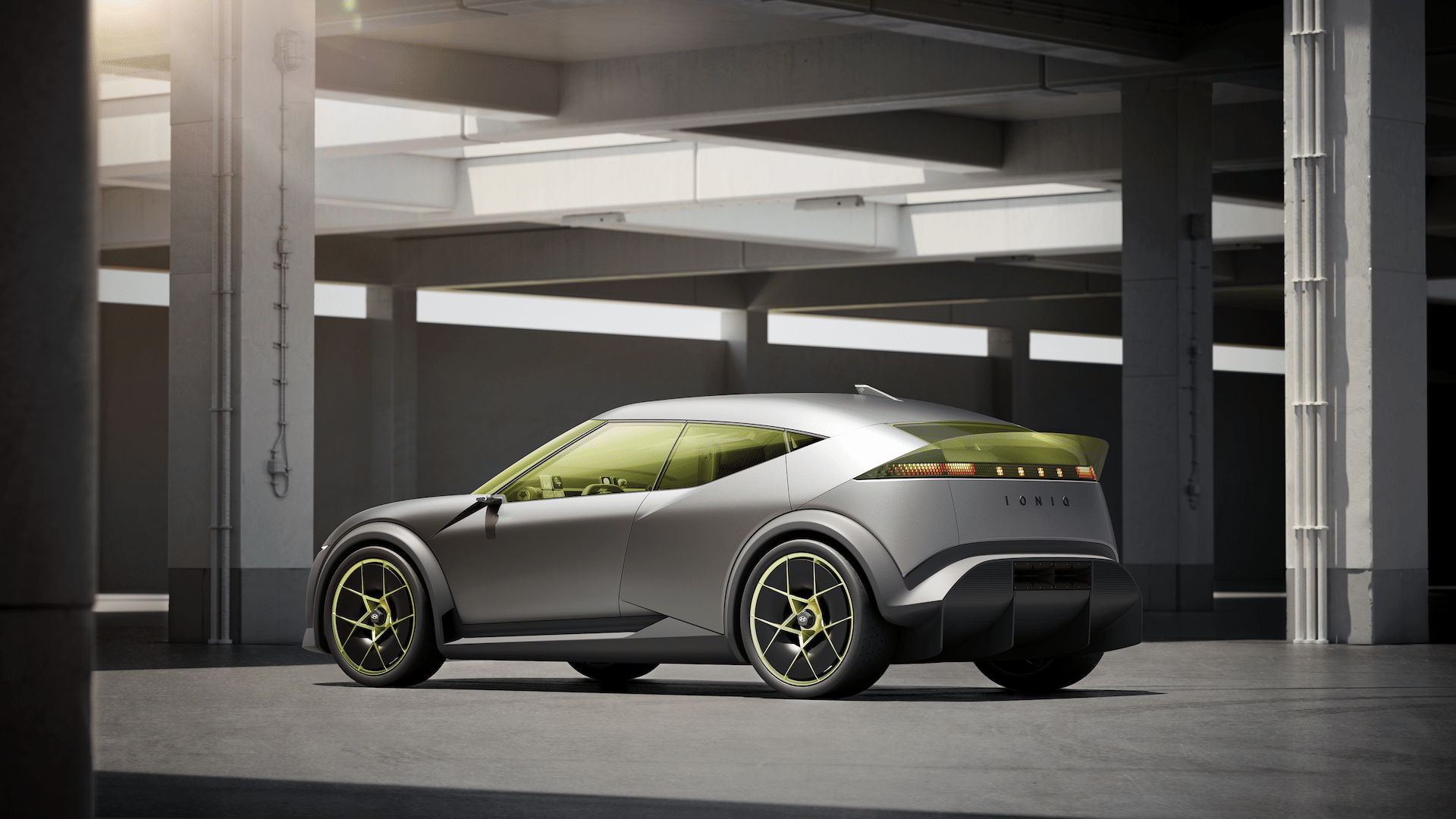
Production of the IONIQ 3 in Turkey will mark a milestone for Hyundai in Europe, strengthening its presence in the electric vehicle market and consolidating this country as a key production hub.
Although Hyundai has not officially commented on the matter, in an interview given to the media during the IAA Mobility, which is taking place this week in the German city of Munich, the general manager of Hyundai Turkey has confirmed that the future IONIQ 3 will be produced in the Ottoman country.
“Starting next year we will begin production of the IONIQ 3, the first electric model in the IONIQ range built in Europe, at our plant in Turkey.”
The truth is that this news is by no means unexpected, since it has been known since May that Hyundai planned to produce electric vehicles alongside combustion models at its Turkish plant in İzmit from August 2026. However, until now it had not been specified which model would be manufactured. In the same interview, this senior Hyundai Turkey executive also highlighted that the main markets for the future IONIQ 3 will be the United Kingdom, Germany and France.
As we already told you in a recent post, at the IAA Mobility in Munich Hyundai did not show the final production version of the IONIQ 3, but rather a prototype under the name Concept Three, which previews the design direction this model will follow. At 4.29 metres long, 1.94 metres wide and 1.43 metres high, this prototype has a clearly sporty appearance.
Other points of interest
As far as we know today, the IONIQ 3 will use the Electric-Global Modular Platform (E-GMP), a technology that allows various electric models, from segment A to E, to be produced on the same structure. It is not clear, however, whether it will have a 400-volt or an 800-volt architecture. In any case, considering that similar models from the South Korean group, such as the KIA EV3, EV4 and EV5, use 400-volt technology, everything suggests the same will happen in this case.
The İzmit plant, which currently produces the combustion models i10, i20 and the Bayon SUV for Europe, will soon be adapted for electric vehicle production. During this work, Hyundai plans to reduce the plant’s annual output to around 190,000 vehicles, a figure slightly below its maximum annual capacity, which stands at around 245,000 vehicles.


 Peugeot E-208 GTi: a battery-powered toy that revives the spirit of the 1980s sports cars
 New Lexus ES: luxury grows and goes electric
 First contact with the Dacia Sandero Hybrid 155: power and efficiency from €19,890
Deja un comentario