Captur Renault Hybrid Cars SUV
For these three reasons, I believe the new Renault Captur is one of the best SUVs in its category
 Antonio Roncero @roncero_antonio
4 April 2024
8 min.
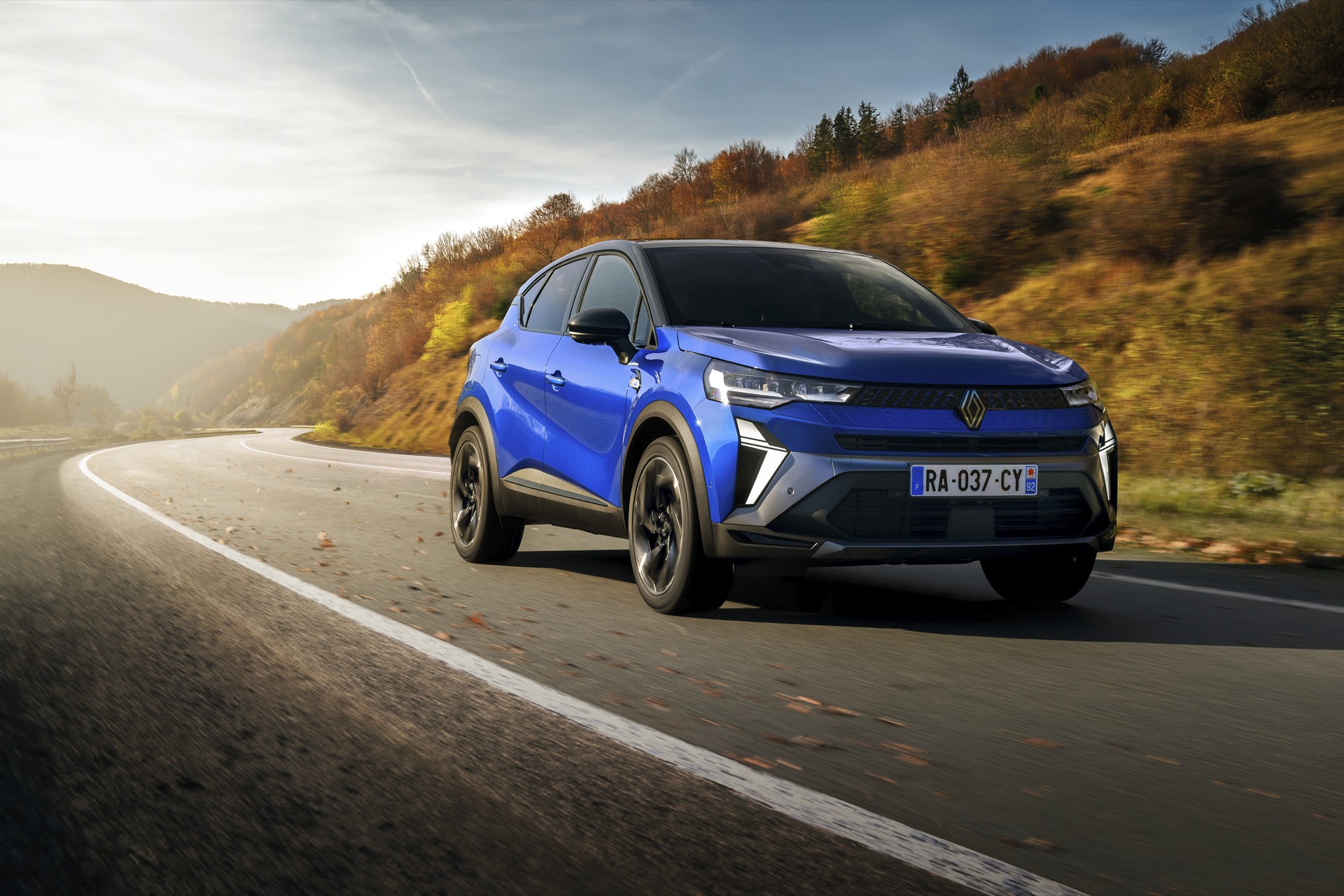
The Renault Captur has been on the market for ten years, and around 2.2 million units have been sold in more than 90 countries around the world. By the way, all of them were manufactured at the Renault plant in Valladolid, where the new Renault Captur will continue to be produced exclusively for the entire world; there you have it. And in the cycle of new product launches and range renewal that Renault is currently undergoing, it is now the turn of the urban SUV, which has been thoroughly renewed to remain, in my opinion, one of the best buying options in its category.
This could well have applied to the outgoing model too, although after seeing it in person at a first static presentation and learning all the details of what this new Captur offers, the truth is that the small SUV has all the aces up its sleeve to keep bringing joy to the brand. In fact, in recent years the Renault Captur has been the best-selling Renault model in Spain among private customers. And the urban SUV market keeps growing, now accounting for 50% of sales in the B segment.
But let’s get straight to the point, because I would like to summarise for you in three points why I believe the Captur is, now more than ever, one of the best cars in its category.
1.- Much more than an urban SUV
It is increasingly common to refer to B-segment SUVs as “urban SUVs”. But the reality is that the Captur is much more than that. In just 4.24 metres in length, the Captur offers a more spacious and versatile cabin than most compact cars, which these “urban SUVs” have been gradually taking market share from. Not only does it offer very comfortable front seats, which give absolutely no sense that you are driving a “small” car, but the space for rear passengers and luggage is very generous… and adjustable.
Of course, Renault retains the functionality of the sliding rear bench, which moves by no less than 16 centimetres, giving plenty of flexibility when configuring legroom for passengers or cargo volume, which ranges from 422 to 536 litres depending on the bench position for the petrol and LPG versions, and between 326 and 440 litres for the E-TECH Hybrid. In addition, if the previous Captur already stood out for its ease of handling in everyday driving and its touring abilities when tackling long journeys, the new Captur enhances these virtues with chassis improvements, including new settings for the power steering and new dampers.
Initially reserved for the E-TECH Hybrid versions with 18-inch wheels, the Extended Grip advanced traction control system is also offered, with specific snow and off-road modes, which essentially modifies how the ESP works. The Captur has never stood out for its “all-terrain” capabilities, and that will remain the case: it is an SUV… but for tarmac.
2.- The best in connectivity and the latest driver assistance
Inside, there is not as big a design leap as on the exterior, although the materials and upholstery have been renewed. But the highlight is the introduction, for the first time in this category, of the openR link multimedia system with integrated Google and all the advantages of the Android Automotive 12 operating system, along with the characteristic vertical touchscreen, which grows to 10.4 inches.
Connectivity is something that is becoming increasingly important to buyers when deciding on a new car, and having the advantages of the Google ecosystem is always a plus; I highlight this every time I test a car with this technology. Here, in addition to services such as Google Maps or Google Assistant, which even lets you change the driving mode using voice commands without having to scroll through menus or look for buttons, you can use up to 50 Google Play apps directly on the car’s screen. This allows you to enjoy Amazon Music or Waze, for example, without needing to use your phone or connect it to the car.
Other new features on the updated Captur relate to driver assistance. The new predictive assistant for hybrid driving helps you reduce consumption – in the case of the E-TECH Hybrid version – by anticipating the route using connected navigation data up to seven kilometres ahead, so that the battery management system makes the best use of electric energy according to the journey. Also new on the Captur is the Active Driver Assist, the active driving assistant that combines the intelligent adaptive cruise control function with the lane keeping system and Stop & Go. It is a feature that is often underappreciated… until you try it and see the safety and comfort it provides, especially on long motorway journeys.
3.- Engines: petrol, LPG, MHEV, E-TECH hybrid…
And we come to another of the Captur’s strong points: its engine line-up, which Renault calls its “multi-energy offer”. There are no novelties here, since diesel engines and the plug-in hybrid variant of the Captur had already disappeared from the range. In the first case, diesel engines account for only around 8% of this category, and as for the plug-in hybrid, Renault decided that its E-TECH Hybrid technology is already so efficient that, in this category, the price premium of a PHEV is not justified.
That being the case, the range retains the 1.0 TCe 90 hp petrol engine as the entry-level variant and the only one in the range without an ECO badge. The version of this same engine adapted to run on LPG, producing 100 hp, also remains a good option for those who want to cover kilometres as cheaply as possible. Above these, there are two versions of the 1.3 TCe engine with mild-hybrid technology: one with 140 hp paired with a six-speed manual gearbox, and another with 160 hp and a dual-clutch gearbox.
https://www.youtube.com/watch?si=sOJMfmeQOFPzbwfx&v=e1hPUnct9WE&feature=youtu.be
But the real “star” is the E-TECH Full Hybrid, which receives the upgrades already introduced on the Clio E-TECH, increasing power to 145 hp and improving efficiency to homologate an average consumption of between 4.7 and 4.9 l/100 km. Now, with the E-SAVE button on the dashboard, the system keeps the battery charge above 40%, so that it can be held in reserve to have that extra energy the electric motor provides when tackling a mountain pass.
Besides these three points, there is no doubt that the new Captur has many other virtues, inherited and even enhanced from the outgoing model, which I do not want to overlook. The design, for example, has always been one of its strong points. And now, especially with the new front end, I think it has gained in presence and style; it looks “more like a car”. Of course, one of the Captur’s trademark features since its launch remains, the option of a two-tone paint scheme with the roof and exterior mirrors in three contrasting colours, which are now grey, black or a new pearl grey. In total, there are up to 14 possible configurations.
Another additional attraction of the new range is the introduction of the esprit Alpine trim version, which Renault is rolling out across all its models. With a sporty focus in terms of exterior and interior styling, with clear nods to the Alpine brand, and for the first time on the Captur with 225/45 tyres on 19-inch wheels, it is paired with the two most powerful engines. As for the price, we will soon know how the range is configured for Spain, although everything points to the favourable balance between what you pay and what you get in return remaining one of the new Captur’s main weapons in staying a “best seller”.
Related information
- We test the Renault Captur hybrid, a very interesting SUV
- Renault Clio E-TECH esprit alpine: the keys to the eco urban sports car
- Renault Austral E-TECH Hybrid: the reasons why this SUV is one of our favourites
New Renault Captur – Image gallery
Technical specifications of this car


 Peugeot E-208 GTi: a battery-powered toy that revives the spirit of the 1980s sports cars
 New Lexus ES: luxury grows and goes electric
 First contact with the Dacia Sandero Hybrid 155: power and efficiency from €19,890
Deja un comentario