IS Lexus Sedans Sports Cars Photos Tests
Lexus IS 250 F-Sport, road test (Design, equipment and verdict)
 Diego G. Moreira
14 November 2012
4 min.
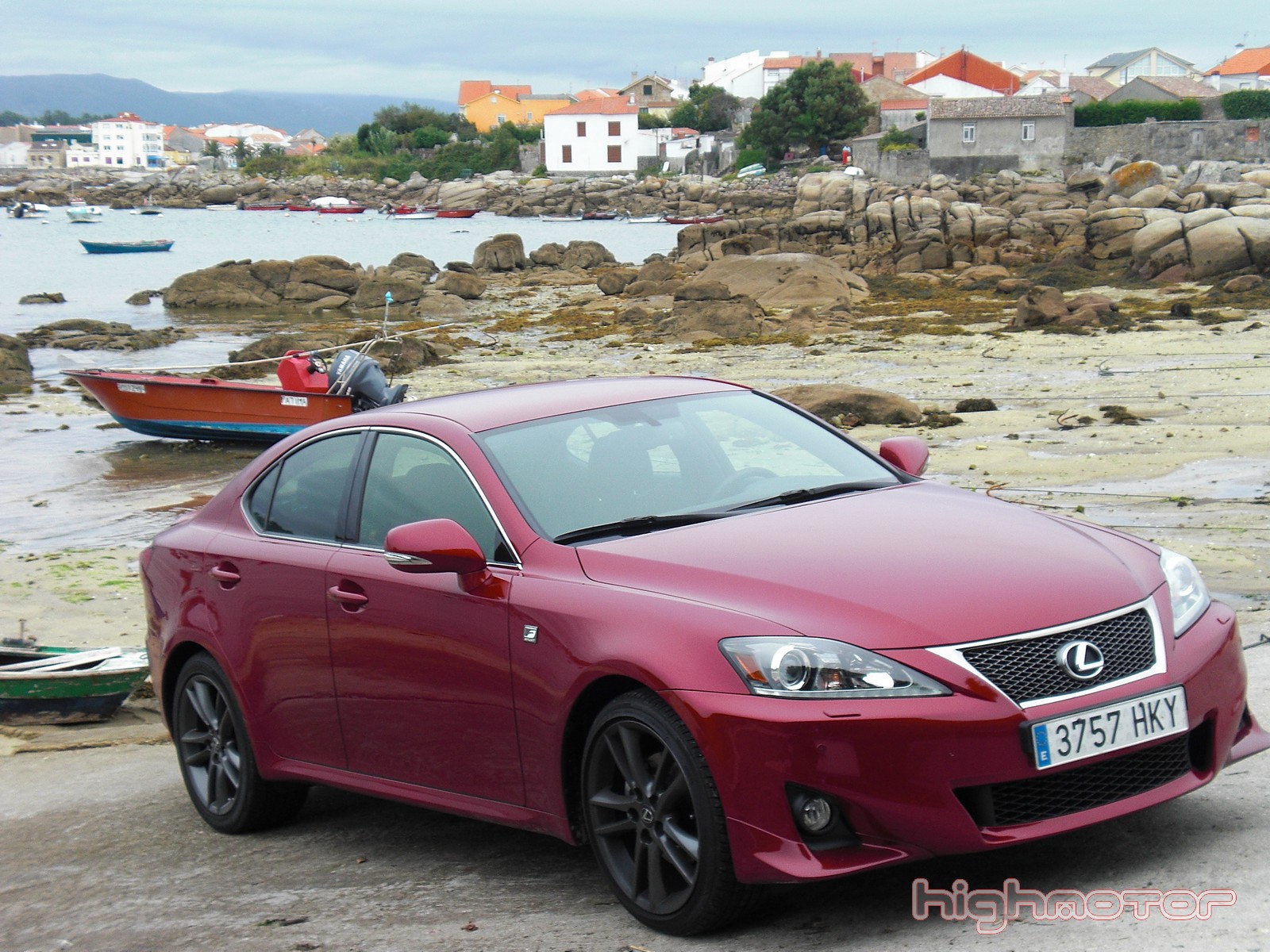
Second part of the road test of the Lexus IS 250 F-Sport. Now we analyse the design, finishes, interior, equipment and prices of this Japanese saloon with 208 CV.
A few days ago we started the road test of the Lexus IS 250 F-Sport, a model with plenty to tell us, especially in terms of driving feel and performance. Under the bonnet it hides a 2.5-litre V6 petrol engine with 208 CV.
Performance, handling and fuel consumption are the elements we analysed in the first part of the test. The car’s sporty character is worth highlighting, but it relies on a naturally aspirated engine, more traditional and above all very smooth.
Now in this second part we are going to analyse, in a concise way, the rest of the usual points in a road test. We will do it faster than usual, because the car is identical inside and out to the Lexus IS 200d F-Sport we tested a few months ago. So we refer you to that test to delve deeper into the design, interior or equipment sections.
Sporty exterior, refined interior
The F Sport trim gives a very distinctive touch to a model that is a veteran on the market, but by bringing out its sportier side it manages once again to attract a great many glances on our streets. From the larger bumpers to the 18-inch black alloy wheels, all of these are elements of the F Sport trim.
Inside, it blends sportiness and quality in equal measure in its finishes. As soon as we sit behind the wheel we are greeted by comfortable seats with mixed leather and suede upholstery. The sportier side shows in the good lateral support, while the elegant side comes from the different textures of the seats, making them, in short, very comfortable for long journeys.
The rear seats follow the same line as the front ones, with enough space for feet and head. However, the raised transmission tunnel reduces comfort in the middle seat. As a practical detail, there are rear air vents.
The quality of the dashboard is beyond doubt, it is hard to find a hard or unpleasant plastic to the touch. The leather-wrapped steering wheel with white stitching is a nice detail, together with the seat upholstery, of the F Sport trim.
Equipment
(See Lexus IS200d F-Sport test)
Again, to delve deeper into the equipment elements, we recommend the test of the Lexus IS200d F-Sport, which had the same features as our current protagonist. Regarding safety equipment, we must not forget that it has five stars in Euro NCAP and features a knee airbag, a good safety addition for passengers.
With the F Sport trim, there are few optional extras beyond the navigation system or the sunroof. Bi-xenon headlights, air conditioning, the comprehensive speaker system (with very high sound quality), Bluetooth, LED rear lights, LED daytime running lights, keyless start and entry, among other features, are standard.
If we look at the base equipment and the starting price (34,850 euros), it is hard to find a premium saloon with this level of equipment at that price.
Prices
- Lexus IS200d Premium 34,850 euros
- Lexus IS 250 Premium 42,550 euros
- Lexus IS 250 Luxury 45,950 euros
- Lexus IS 250 F-Sport 48,100 euros
- Lexus IS 250 President 55,200 euros
General Verdict
To recap, we have a premium saloon with a 2.5-litre V6 petrol engine with 208 CV, rear-wheel drive and a sporty, eye-catching exterior design. Add the final price of 48,100 euros and the IS 250 is certainly not an ideal vehicle for those looking to save money.
In its favour are the engine and its behaviour, it is a noble car on the road, extremely smooth and comfortable, and we always have the confidence of a good response when we press the accelerator. The price of the F Sport trim is harder to justify, despite the complete equipment, although it is hard to find a rival with this V6 engine and the level of equipment of the Lexus.
In short, it is a car that stands out, for its exterior and its engine, and it is geared towards enjoying driving. It is perfect for someone who is not constantly watching fuel consumption and who wants to feel the smoothness and strength of a V6 block, which is very different from what efficient four-cylinder engines offer.
Photos | Diego G. Moreira


 Peugeot E-208 GTi: a battery-powered toy that revives the spirit of the 1980s sports cars
 New Lexus ES: luxury grows and goes electric
 First contact with the Dacia Sandero Hybrid 155: power and efficiency from €19,890
Deja un comentario