Hyundai Tucson Hybrid Cars ECO SUV
New Hyundai Tucson: larger, more technological and with hybrid versions of up to 292 CV
 Antonio Roncero @roncero_antonio
5 October 2026
9 min.
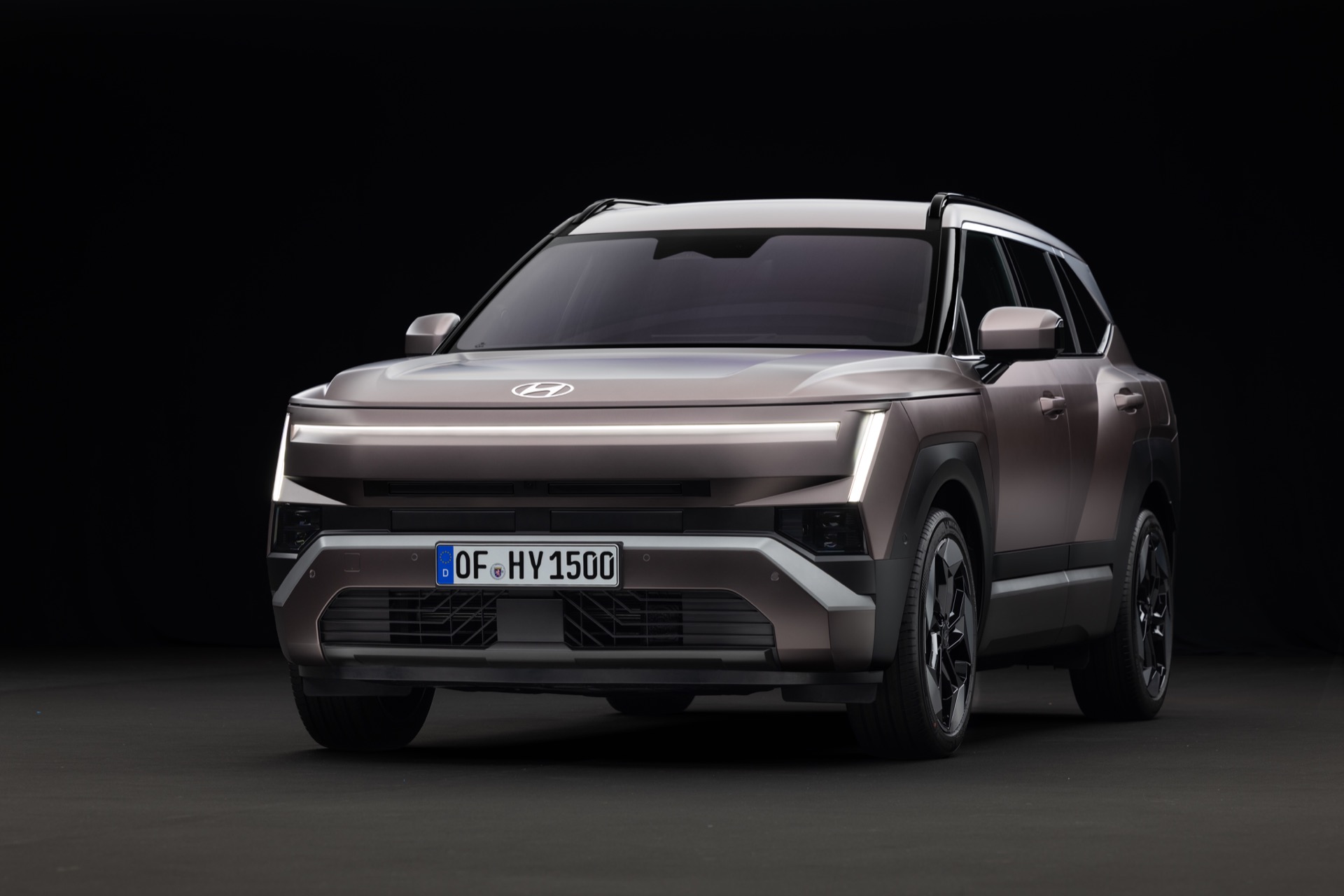
The new Hyundai Tucson grows in size and features a roomier, more technological and more practical interior. The range includes petrol, hybrid and plug-in hybrid versions, with up to 292 CV and an estimated electric range of 81 km in the PHEV.
The Hyundai Tucson enters a new generation, and it does so with a thorough overhaul of design, technology, interior space and engine range. The Hyundai SUV, one of the brand’s most important models in Europe, leaves behind the “Parametric Dynamics” design era of the previous model and now adopts the new design language known as “Art of Steel”, an aesthetic philosophy that aims to convey more solidity, presence and sophistication.
The change is radical. The new Tucson also grows in every dimension, features a completely redesigned interior, incorporates the new Pleos Connect infotainment system based on Android Automotive OS, and maintains a very wide range of engines, including petrol, mild-hybrid, hybrid and plug-in hybrid versions.
Hyundai has not yet released all the specific details for the Spanish market, but it has revealed the main features of the European range. As before, the Tucson intended for Europe will be built at the Hyundai plant in the Czech Republic, a notable detail for a model that has established itself as one of the benchmark SUVs in the C segment.
New “Art of Steel” design
The most obvious change is on the exterior. The new Tucson abandons the sharper angles of the previous generation in favour of a more robust, horizontal look. Hyundai defines this new design language as “Art of Steel”, an idea that plays with tension in the surfaces, pronounced wheel arches and a body with more muscular proportions.
The front features a new light signature called H-Edge, which combines indirect central lighting with a more defined edge design. The aim is to reinforce the car’s visual width and create a more planted presence on the road. At the rear, the new Prism light clusters have a three-dimensional structure that gives them a distinctive light signature. Depending on the version, the new Tucson may also be fitted with Micro Pixel Lighting, made up of 25,600 individual LED pixels. This system allows more precise control of the light beam and creates welcome and farewell animations.
The new Tucson measures 4.56 metres long, 1.90 metres wide and 1.67 metres high. Compared with the previous model, it is 35 mm longer, 35 mm wider and 20 mm taller. The wheelbase also increases to 2.72 metres, which improves interior space. The colour range will include new shades for Europe, such as Moonlake Blue Metallic, Moonlake Blue Matte, Rich Walnut Metallic, Rich Walnut Matte and Ignite Red.
A roomier interior with more physical controls
The interior has also been completely changed, with a design that seeks to bring a feeling closer to a furnished space into the cabin, with soft surfaces, horizontal shapes and a less cluttered layout. The dashboard adopts a two-level architecture. The upper section is reserved for a clean, horizontal visual line, while the lower area integrates an open storage tray. The instrumentation is displayed on a slim 9.9-inch screen positioned above the steering wheel, and depending on the version it can be complemented by a head-up display projected onto the windscreen.
One of the most interesting decisions is that Hyundai has not completely eliminated physical controls. Beneath the central screen a row of buttons is kept for everyday functions, a more practical solution than concentrating everything in touch menus. The central screen can be 12.9 or 17 inches, depending on the version. The Pleos Connect infotainment system uses Android Automotive OS and is complemented by Gleo, an AI-powered voice assistant capable of better understanding context and accessing real-time information.
The centre console has also changed. The gear selector moves to the steering column, freeing up space between the seats. In addition, there are two 15 W wireless charging pads for mobile phones and four 100 W USB-C ports distributed around the cabin, capable of charging higher-power devices such as tablets or laptops.
More passenger space and up to 695 litres of boot space
The increase in size is noticeable in the interior space. The new Tucson offers more room for the head, legs and shoulders. Hyundai quotes 1,038 mm of headroom in the front seats, 1,002 mm of legroom in the second row and 1,470 mm of shoulder width at the front. Access to the rear seats also improves, as the door opening angle rises from 73 to 83 degrees. This is a particularly useful detail in a family SUV, both for fitting child seats and for making it easier for passengers to get in and out.
The rear seats can feature a 4:2:4 split and 150 mm of longitudinal sliding. Depending on the version, the driver can have an Ergo Motion seat, with a seven-cell pneumatic system for lumbar and lateral support, plus a massage function. Relaxation Comfort seats will also be offered for driver and front passenger, with one-touch reclining to improve comfort during stops. The boot reaches up to 695 litres according to the European VDA standard, a very notable figure for an SUV in this segment. Towing capacity will also be significant: up to 1,910 kg in the hybrid version and up to 1,810 kg in the plug-in hybrid.
Engine range: petrol, hybrid and plug-in hybrid
The initial range of the new Hyundai Tucson maintains a broad line-up of engines. There will be petrol versions, 48-volt mild-hybrid petrol versions, self-charging hybrids and plug-in hybrids.
The entry version will use the 1.6 T-GDI petrol engine with 150 CV and 250 Nm of torque. It can be combined with a six-speed manual gearbox or with the 48 V mild-hybrid system and a seven-speed dual-clutch automatic.
Above it sits the Tucson HEV, with a self-charging hybrid system. It combines the 1.6 T-GDI engine with an electric system and a 1.49 kWh battery to deliver 245 CV and 380 Nm of torque. It will be available with front-wheel or all-wheel drive and a six-speed automatic gearbox. In the 2WD version, acceleration from 0 to 100 km/h is 8.3 seconds.
The most powerful variant will be the Tucson PHEV. Here, the plug-in hybrid system delivers 292 CV and 380 Nm of torque. The battery has a 17.1 kWh capacity and allows an estimated electric range of up to 81 km with 17-inch wheels, still pending final homologation. The on-board charger is 7.2 kW AC. The Tucson PHEV can also be fitted with all-wheel drive. In this configuration, it claims acceleration from 0 to 100 km/h in 7.9 seconds.
Another technological novelty of the hybrid Tucson is HEV Stay mode, a function that keeps certain vehicle systems active with the combustion engine switched off. Thanks to this mode, items such as air conditioning, the audio system or device charging can keep working during a stop without starting the petrol engine. The idea is to offer an experience closer to that of an electric car when the vehicle is stationary, with less noise and greater comfort inside the cabin. It is especially useful during breaks on a journey, waiting times, stops with children or situations where you want to stay in the car while keeping the climate comfortable.
More connectivity and parking assistants
The new Tucson comes with extensive technology. In addition to the Pleos Connect system, over-the-air (OTA) updates will keep certain vehicle and multimedia functions up to date. It can also be equipped with the Hyundai Digital Key 2 digital key, a 12-speaker Bang & Olufsen sound system, Mood Lamp interactive ambient lighting and a digital rear-view mirror, which provides a rear camera view when the rear window is blocked by passengers or luggage.
For parking aids, Hyundai introduces systems such as Memory Reverse Assist, which can record up to 50 metres of forward manoeuvres at speeds of up to 30 km/h, and then help the driver reverse along the same path. The Remote Smart Parking Assist will also be available, along with a low-speed collision avoidance assist for manoeuvres and, in 4WD versions, the Ground View Monitor, which shows the immediate surroundings and the area beneath the vehicle.
For those who tow, the Tucson can be equipped with Trailer Reverse Assist, designed to make reversing with a trailer easier. In terms of safety, the new Tucson features seven airbags, including a central side airbag between the front occupants. The bodyshell structure uses hot-stamped high-strength steel and reinforced centre pillars to improve energy management in the event of an impact.
The Hyundai SmartSense assistance suite includes systems such as Forward Collision-Avoidance Assist 2, Highway Driving Assist 2, Intelligent Speed Limit Assist and navigation-based intelligent cruise control. It also incorporates a camera-based in-cabin monitoring unit capable of watching the driver’s attention and detecting signs of drowsiness. To these are added functions such as child presence detection and rear occupant alert, two systems aimed at reinforcing safety in a model with a clear family focus.
A more complete and more technological Tucson
The new Hyundai Tucson represents a major leap over the previous generation. It grows in size, adopts a much more robust design, improves interior space, offers a large-capacity boot and features a more technological interior, without giving up physical controls for essential functions.
The engine range keeps one of its key strengths: variety. From the 1.6 T-GDI petrol to the 292 CV plug-in hybrid, the Tucson will continue to offer alternatives for very different driver profiles, with electrified versions taking centre stage.
Pending details on prices, arrival date in Spain and the final composition of the range, the new Tucson is presented as a very ambitious evolution of one of the most important compact SUVs in the European market.
Hyundai Tucson – Image gallery
Technical specifications of this car

 Peugeot E-208 GTi: a battery-powered toy that revives the spirit of the 1980s sports cars
 New Lexus ES: luxury grows and goes electric
 First contact with the Dacia Sandero Hybrid 155: power and efficiency from €19,890
Deja un comentario