GWM ORA 5 1.5T 160 CV test drive: a petrol SUV that surprises, but the hybrid costs only 2,000 euros more
 Antonio Roncero @roncero_antonio
5 October 2026
13 min.
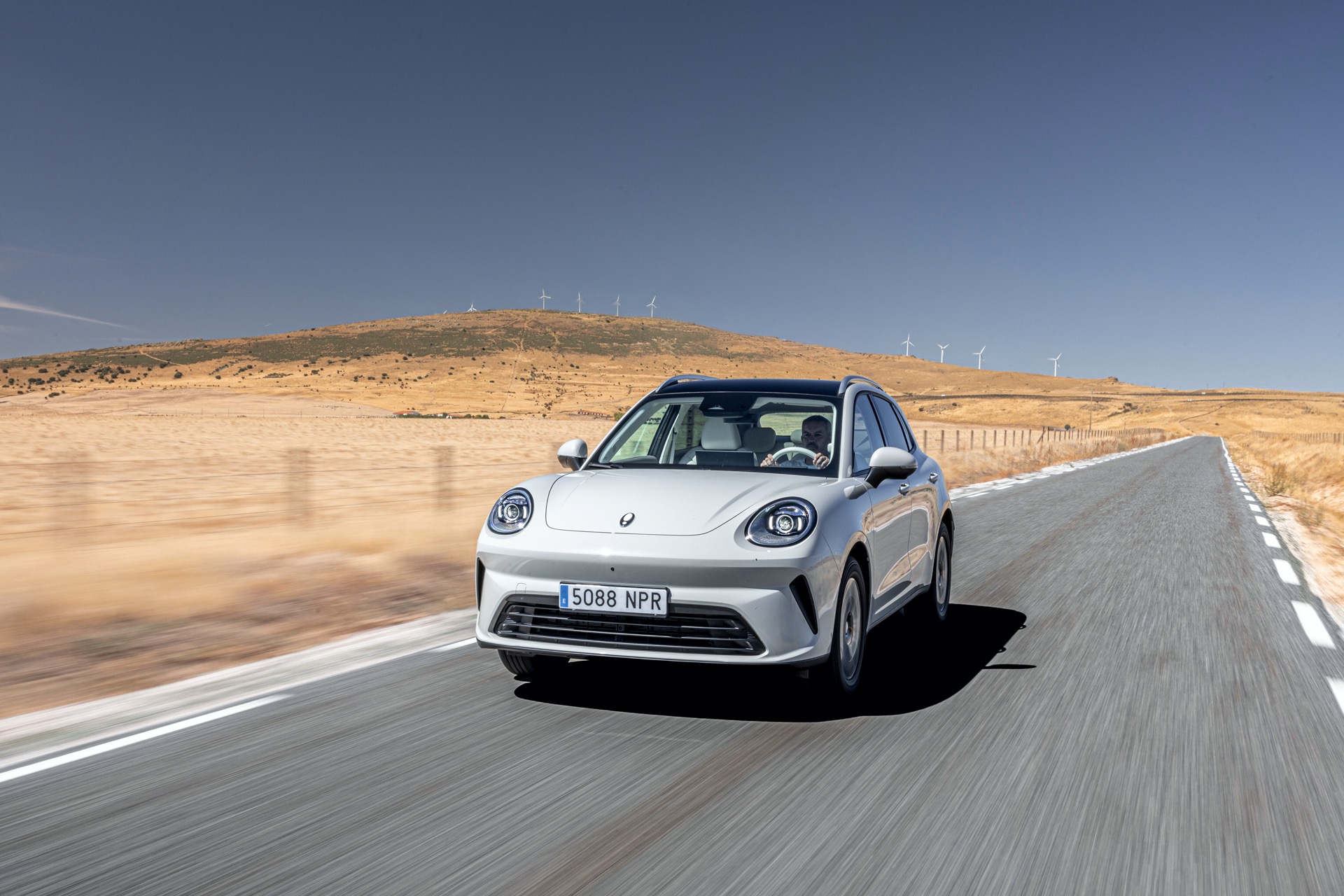
We test the GWM ORA 5 with its 160 CV 1.5T petrol engine, which surprises with its build quality and dynamic behaviour, although its consumption and the mere 2,000 euros that separate it from the HEV make choosing it difficult.
GWM has not exactly chosen the easiest path to kick off this new chapter in the Spanish market. Its first model, the ORA 5, lands in one of the most competitive segments, that of compact SUVs, and does so with a particularity that is becoming less and less common: it can be chosen with three completely different propulsion technologies. There is an electric ORA 5 with 204 CV, a full hybrid with 223 CV and the version we have tested on this occasion, equipped with a 1.5 turbo petrol engine producing 160 CV, with no electrification of any kind and, therefore, with a C environmental label from the DGT.
There are several aspects in which it surprises for the better. The first is its design, because it does not look like a car built following the same pattern as many of the new SUVs arriving from China. It is true that it provokes mixed feelings, almost 50/50 between those who like it and those who don’t. But it cannot be denied that it is different and has its own personality. The second is the perceived quality of the interior. But, above all, I am most struck by its dynamic behaviour: GWM says it has specifically worked in Europe to tune the chassis, suspension and steering to our roads and our tastes, and I can confirm that it shows.
That said, not everything is perfect. The engine more than meets requirements in terms of performance and combines very well with the dual-clutch automatic gearbox, which comes as standard. But real-world consumption falls well short of what one would expect given its power and size. And this version also has an extra “problem”: within its own range there is a hybrid ORA 5 which, for 2,000 euros more at the same trim level, has more power, better performance, an ECO label and consumes considerably less. But let’s take things one step at a time.
A design that doesn’t leave you indifferent
At 4.47 metres long, 1.83 metres wide and 1.64 metres high, the GWM ORA 5 falls squarely into the territory of compact SUVs. It is not a small car, but it does not give an impression of excessive bulk from the outside either. What it does convey is personality. The front features very rounded shapes, with a raised bonnet, well-defined wheel arches, distinctive oval headlights and large wheels. Some may find a familiar inspiration in the way the front has been resolved, but seen as a whole the ORA 5 has a fairly strong identity.
And if the front is somewhat peculiar, the surprise comes at the back. The rear lights are integrated into the lower part of the rear window, leaving a very clean sheet-metal surface on the tailgate, which is unusual. It is a solution that completely changes the visual perception of the car and one that takes some getting used to. The wheels are 18 inches across the entire range, and there are also roof rails and darkened rear glass. The colour offer also includes bolder tones than usual – some even too bold – and a matt paint option for the top trim. The colour of the unit you see in the images is one of the ones that suits it best.
A more conventional interior, but well resolved
Once you step inside, the formula is considerably more familiar, although here too there are details that make a difference. The dashboard has a very horizontal design, with 10.25-inch digital instrumentation in front of the driver and a large 14.6-inch central multimedia screen. The centre console is of the floating type, leaving a generous space underneath, and around it there are enough storage compartments for everyday use.
There are cup holders, a central armrest and a surface for placing objects with an anti-slip finish that stops phones, keys or anything else from sliding from side to side as soon as you take a couple of bends. It may seem a minor detail, but it is the kind of thing you appreciate when you use a car every day. I also liked some design elements, such as the speakers or the button panel located below the screen for certain functions. Because although many operations are carried out through the multimedia system, GWM has kept some physical controls. And that, at a time when there seems to be a race to eliminate every button from the dashboard, always earns points. Even more so here, when those buttons form part of the interior design and add an extra touch of personality.
The sense of quality is also above what one would expect for the price. There are soft-touch materials in visible areas, with textile coverings and pleasant surfaces to the touch. The fittings convey solidity, and even the sound of the doors closing contributes to that feeling of a well-built car.
In terms of space, the ORA 5 makes good use of its 4.47 metres of length. There is plenty of room in the front and it is easy to find a comfortable driving position. In the back, two adults can travel without problems, both in terms of legroom and headroom. Three occupants will depend, as always in a car of this size, on their build and the length of the journey. The boot has a capacity of 422 litres, a decent figure, though not especially outstanding for an SUV of these dimensions. With the rear seatbacks folded down, it reaches 1,120 litres.
Plenty of screen, and a multimedia system that works well
When all the important functions of a car go through a screen, two issues become fundamental: that the system responds quickly and that the menus are easy to understand. The multimedia system works very smoothly, has clear graphics and allows quick access to the main functions. From the screen you can control practically everything, including elements such as opening and closing the sunshade of the panoramic roof on versions that include it.
You can also configure certain functions through a shortcut on the steering wheel. I have set that button to access the driving modes directly, because it lets you switch between Eco, Normal, Sport and Snow without having to go to the screen. During the test I also had no problems with wireless Apple CarPlay, which worked reliably.
The instrumentation also deserves a mention, because beyond what we are used to seeing in most Chinese cars, which offer a fixed screen with no configuration options and often very small text, here there are different display formats, including one with a speedometer and rev counter clearly represented, much closer to traditional instrumentation.
Another element that works especially well is the peripheral camera. The image quality and resolution are good, and the 360-degree view is genuinely useful for manoeuvring. And the climate control, which sometimes takes a back seat when talking about cars full of technology, also struck me as particularly effective. The voice control system also impressed me as practical: you can ask it to tune the radio, open the sunroof blind, raise or lower the cabin temperature or open or close any window to a set height, among many other things.
1.5 turbo engine with 160 CV and a seven-speed automatic gearbox
The star version of this test uses a four-cylinder 1.5 turbo petrol engine producing 160 CV and 270 Nm of torque. The transmission is a dual-clutch automatic with seven speeds, always front-wheel drive.
On paper, the figures are sufficient for the car’s brief: it accelerates from 0 to 100 km/h in 8.9 seconds and reaches 190 km/h. And on the road the impression matches these numbers. It is not a car that aims to deliver sporty sensations, but the engine responds well from low revs and climbs through the range with ease. It has enough strength to move the ORA 5 with ease, allows overtaking with confidence, and there is no need to keep it high in the rev range to get a response.
The automatic gearbox helps a great deal here. It is not a “lightning bolt” when changing gear, but the dual-clutch box normally selects the right ratio and makes driving the car very easy. In automatic mode there is good harmony between engine and transmission and, moreover, when you demand acceleration it downshifts quickly enough to make the most of the 1.5 turbo’s sweet spot.
The engine also doesn’t run roughly or sound unpleasant as it revs up. What I do miss are paddle shifters behind the steering wheel. In a car where the combination of engine and gearbox works so well, having the option to select a gear manually on a winding road, when preparing an overtake or when tackling a descent would have added one more layer of control. There is also no conventional lever to select gears sequentially, so the driver’s involvement in this area is very limited.
A Chinese SUV that finally stands out for its handling
We come to one of the aspects that surprised me most about the ORA 5. GWM explains that it has carried out a specific tuning for Europe. We have heard this from other Chinese manufacturers before, but in this case, you can feel it behind the wheel.
The ORA 5 uses independent MacPherson strut suspension at the front and a multi-link arrangement at the rear. The suspension has a rather firm setup, but it does not feel harsh. It controls body movements well and at the same time retains good ability to absorb road irregularities, with a good balance between firmness and comfort, and without that sensation of disconnection between steering, suspension and chassis that in some situations, especially on winding roads, we still find in some models originally designed for other markets.
On secondary roads you can enter a bend with confidence. The body settles progressively, the car holds its line well and, importantly, it shows no strange reactions if you have to correct mid-bend. It brakes well, keeps its composure during rapid direction changes and gives an impression of solid overall cohesion. Of the Chinese cars of this size I have tried recently, it is one of those that surprised me most for its dynamic behaviour.
The steering still has room for improvement. It could be somewhat more precise and convey a bit more information about what is happening at the front wheels, but you can adjust its assistance or let it adapt to the selected driving mode. My recommendation is to use the Sport setting, which offers a little more weight and feels more natural, especially outside the city.
Real consumption vs homologated consumption
So far, the petrol version’s balance would be very good. But we come to its main weak point. GWM homologates a combined WLTP consumption of 6.9 l/100 km. That’s not bad, but in practice it is not easy to get close to that figure in normal use. During the test, the usual figure was closer to 8.5 l/100 km. And consumption is especially penalised when you use the car on very short urban journeys, precisely the trips that make up the everyday routine of many families: taking the children to school, going shopping, driving a few kilometres and switching off the engine before it reaches its operating temperature.
The situation clearly improves on the open road, but it requires smooth driving and use of Eco mode, which affects throttle response. Then you can drop to around 7.5 l/100 km, a much more reasonable figure. But even then it is not a particularly efficient car for its size and power. And this matters even more because there is a hybrid variant within the same range, which is the petrol ORA 5’s biggest rival. The HEV costs around 2,000 euros more, and as I mentioned, it is more powerful, offers greater driving pleasure and better performance, and uses… between 2 and up to 3 l/100 km less, depending on whether you do little or a lot of city driving.
Explore or Advance: is it worth paying more?
The ORA 5 is sold in two trims, Explore and Advance, and even from the entry version the equipment is quite complete.
The Explore includes as standard full LED headlights and lights, 18-inch wheels, rain and light sensors, darkened rear glass, keyless entry and start, electrically adjustable driver’s seat, heated front seats and automatic climate control. In terms of technology there is the 14.6-inch multimedia screen, 10.25-inch digital instrumentation, connected navigation, wireless Apple CarPlay and Android Auto, OTA remote updates and a six-speaker sound system.
Driver assistance is not stinted either. There are seven airbags, adaptive cruise control, lane keeping and centring assistants, blind spot detection, cross-traffic alerts, automatic emergency braking, front and rear sensors and the aforementioned 360-degree camera.
The Advance trim adds some elements that initially seem dispensable: an electric tailgate, a 1.65-square-metre panoramic roof, synthetic leather upholstery, a heated steering wheel, electric and ventilated front seats, driver memory, 64-colour ambient lighting, a 50 W wireless charger and a nine-speaker sound system. The “step up” costs 2,550 euros, and considering the extra equipment, it may make sense for anyone who especially values comfort.
Conclusion: the petrol ORA 5 goes very well, but I would make the effort for the hybrid
What I like about the ORA 5 is that it doesn’t simply rely on the usual formula of lots of equipment, lots of screen and a competitive price. Here there is chassis work that is noticeable from the first kilometres. And the performance of the engine and transmission combination is also convincing, with the dual-clutch automatic gearbox as standard.
Inside it is well finished, has enough space, a fast multimedia system, an excellent peripheral camera and a very complete standard equipment list. Its weak point is that it consumes more than expected. So, unless there are one-off offers that widen the gap, for 2,000 euros more, the ORA 5 HEV offers 223 CV, better performance, more torque, an ECO label and a clearly lower consumption, with the only drawback being a few litres less boot space. I would make the financial effort to go for the hybrid.
GWM Ora 5 – Image gallery


 Kia offers an electric range of 10 models, 50 versions and 400 possible combinations
 The seven finalists for the 2027 European Car of the Year (COTY) are exclusively electric
 Peugeot E-208 GTi: a battery-powered toy that revives the spirit of the 1980s sports cars
Deja un comentario