Cayenne Porsche Electric Cars SUV
The new Porsche Cayenne 2026 will come with optional wireless charging
 Javier Cantagalli
4 September 2025
4 min.
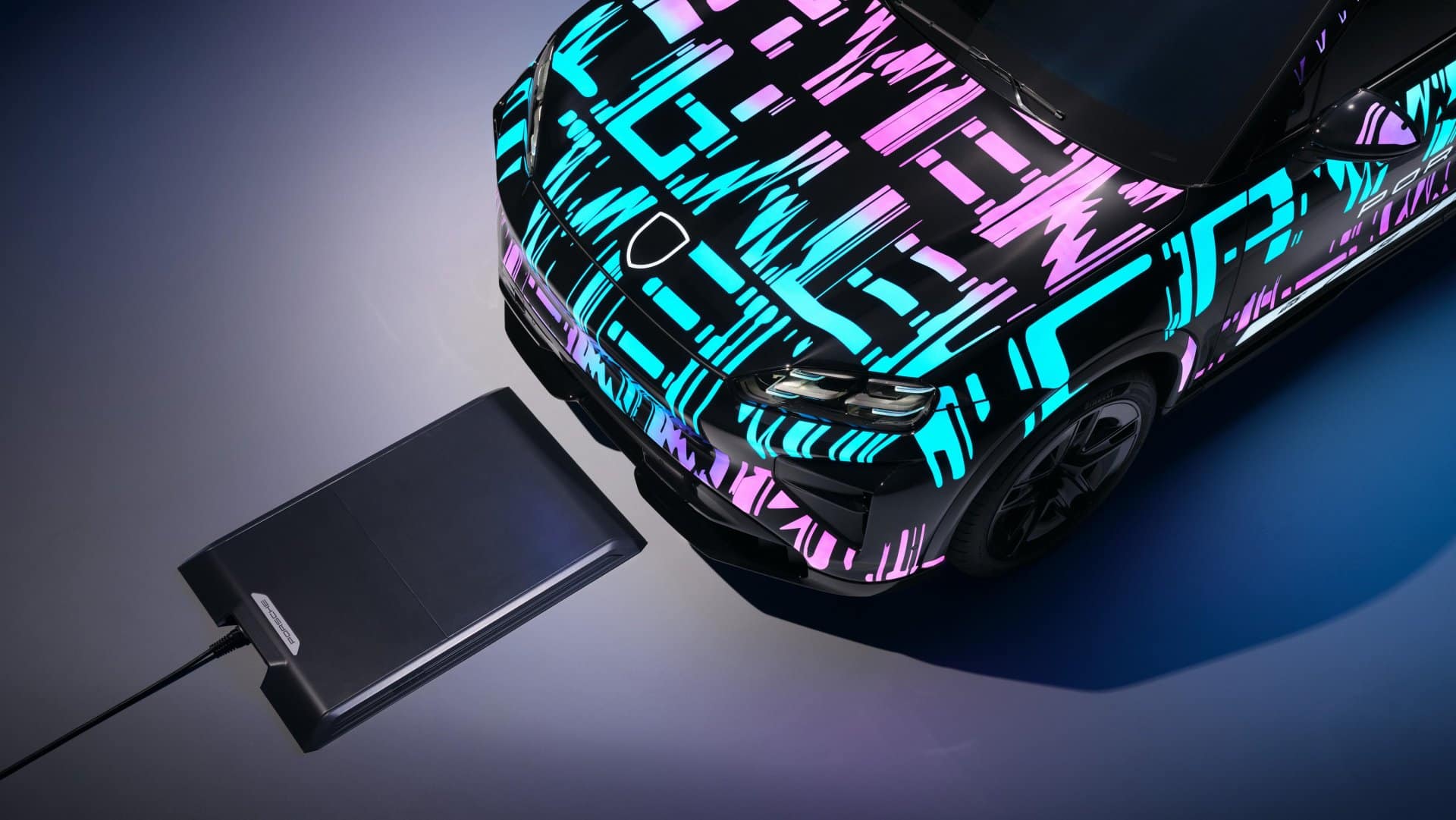
With this new inductive wireless charging system, Porsche aims to revolutionise home charging, so that its customers almost forget they are driving an electric vehicle.
Porsche continues to catch our attention by gradually revealing some of the innovations we will find in the new fully electric generation of the Cayenne 2026, which will be officially presented at the end of this year to begin its commercialisation in Europe early next year.
A few days ago, the Stuttgart-based company already surprised us with the blistering acceleration from a standstill of the new Cayenne 2026, complemented by curious side spoilers that will leave other drivers at traffic lights wide-eyed, but now the innovation comes from the vehicle’s charging.
Porsche has just announced the first inductive wireless charging system at 11 kW available as an option for a series-production electric vehicle, using a charging pad that must be installed on the garage floor and that will replace the wallbox usually mounted on the wall for a conventional electric vehicle. This innovative technology will be officially presented next week at the IAA Mobility, held in the German city of Munich, and will be available in Europe with the launch of the Cayenne 2026 early next year.
The system has been designed to offer maximum convenience to Porsche customers, eliminating the need to install wall boxes or additional control units, as it only requires the charging pad placed on the floor of the parking space. Measuring 117 x 78 x 6 centimetres and weighing approximately 50 kg, this charging pad is protected against rain and snow, so it can be installed outdoors, and complies with safety and environmental standards in Europe and the United States, with CE and UL certifications. It is also worth noting that it includes LTE and WLAN modules for downloading software updates and for remote management.
How does it work?
The charging process with the new system devised by Porsche could not be simpler or more convenient. The charging pad uses ultra-wideband technology to detect the vehicle’s position and guide the driver to the optimal location. Once aligned, the vehicle’s secondary coil captures the magnetic field generated by the charging pad, converting alternating current into direct current to charge the Cayenne’s high-voltage battery. Porsche promises an energy transfer efficiency of up to 90 percent, which comes very close to the performance of cable charging at 11 kW. It is an impressive technical achievement that overcomes one of the major drawbacks of the vast majority of third-party inductive wireless charging systems we have seen so far.
And yes, in case you are wondering, the use of this technology is completely safe, both for the driver and for anyone nearby. The engineers at Porsche have thought of everything, and the system can even stop charging automatically if someone approaches out of curiosity and has the “brilliant” idea of reaching under the car to see what happens, or if a cat decides to come over and investigate.
Porsche estimates that 75 percent of its drivers’ charging sessions take place at home, so this technology seeks to maximise convenience and practicality, thereby driving the transition to electric mobility.
“Ease of use and charging infrastructure are essential for the acceptance of electric mobility. We are proud that inductive charging is ready for series production, making charging an electric vehicle at home simpler and more convenient than ever.”
As for the price of this system, which as we have said will be optional, it does not seem likely to be cheap. But it is also true that if you have the budget to buy a Cayenne 2026, it will not seem so expensive. Until Porsche announces its official price, everything points to the pad integrated into the vehicle, which connects with the charging pad, costing around two thousand euros when configuring the new Cayenne 2026. To that, obviously, the charging pad must be added which will cost around 5 thousand euros plus installation.


 Peugeot E-208 GTi: a battery-powered toy that revives the spirit of the 1980s sports cars
 New Lexus ES: luxury grows and goes electric
 First contact with the Dacia Sandero Hybrid 155: power and efficiency from €19,890
Deja un comentario