ID.2 Polo Volkswagen Electric Cars
Volkswagen is reconsidering its electric strategy and will finally call the ID. Polo the ID.2
 Javier Cantagalli
4 September 2025
4 min.
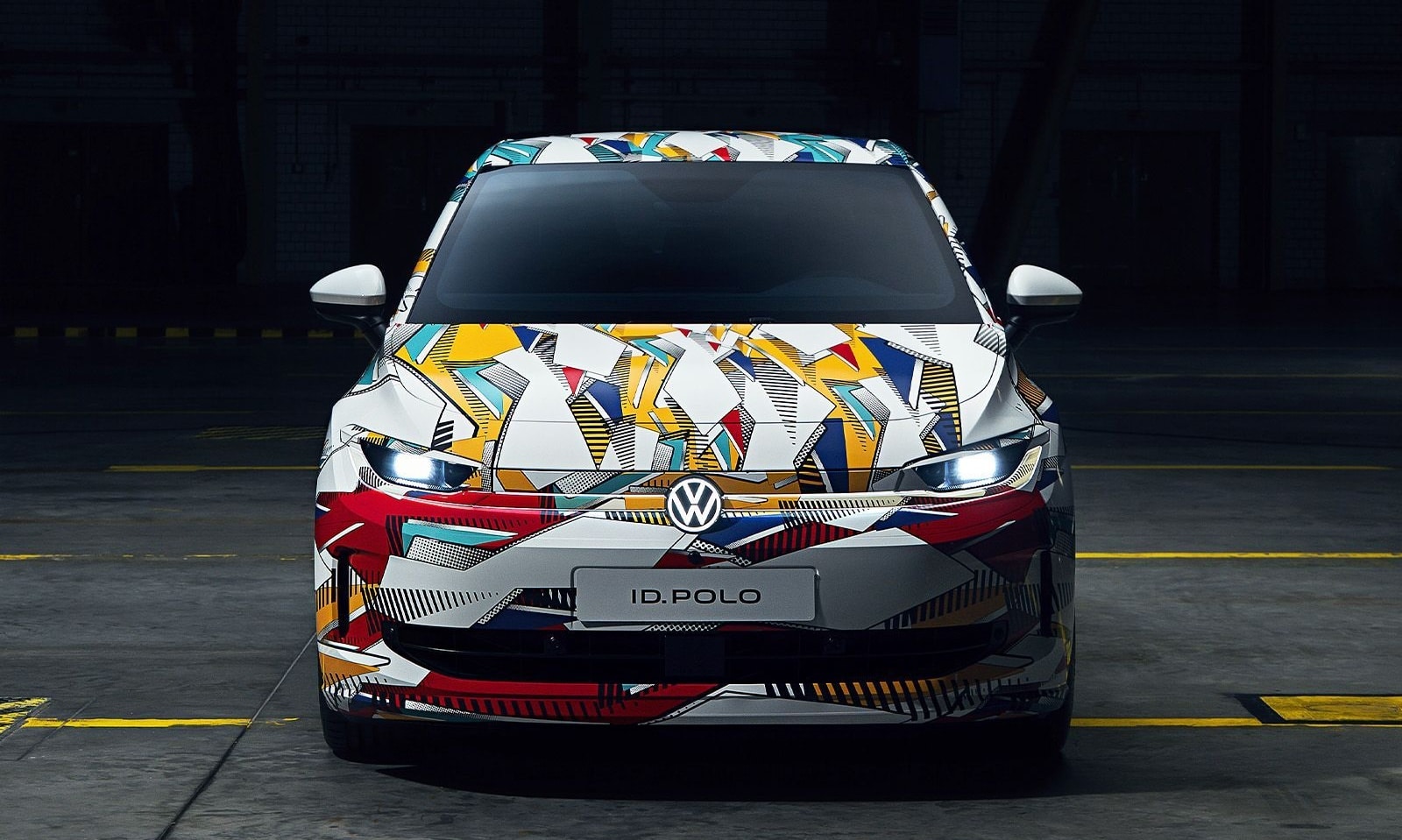
Volkswagen hopes to boost sales of its new electric models this way, relying on the prestige built up over the years by some of its combustion-engined models.
Ahead of the IAA Mobility, which will be held next week in the German city of Munich, Volkswagen has announced a new naming policy for its future electric models, abandoning the format of the ID. prefix followed by a number, and replacing the latter with the name of one of its most recognised models throughout the brand’s history.
The first Volkswagen model to adopt this change will be the production version of the ID.2all prototype, which will not be called ID.2 as expected, but ID. Polo. With this new policy, the German manufacturer seeks to draw on the recognition that some of its models have earned over the years, such as the Golf, the Polo or the Tiguan, to promote the launch of new electric models
In any case, Volkswagen has made it clear that these iconic names cannot be applied to just any electric model, and are only valid for those that meet the expectations associated with their legacy. So, for example, if it uses the Golf name, it must deliver what everyone expects from a Golf.
The changes coming to Volkswagen’s electric model range
This new strategy by Volkswagen also suggests that the next generation of the ID.3 could end up becoming the ID. Golf, the ID.4 the ID. Tiguan, and the ID.7 the ID. Passat. An important point to note is that the German manufacturer will continue to sell combustion-engined models using these same names but without the ID. prefix, which may cause some confusion since they will be completely different models, not only because they use a different propulsion system, but because they are based on different platforms and, ultimately, are vehicles with no link beyond the name and belonging to the same market segment.
Volkswagen also plans to replace the GTX badge, used until now exclusively on its high-performance electric models, with the far more recognised GTI, on both its combustion and electric models. In this regard, the company has confirmed that the ID. GTI prototype presented in 2023 will enter production in 2026 as the ID. Polo GTI.
Next week, during the IAA Mobility in Munich, Volkswagen will not show the final versions of the ID. Polo or the ID. Polo GTI, but near-production prototypes, camouflaged in colours inspired by the Harlekin special edition of the 1990s. Although the design will remain in line with the one shown on the ID.2all prototype, new details can be found, such as a change in the position of the charging port. The official presentation of the production version of this model will finally take place in May 2026, and the market launch is expected at the end of next year.
What else do we know about the future ID. Polo?
As for its technical specifications, for now we know little more than what was revealed in 2023 with the ID.2all prototype. The ID. Polo GTI will have 166 kW of power and will come equipped with an NMC battery pack that will give it a range of up to 450 km under the WLTP homologation cycle. The ID. Polo, on the other hand, will be available with two different battery packs to choose from and three power levels, to which a fourth will be added later. Its price will be below 25 thousand euros in the entry-level version, which will presumably fit a smaller-capacity LFP battery pack to reduce costs.
Finally, it should be noted that next Sunday, just a couple of days before the IAA Mobility in Munich begins, Volkswagen plans to present the ID. Cross Concept prototype, a compact SUV of small dimensions based on the ID. Polo, whose production version, under the name ID. Cross, will reach the market at the end of 2026 as the electric equivalent of the T-Cross.
Technical specifications of this car


 Peugeot E-208 GTi: a battery-powered toy that revives the spirit of the 1980s sports cars
 New Lexus ES: luxury grows and goes electric
 First contact with the Dacia Sandero Hybrid 155: power and efficiency from €19,890
Deja un comentario