This is how the Israeli hydrogen engine works, which weighs just 10 kilograms
 Mónica Redondo @MonicaRedondoD
23 August 2021
2 min.
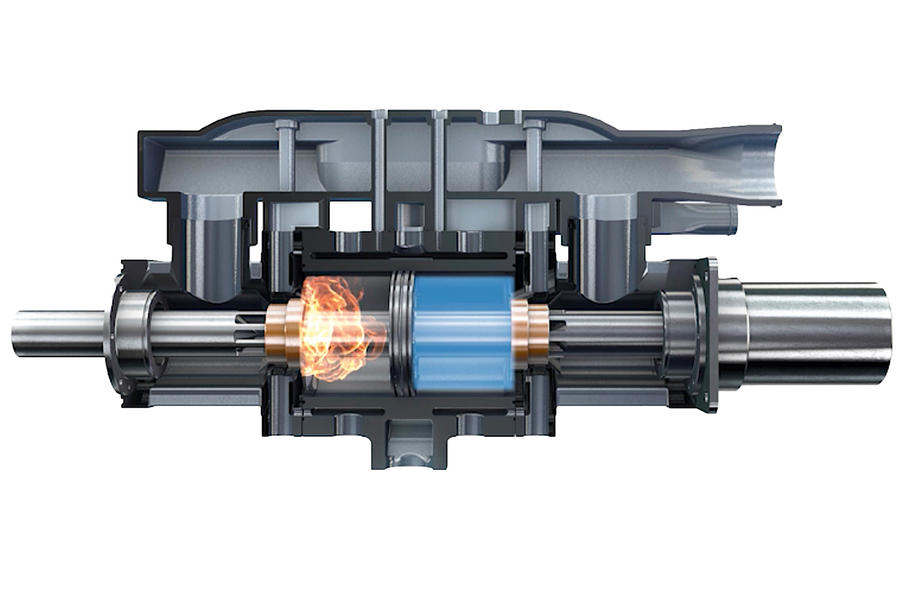
This innovative hydrogen engine weighs just ten kilograms and was developed by an Israeli company.
Hydrogen engines could start to make their mark in the automotive industry following the confirmation by the European Union of the installation of hydrogen refuelling stations on the main roads of its member states. Now, the Israeli company Aquarius Engines has developed an innovative hydrogen engine that weighs only ten kilograms. Its development began in 2014, and it is a two-sided free-piston linear engine, also known by the acronym FPLE. This revolutionary engine is designed to generate power in plug-in hybrid models.
The hydrogen engine is made up of twenty components, of which only one moves. Originally it was built to burn petrol, and it may be able to run on a wide variety of fuels. This linear engine gets its name because, instead of converting reciprocating forces into rotational forces through a crankshaft, the rod of a single piston moves back and forth in a two-stroke cycle.
This is how the new hydrogen engine works
This curious hydrogen engine consists of a piston rod, a small cylinder block in which the piston slides, two cylinder heads, two inner bearings and two outer bearings. The engine requires no lubrication, as it has graphite piston rings coated with a special material that reduces friction. The absence of oil rules out any possibility of leaks or unburnt hydrocarbons during combustion and simplifies servicing, which, according to its designers, is minimal and only required every 1,000 hours of operation.
As the piston moves, it expels the exhaust gases through the ports located in the cylinder walls. It then draws in air through a patented air filtration system. This curious engine has four injectors, two in each cylinder head. On each stroke, hydrogen is injected, the mixture is compressed and ignited by a spark plug. The engine drives a generator that feeds the battery. The regenerative braking system works in the same way as in any other electric or hybrid car.
For the moment, no production dates have been confirmed, but a unit is undergoing testing by AVL Schrick in Austria. It is worth noting that Aquarius’s hydrogen engine is already running on a driverless skateboard chassis. The concept used is a petrol hybrid.


 Peugeot E-208 GTi: a battery-powered toy that revives the spirit of the 1980s sports cars
 New Lexus ES: luxury grows and goes electric
 First contact with the Dacia Sandero Hybrid 155: power and efficiency from €19,890
Deja un comentario