Scirocco Volkswagen Coupés Tests
Volkswagen Scirocco Hurricane 2.0 TDI 140 CV DSG, road test (Engine, performance and consumption)
 Diego G. Moreira
21 February 2013
3 min.
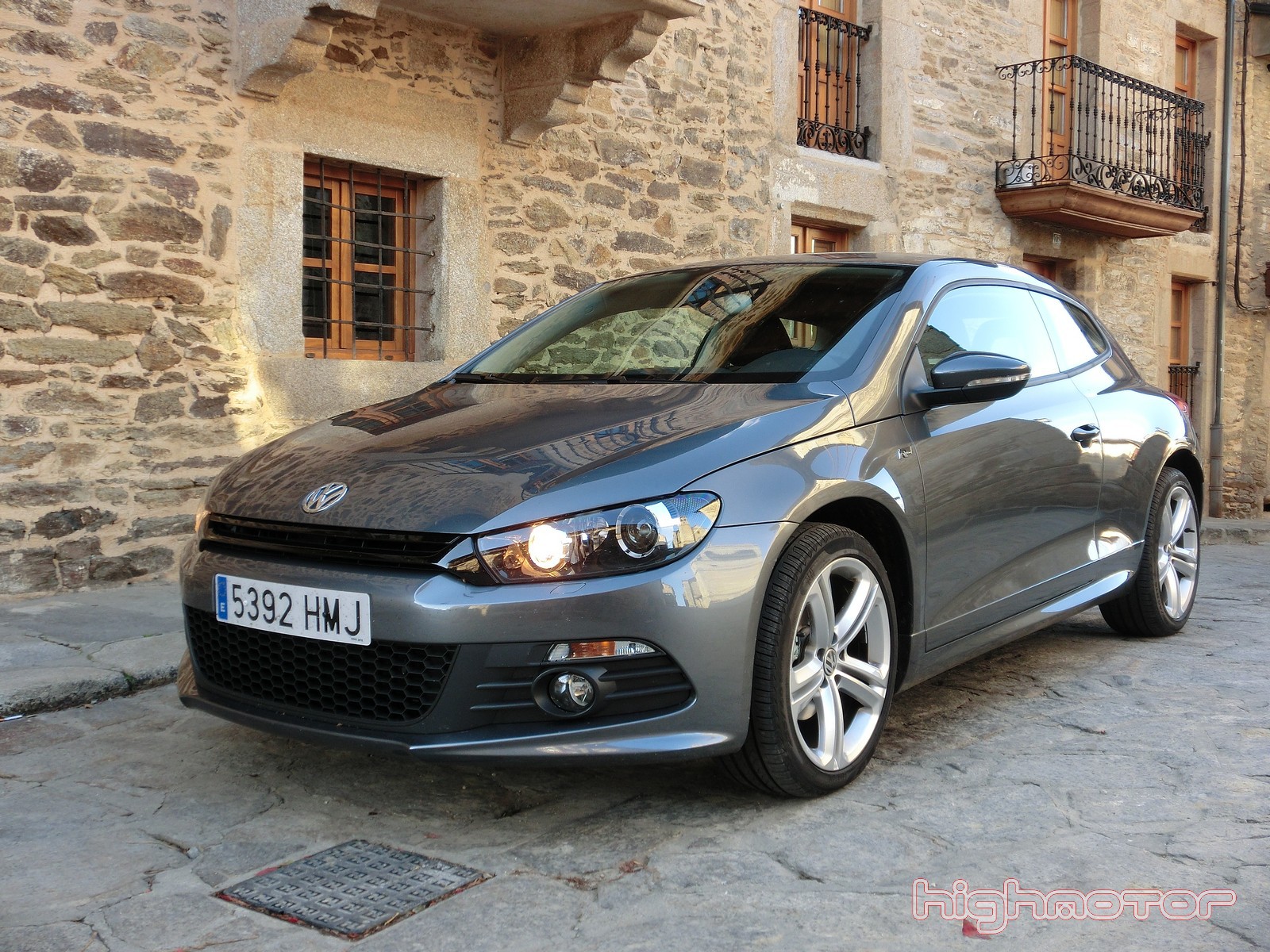
The Volkswagen Scirocco has been on the market for quite some time, but it remains an interesting car and, with the new Hurricane trim, it is making headlines again, becoming a much more sensible option in terms of price and equipment.
We tested it with the 140 CV diesel engine paired with the DSG dual-clutch automatic gearbox. The combination promises good response on the road, tight consumption and the comfort of the DSG gearbox. Keep reading this Scirocco test and we will tell you everything about the engine, handling and consumption of this German coupé with a personality all its own.
This limited edition of 200 units, Hurricane, adds a sporty exterior design with the R-Line pack, and more equipment: cruise control, parking sensor, keyless start and entry, xenon headlights (standard on the diesel) or the touchscreen radio with colour display, all for 26,780 euros for the diesel (21,500 euros for the 122 CV petrol).
Engine and performance
140 CV or 170 CV? With diesel the decision is clear: the 140 CV 2.0 TDI is more than enough to move the Scirocco with ease, and it also gives us more than sufficient margin to enjoy the drive or to overtake with total confidence.
The powertrain responds with force, from 1,800 rpm up to 4,500 rpm it pushes relentlessly, delivering the typical kick between 2,500 and 3,500 rpm. Little by little this veteran engine is gaining smoothness, but the push of the turbo can still be felt when it starts to blow.
The best complement to the engine, for those seeking a sporty touch or simply greater comfort, is the DSG6 gearbox fitted to our test unit. Everyone knows this dual-clutch gearbox, which, paired with this diesel engine, offers six speeds, standing out for its speed of gear changes and the smoothness of those changes.
Handling
The Volkswagen Scirocco is a fun car, with outstanding agility and good composure on the road. Its dimensions, a good chassis and a firm suspension setup make any winding road a fun place to drive the Scirocco.
The most notable thing is its agility and its responsiveness to steering inputs; even the city is good terrain for this coupé. That said, the low-profile tyres and the firm suspension are not good allies of interior comfort, which nevertheless stays at acceptable levels.
During the test we had the chance to drive over a mountain pass and several fast, winding roads, where the Scirocco showed its composure and drew more than one smile from us despite having only 140 CV under the bonnet and being a diesel.
The feel of the steering is rather firm, appropriate for a car of this type, and the braking system fulfils its duty with total confidence.
Volkswagen Scirocco consumption
On country roads or motorways, the diesel engine makes itself felt, and so does the six-speed gearbox, achieving consumption figures such as 5.1 litres on the motorway on the usual Madrid > Vigo > Madrid route.
On country roads it depends on how we use the accelerator pedal: with a somewhat more dynamic driving style, consumption hovers around 6 litres per 100 km, a figure that can be reduced to about 5.5 litres per 100 km if we are more careful with the pedal.
In town, where the automatic gearbox adds an extra dose of comfort, consumption stays at around 8 litres per 100 km, a fairly good figure.
As we can see, it is a fun car but at the same time sensible when it comes to consumption, with figures manageable for an ordinary driver. In the second part we will talk about the exterior design (where it shows the most personality) and the interior, where the rear space is limited.
Photos | Diego G. Moreira


 Peugeot E-208 GTi: a battery-powered toy that revives the spirit of the 1980s sports cars
 New Lexus ES: luxury grows and goes electric
 First contact with the Dacia Sandero Hybrid 155: power and efficiency from €19,890
Deja un comentario