A new technology will allow cars to be up to 45% lighter
 Mónica Redondo @MonicaRedondoD
6 November 2020
2 min.
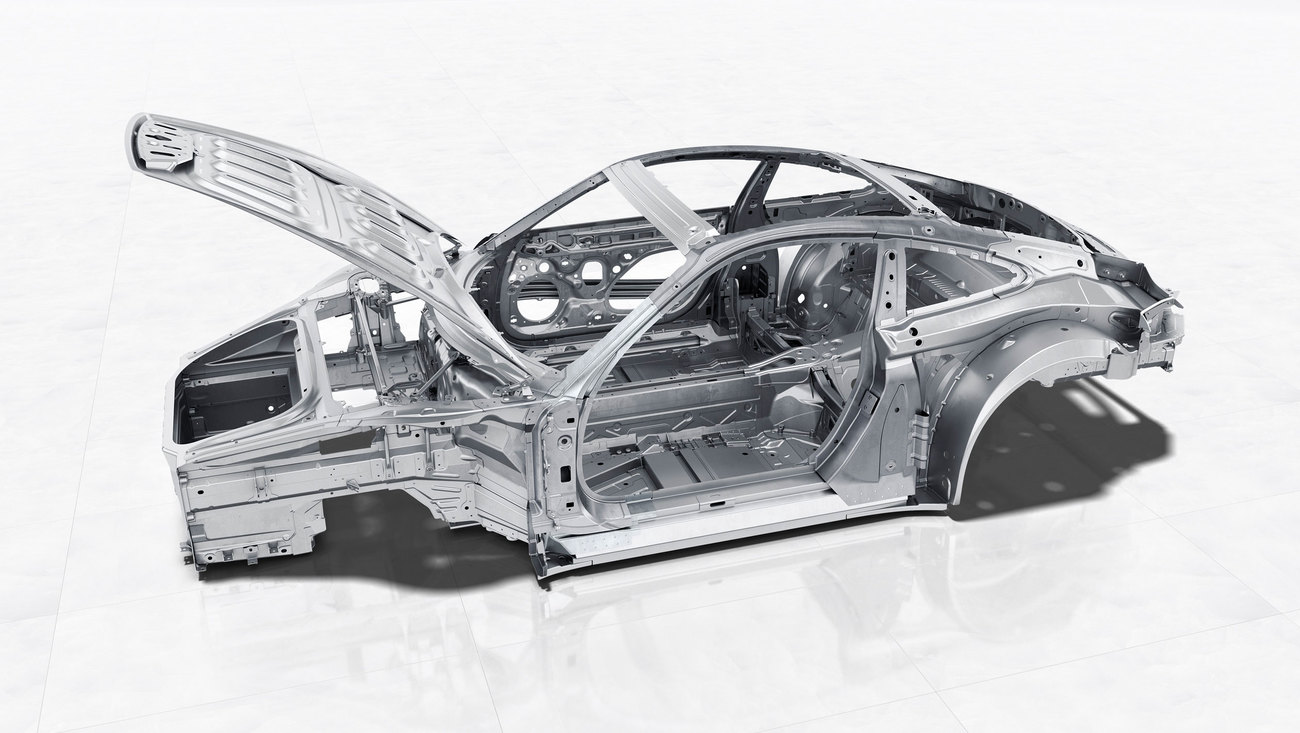
An Israeli company is working on a composite that could reduce the weight of electric cars by up to 45%. Want to know more?
Car manufacturers never stop searching for lightweight materials to reduce the weight of their new cars. Now, Plasan, an Israeli bodywork company, is designing a new lightweight chassis with a carbon fibre composite. A new lightweight carbon and composite body structure could revolutionise the way electric cars are manufactured over the next decade.
Designed by the Israeli defence and bodywork panel company Plasan, this new material offers a weight reduction of up to 45% compared with steel chassis and 20% compared with aluminium chassis. Plasan has presented the new technology to original equipment manufacturers and motorsport companies around the world, including some based in Europe, and it was recently made public.
“We hope that in two or three years there will be components built with our technology, and a complete chassis after a few years,” said chief designer Nir Kahn in an interview.
This is the new technology that could reduce the weight of electric car bodies
At the heart of Plasan’s technology are pultruded carbon fibre beams, with carbon fibre filaments running continuously along the entire length of the tube walls, resulting in very strong, rigid but lightweight structural members. Each beam is bonded to composite body panels to make semi-structural sides, floor and roof. These subassemblies are then joined with metal “nodes”. The nodes are made of two-piece pressed aluminium, designed to speed up assembly.
Plasan believes its design is a major breakthrough because the bodies can be built using existing production line equipment and with the same basic techniques as a conventional steel body. “We really see high-volume production of cars as possible, this is not limited to defence or motorsport applications, with feasible annual production rates of hundreds of thousands a year,” said Plasan’s head of composites, Ronen Berger.
Although carbon fibre body technology is relatively expensive, Plasan estimates that the cost of saving each kilogram of weight in an electric car is justified at around eight euros per kg. “This makes it more cost-effective than other methods of improving the efficiency or range of electric cars,” Kahn concluded. “There is a virtuous spiral to reducing weight.”


 Peugeot E-208 GTi: a battery-powered toy that revives the spirit of the 1980s sports cars
 New Lexus ES: luxury grows and goes electric
 First contact with the Dacia Sandero Hybrid 155: power and efficiency from €19,890
Deja un comentario