Did you know that the Peugeot 306 turns 30 years old?
 Mónica Redondo @MonicaRedondoD
23 August 2023
3 min.
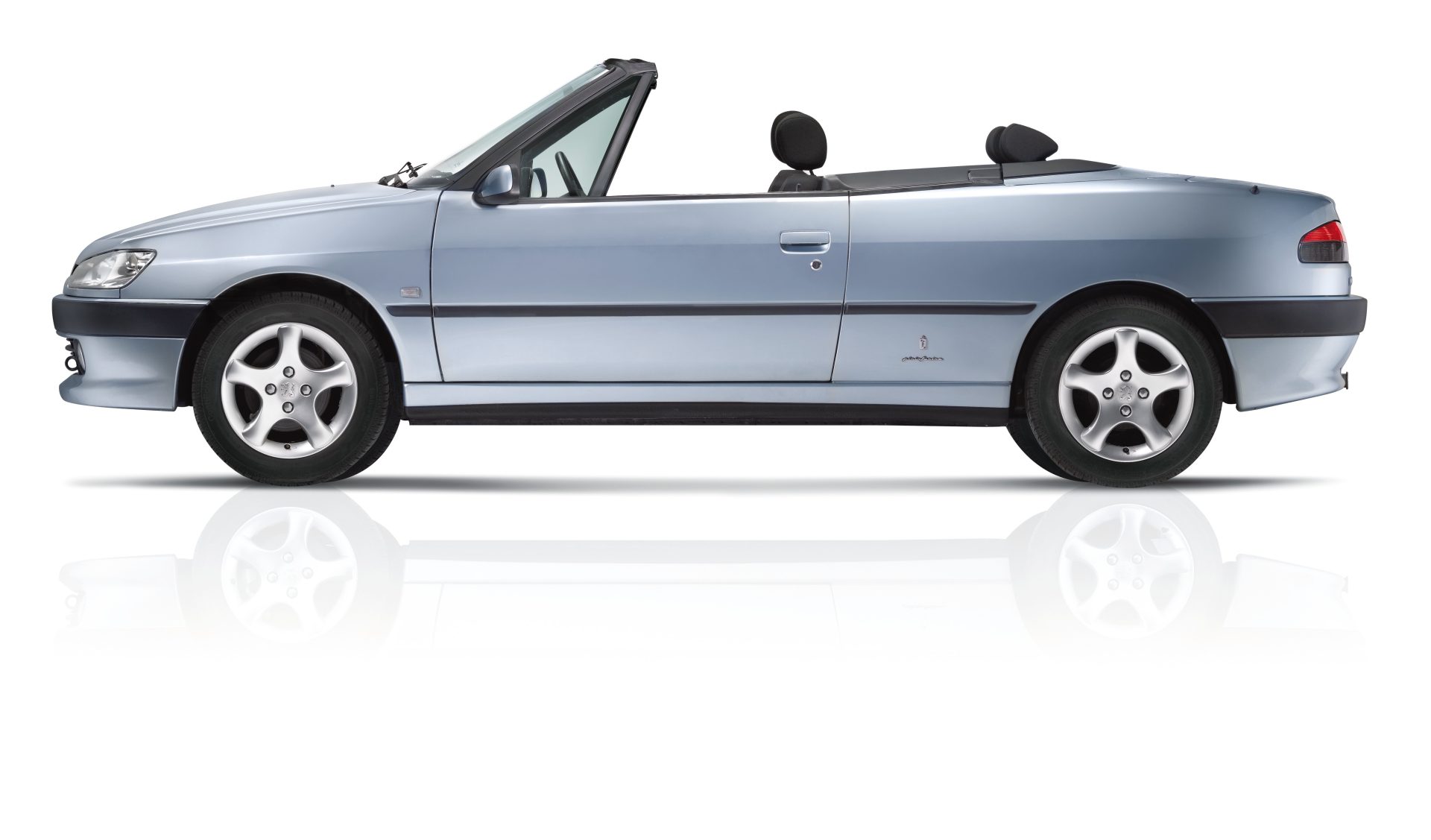
The model hit the market in 1993 and was manufactured until 2002. It was also assembled at several plants, including Poissy, Madrid, Ryton, Uruguay, Chile, Argentina and Italy.
The Peugeot 306 is celebrating, as this compact saloon turns 30 years old. As the lion brand has confirmed, the Peugeot 306 “was a benchmark in this segment during the 90s thanks to its design and excellent road behaviour.” This model attacked the C-segment from several fronts, as it was available in different bodystyles: saloon, coupé, convertible and estate.
In a short time it surpassed three million units produced between 1993 and 2002. The Peugeot 306 has always been recognised for its great reliability, and many can still be seen on our streets and roads. For the lion brand, 1993 was a year in which it restructured its range, especially when it came to saloons.
Until then, the Peugeot 305, a three-box model launched in the 70s, was available on the market. The Peugeot 309, which was planned as the Talbot Arizona, was also on sale. The brand then chose to move up a segment and relaunch the 4 series with the birth of the Peugeot 405 as a D-segment saloon.
To maintain its leadership in the C-segment, it launched the Peugeot 306, a model with sober, rational lines that aimed to establish the five-door silhouette. It also sought to win over the customers who had embraced the already legendary Peugeot 205.
This was the Peugeot 306
Throughout 1993, the five-door saloon versions were launched, measuring 4.03 m long, and at the end of the year the three-door coupé, along with the diesel engines. Aesthetically, they fitted perfectly into the style of the range of the era, with a front end and flanks similar to those of models such as the 106, 205 and 605.
In 1994 the Sedan version arrived, with 463 litres of boot space and a charismatic silhouette. The Peugeot 306 Cabriolet, bearing the Pininfarina signature, has become a timeless and highly sought-after classic thanks to its four spacious seats, its raked windscreen, its 138 CV engine and its wide range of colours. Its fabric roof folded away completely, either electro-hydraulically or manually, and stowed in a dedicated compartment, so the car kept the 310 litres of boot space of the 306 Berlina.
The model was also available in two high-performance versions. The XSI fitted a 121 CV petrol engine, and the S16 had a 2.0-litre engine with a five-speed manual gearbox and 158 CV. In Spain, the Peugeot 306 GTi was also launched, with 167 CV and a six-speed manual gearbox. We cannot forget the rally Kit-Car called the Peugeot 306 Maxi, which won the Tour de Corse (1997 and 1998) and also took the French rally championship in 1996 and 1997.
Manufactured until 2002 in Poissy, Madrid, Ryton, Uruguay, Chile, Argentina and Italy (Cabrio).
Technical specifications of this car


 Peugeot E-208 GTi: a battery-powered toy that revives the spirit of the 1980s sports cars
 New Lexus ES: luxury grows and goes electric
 First contact with the Dacia Sandero Hybrid 155: power and efficiency from €19,890
Deja un comentario