Health authorities warn about the dangers of disinfecting our cars with ozone or ultraviolet light
 David Lopez @espacionblanco
29 June 2020
4 min.
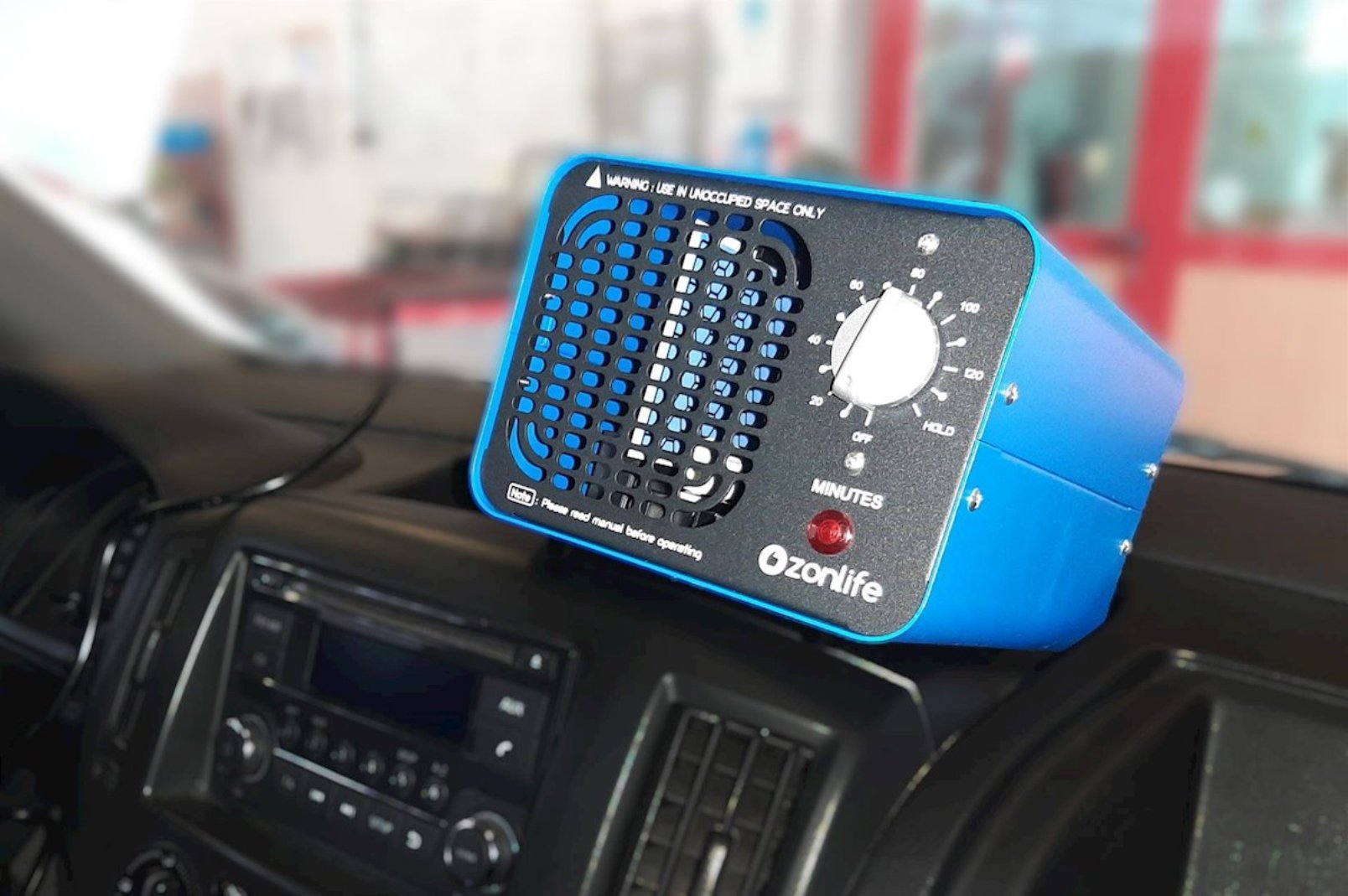
For disinfecting our vehicles, we have seen how the use of ozone and ultraviolet light has grown, but this carries a series of risks
If there is one thing we must emphasise to avoid catching Covid-19, apart from keeping the safety distance to the maximum, it is to practise correct hygiene, especially of our hands and, if possible, using soap, since, as you know, excessive use of hydroalcoholic gel can cause us irritation and, in our cars, since our hands touch numerous parts of the upholstery, a premature wear of them.
But beyond our personal hygiene, it is also advisable that our car, especially if we use it continuously, also remains as clean as possible to avoid possible transmission of the virus both to us and to the people we transport. That is why we have seen numerous companies carry out disinfections of the interior of our vehicles, with the treatment with ozone or with ultraviolet light being the most widely used, but the Ministry of Health warns us that these methods can be harmful to our health.
Treatment with ultraviolet light
It is perhaps not the most common treatment, but the products that use ultraviolet-C radiation to disinfect the coronavirus in both the air and on surfaces require professional application, and if they are not carried out with a minimum of guarantees and safety we run the risk of suffering damage to both the eyes and the skin, and even irritation of the respiratory tract.
In fact, the application of UV-C radiation cannot be applied in the presence of people and, of course, much less in our own homes, so imagine in vehicles. Furthermore, the Ministry of Health warns that although it is true that it can reduce the presence of the virus on surfaces, so far it has not been possible to prove that this reduction is sufficient to achieve adequate and optimal disinfection.
Treatment with ozone
It is perhaps the most popular treatment carried out during this pandemic, since with ozone we manage to reach every corner and nook of the interior of our vehicles, but we must bear in mind that ozone is neither approved nor regulated for use on air or surfaces; in fact, it does not even appear on the official list of virucides accredited and recognised by the Ministry of Health and, at European level, it is still under evaluation.
The main risk of ozone is that it is a very toxic product, and even at low concentrations it is capable of causing people eye, nose and throat irritation, coughing, asthma attacks and headaches; while if the ozone concentration is high we risk severe lung damage, alterations of the immune system and, in more serious cases, death. For this reason, to carry out this treatment it must be done with thorough protection and followed by deep ventilation and, even so, the upholstery fabrics can absorb it or deposit on contact surfaces for a period that is currently very difficult to determine.
On top of all this, there is currently no established protocol that tells us for how long or in what quantity ozone must be applied, as well as what approval is required for the machinery to be used. It should be added that, like ultraviolet light, it is also not known with certainty whether ozone, in non-toxic concentrations, is really effective for disinfecting air and surfaces.
Fumigation with biocides
If a cleaning with soap and water, as we have always done, does not leave us at ease, the Ministry of Health recommends using an authorised biocidal product, which has the authorisation of the competent authorities and has a protocol for use inside vehicles. In this regard, Health cites Carglass as an example, who use a virucide with hydrogen peroxide and peracetic acid under a strict scientific protocol for its application, in which the best position for nebulising the cabin and the required times have been studied, the positions the car’s air-conditioning system must be in at each phase, and even the correct use of the machine.
The great advantage of these biocides is that they are fully regulated, being harmless to people, animals and surfaces; so much so that when they are used they do not require subsequent rinsing.


 Peugeot E-208 GTi: a battery-powered toy that revives the spirit of the 1980s sports cars
 New Lexus ES: luxury grows and goes electric
 First contact with the Dacia Sandero Hybrid 155: power and efficiency from €19,890
Deja un comentario