Hyundai Electric Cars Hybrid Cars
Hyundai unveils its 2027 strategy with five new models
 Victor Alós Yus @sepelaci
6 February 2026
3 min.
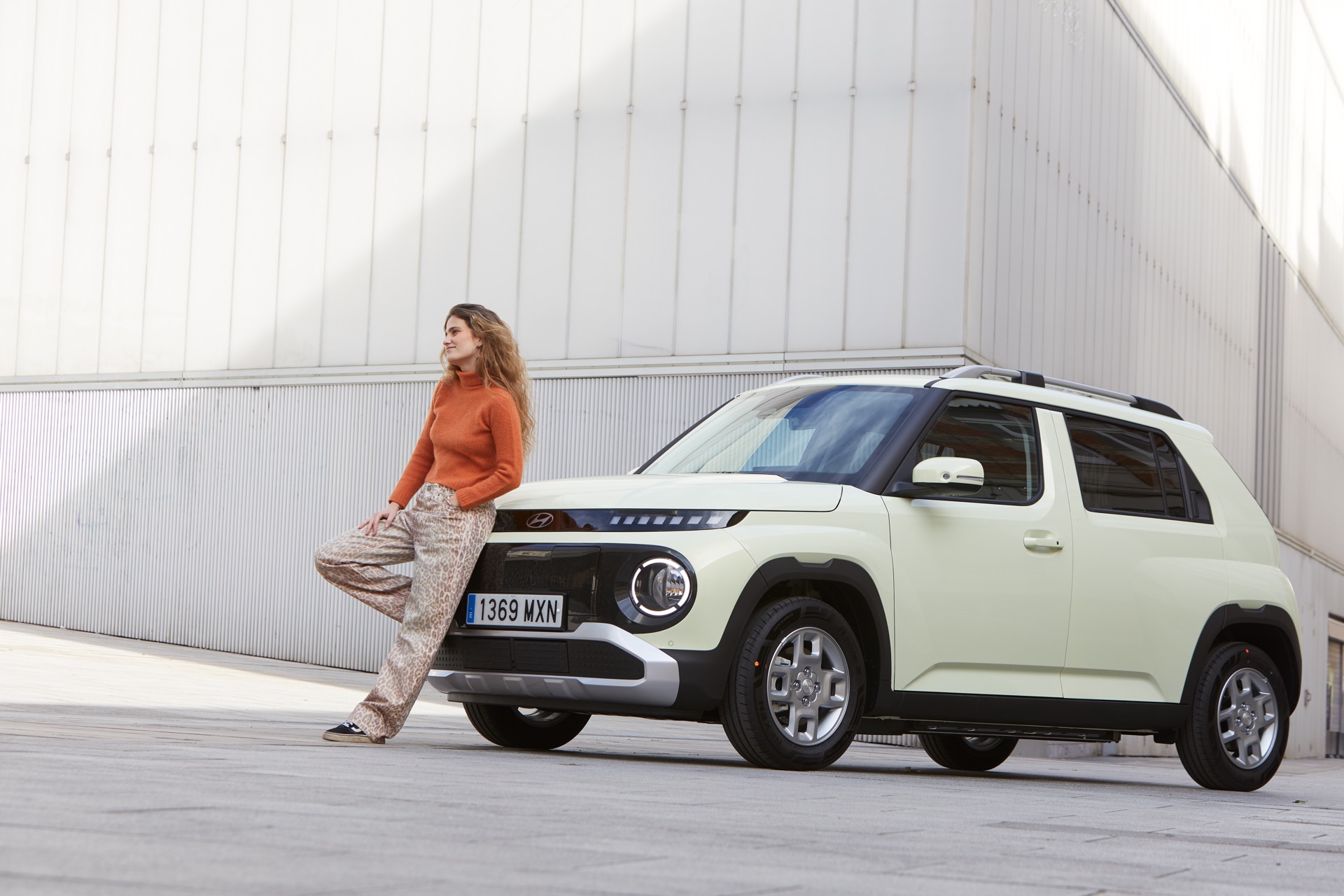
Hyundai’s strategy for the European market centres on launching new electrified models and updating those already on sale.
The European market is very attractive to Asian brands, so there are strategies designed to bring new models to several European countries and steadily grow their presence over the coming years. We are not only talking about the new Chinese brands, but also the others that have been in Europe for some time and will bring new products over the coming months.
Hyundai has recorded 603,542 units across the European territory, reaching a market share of 4.2%. This has come after an active and aggressive strategy, in which €2.15 billion has been invested in developing its models to properly meet the needs of European buyers.
Five electric models for 2027
The Korean brand’s strategy centres on launching five new electrified models over the next 18 months. The brand is seeking a balance between electric models and hybrid solutions. In other words, between sustainability and the preferences of European buyers, who favour hybrid models over pure electric ones.
Among the newcomers, the IONIQ 3 stands out. This compact car will be built in Turkey and is intended to become one of the brand’s best-selling models in the near future. The bad news is that the Hyundai i10 is being discontinued and will have no direct replacement. Instead, the focus will be on the new Inster, which will be its natural successor.
Other updates include the renewal of models such as the i20 and the Bayon, which will get combustion engines with electric hybridisation in the smaller variants. For larger models, there will be an update to the i30 and the Tucson, one of the most popular models in the South Korean brand’s line-up.
Investments in Europe
Hyundai has made several investments to strengthen its presence in the European market. Among them, a €150 million investment stands out in the Square Campus research centre in Germany, where work is carried out to accelerate the development of innovative solutions. A further €2 billion has been allocated to the Nosovice plant in the Czech Republic, which has been modernised to assemble batteries.
With all this, the production chain is optimised and supply-chain risks are reduced, while the company’s capacity to meet the needs of the European market increases.
Over the last year, Hyundai has recorded a rise in sales in Europe. As far as electrified vehicles are concerned, this growth amounted to 24% above 2024 sales. Electric cars have seen a 48% sales increase. The upcoming launches are intended to push these sales even higher and help the brand gain market share in Europe.

 Peugeot E-208 GTi: a battery-powered toy that revives the spirit of the 1980s sports cars
 New Lexus ES: luxury grows and goes electric
 First contact with the Dacia Sandero Hybrid 155: power and efficiency from €19,890
Deja un comentario