Incat is almost ready to enter service with the world's largest fully electric ferry
 Javier Cantagalli
26 December 2025
2 min.
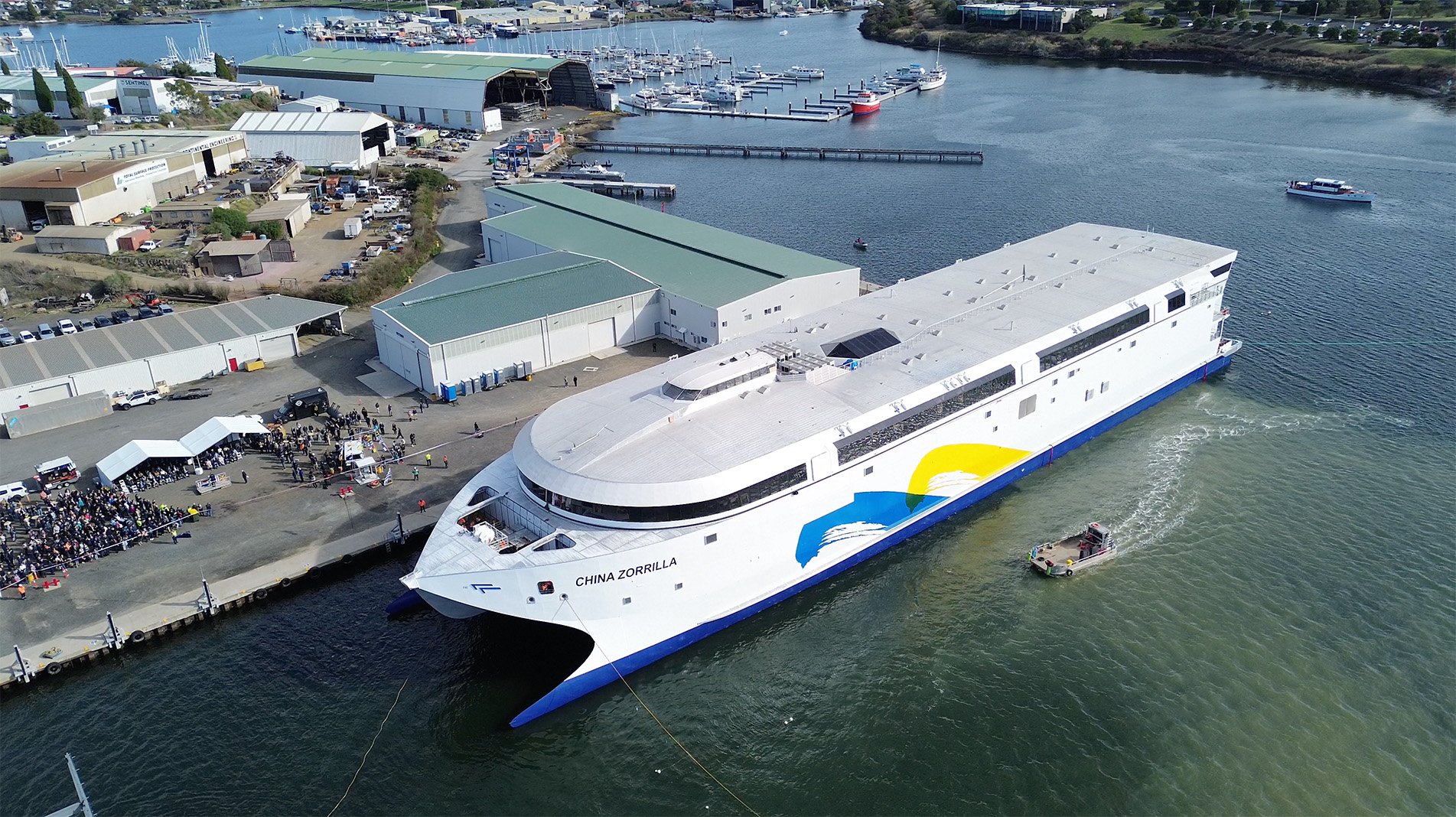
This ferry positions Tasmania as a global leader in the large-scale production of zero-emission vessels, demonstrating that electric mobility is also viable for high-demand maritime transport.
The Australian shipyard Incat Tasmania has taken a historic step in zero-emission navigation after conducting the first propulsion tests of what is considered the largest electric ferry in the world, known as Hull 096. These initial tests were carried out in Hobart, on the Derwent River, marking the first time a vessel of these dimensions has operated exclusively on energy stored in large batteries.
At 130 metres in length, this lightweight aluminium catamaran has been built for the South American company Buquebus, which plans to put it into service from next year on the route between Argentina and Uruguay, crossing the Río de la Plata. The order was placed in 2023, the vessel was launched in May 2025 and, following these successful tests carried out in mid-December, several further trials are scheduled before it begins its crossing to South America.
The Hull 096 is a RoPax ferry capable of carrying up to 2,100 people, including passengers and crew, along with 225 vehicles. It stands out for its spacious duty-free area of more than 2,000 square metres, as well as for its efficient design, with two pontoons that optimise stability and performance.
Technical specifications unlike any seen before
The most innovative feature is its fully electric propulsion system, which integrates a 40 MWh battery pack, four times larger than any previous marine installation, supplied by the Norwegian company Corvus Energy. The complete system, including eight electric propulsors and highly efficient axial waterjets, has been supplied by the Finnish group Wärtsilä, and stands out for its light weight, manoeuvrability and low maintenance.
The Hull 096 represents a turning point in shipbuilding, and it has been made possible thanks to the efforts of the entire Incat team and the support of a loan of 60 million Australian dollars granted by the Tasmanian government. The company plans to expand its capacity with a new facility at Boyer, aiming to carry out further electric vessel projects like this one.


 Peugeot E-208 GTi: a battery-powered toy that revives the spirit of the 1980s sports cars
 New Lexus ES: luxury grows and goes electric
 First contact with the Dacia Sandero Hybrid 155: power and efficiency from €19,890
Deja un comentario