KIA PV5 WAV, the adapted electric taxi prototype seen in New York
 Victor Alós Yus @sepelaci
7 April 2026
2 min.
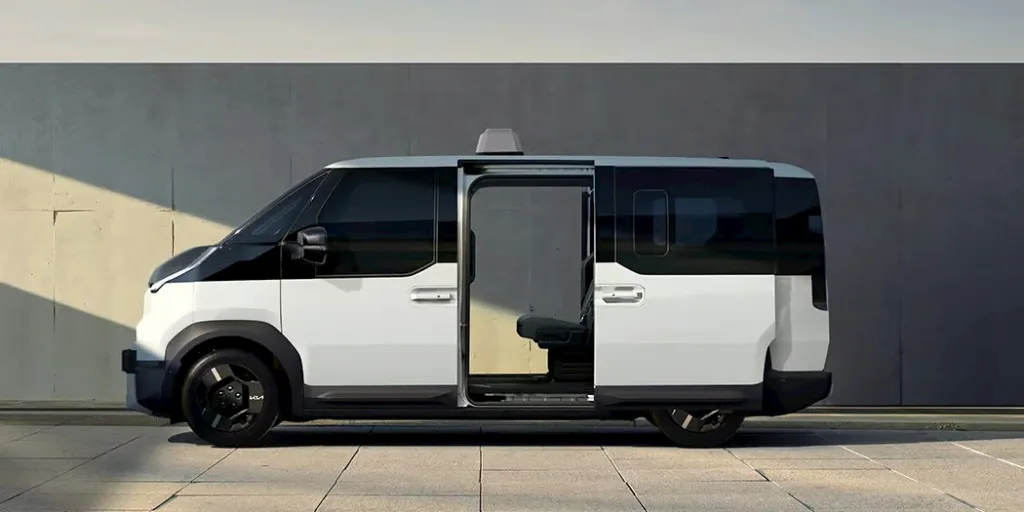
This electric prototype is designed to offer taxi service to people with disabilities who travel in wheelchairs and will be tested in New York.
Even if we tend to forget about them, taxis are vehicles with special characteristics that set them apart from the rest of the cars we see on the city’s streets. For these, low consumption and efficiency are a priority. KIA has just unveiled at the New York Auto Show its new adapted taxi prototype for people with disabilities.
This model is called KIA PV5 WAV and has been designed to comply with all the requirements of the Americans with Disabilities Act. It aims to be an electric vehicle intended for accessible public transport and, above all, ready to be produced.
The rear of the minivan has been designed to serve users in wheelchairs, and a comprehensive set of features has been included to guarantee the safety of the occupants. It has also been designed with a low floor height, allowing users to board and alight easily via the ramp it also features.
It has been developed together with BraunAbility, and the electric prototype will be tested in New York, with the participation of industry companies, inclusive mobility organisations and government agencies. The data gathered in the various tests will serve to fine-tune the electric taxi before it moves into production.
This van is based on the E-GMP.S platform, which has been designed for professional fleets and offers three battery options. These are 43.3, 51.5 and 71.2 kWh. The motor is located on the front axle and delivers 120 kW. In South Korea, the PV5 WAV taxi has a range of around 345 kilometres and its starting price is equivalent to about 29,200 euros.
The version to be tested in New York differs in some respects from the South Korean one, but it is basically the same, adapted for US use. Specifically, in the South Korean version access is through the side, whereas in the US version it is entered from the rear.


 Peugeot E-208 GTi: a battery-powered toy that revives the spirit of the 1980s sports cars
 New Lexus ES: luxury grows and goes electric
 First contact with the Dacia Sandero Hybrid 155: power and efficiency from €19,890
Deja un comentario