Lamborghini Jarama, one of the rarest bulls ever created, is up for auction
 Mónica Redondo @MonicaRedondoD
27 January 2020
5 min.
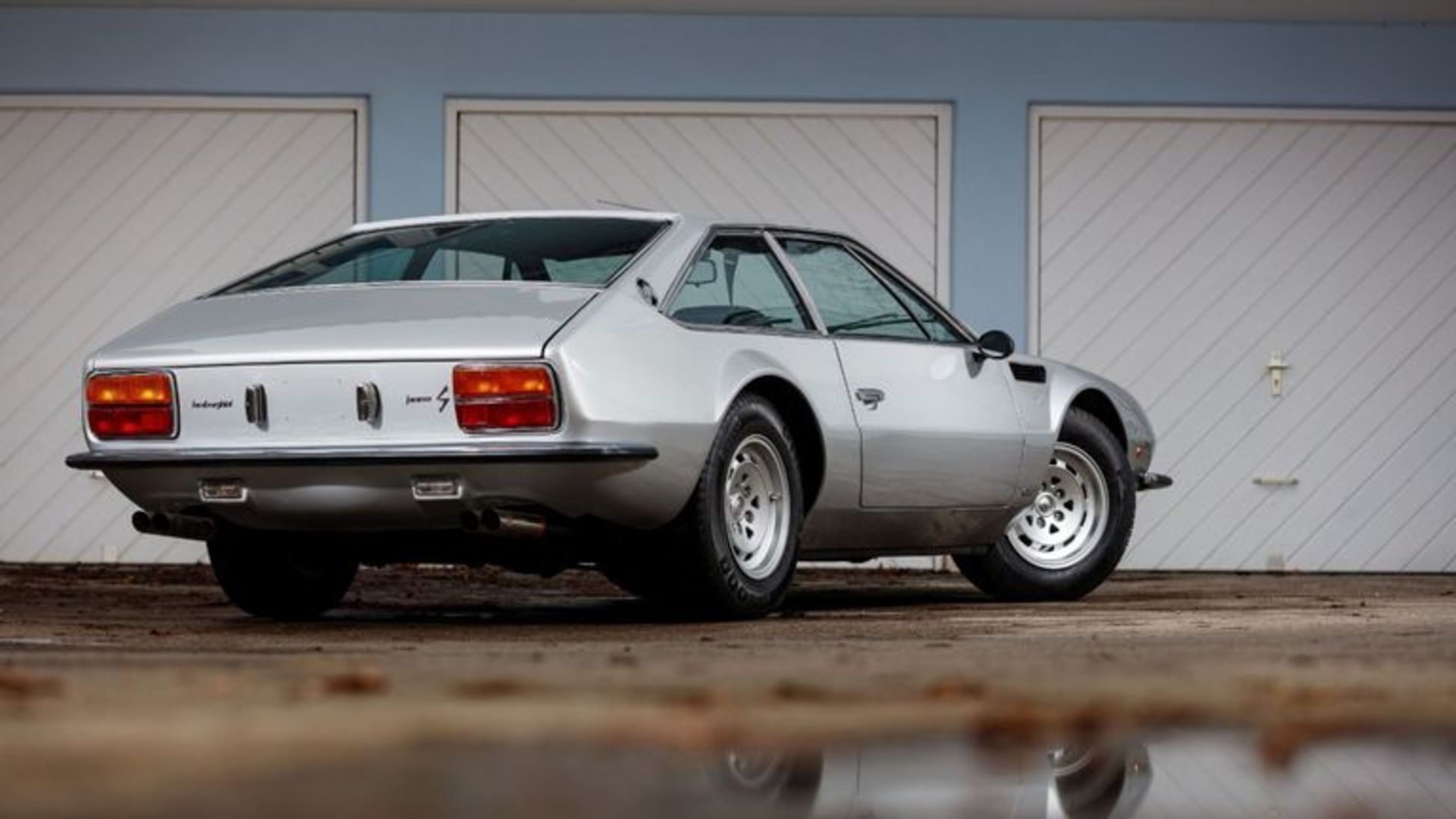
This Lamborghini Jarama will be auctioned in the coming days. Although it is ‘rare’, it is a highly valued unit from the Sant’Agata factory.
The Lamborghini Jarama is perhaps destined forever to be grouped with the “other” Sant’Agata models in the collective consciousness of car collectors, and it is a model rarely seen on our roads due to its extremely modest production.
Just over 320 cars were built between 1970 and 1976, which guarantees its rarity and partially overlaps with the production runs of the Lamborghini Espada, the Lamborghini Countach, the Lamborghini Urraco and the Lamborghini Silhouette. Yes, for a short period of time there were five Lamborghini models in production that were all coupés of different sizes.
In a couple of weeks, one of these rare wedges will pass through the auction block at Artcurial’s Retromobile sale in Paris, and surprisingly it is not a car from the European market, but an American model. How many of those could there be?
Written by Marcello Gandini at Bertone, the Lamborghini Jarama was first shown at the 1970 Geneva Motor Show as a replacement for the elegant Islero coupé. The Lamborghini Islero had been designed during the carmaker’s early years, and automotive design trends had time to evolve somewhat during its short production run, which led Lamborghini to reconsider exactly what they wanted their next grand tourer to be.
The Lamborghini Jarama goes up for auction in Paris
Sant’Agata wanted to keep the Islero’s 3.9-litre V12 engine, but offered a more spacious grand tourer that reflected a new styling fashion of the time: a wedge shape with flat, rectangular surfaces. The carmaker used an abbreviated version of the Espada chassis and kept the V12, also shared with the Espada, while giving the Jarama a lower roofline and a wider stance, almost 10cm wider than the Islero.
The more powerful GTS version produced 370 CV instead of 350 in the standard version, giving the Jarama a top speed of over 257 km/h, in supercar territory at the time, while still offering enough space for four people.
“This GTS model is interesting, as it is rare, with only 152 cars built, and it features a number of improvements in its appearance compared with earlier versions: a new interior look, improved air conditioning and a new version of the 4-litre quad-cam V12, which produces 365 CV at 7,500 rpm”, the auction house notes. “It is a perfect four-seater grand tourer, less radical than the Miura and easier to live with than the Espada.”
The 1973 Lamborghini Jarama 400 GTS that Artcurial will offer in a couple of weeks was delivered new to New York in February 1973 in metallic grey. The auction house states that, despite its low mileage, the car currently shows 9,026 miles; at one point this Jarama had been painted orange. The car has now returned to its original colour and has also swapped its US-specification headlights for European-market ones. Artcurial says a variety of technical work has been carried out in recent years on various systems despite the low mileage, including the exhaust compressor, brakes and air conditioning. The auction house also indicates that a full mechanical service was carried out in 2017.
Despite the low mileage, this Lamborghini Jarama 400 GTS has some history to tell. One of these is that it was once painted orange. “The car comes with a documented service history, its original tool kit and jack, an owner’s manual, two sets of keys and a CD showing photos of its restoration,” the auction house adds.
Artcurial estimates that this Lamborghini Jarama will bring between 120,000 and 160,000 euros on the day of the auction, which translates to a range between 133,320 and 177,760 US dollars. The low mileage and rarity of this model, even among Lamborghini cars of the era, should make this example attractive to collectors, despite the car having some history. Of course, there are in fact no high-mileage Jaramas out there, and the surviving examples of this model tend to all be in collections, appearing at Concours events from time to time. It certainly helps that Gandini’s styling was far ahead of its time, ensuring the Jarama looked modern well into the 1980s, thanks to other professionals in this design direction.
It is difficult to talk about the Jarama without mentioning a very similar Gandini design: the Iso Lele. It is another model from this era that does not receive enough love from collectors despite the power of the American V8, and it is another low-volume Italian sports car of the period that is perpetually “on the verge” of gaining more respect from collectors. However, its moment to shine always seems to be just around the corner, which also applies to the Jarama.


 The seven finalists for the 2027 European Car of the Year (COTY) are exclusively electric
 Peugeot E-208 GTi: a battery-powered toy that revives the spirit of the 1980s sports cars
 New Lexus ES: luxury grows and goes electric
Deja un comentario