A290 Alpine Electric Cars ECO Tests Urban
Me too thought electric cars weren't fun... until I tried the Alpine A290
 Antonio Roncero @roncero_antonio
21 March 2025
12 min.
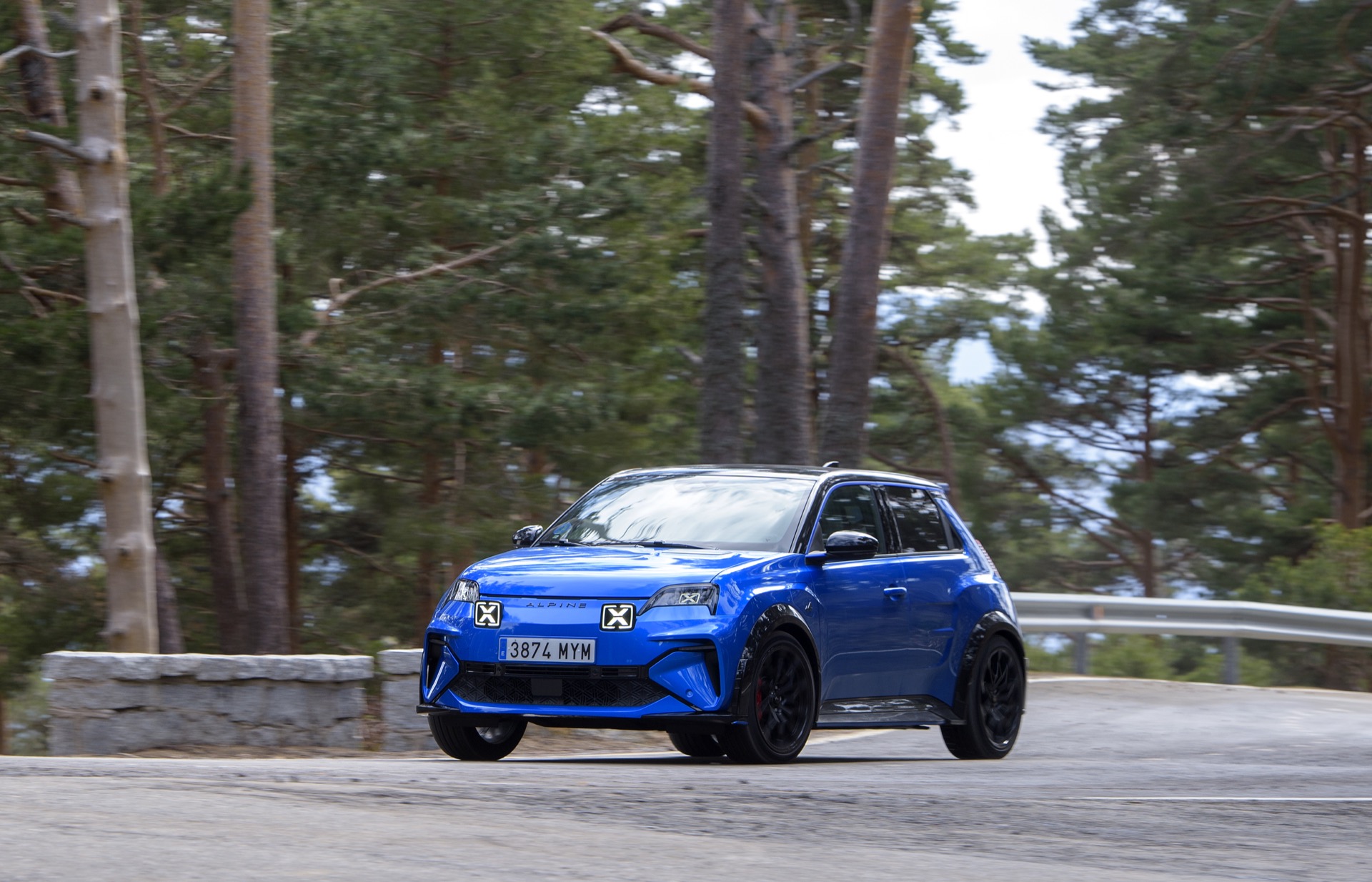
Alpine has pulled it off: just as the A110 is a benchmark for feel and driving fun among combustion-engined cars, its first electric car, the A290, is one among battery-powered vehicles.
Get used to the idea: whether you like it or not, electric cars are here to stay. All the barriers are starting to fall, and soon there will be no excuses left: not range, not charging times… nor that classic “fine, but where I live, driving a combustion car is…”.
In fact, new electric vehicle launches with ranges already exceeding 700 km are becoming more and more common, such as the recent Audi A6 e-tron. BYD, for its part, has just announced a technology, the Super e-Platform, that allows its new electric cars to charge “at lightning speed”, practically matching the times of refuelling a combustion car. And as they themselves say, with the A290, Alpine has put on the market a true electric “hot-hatch”, one of the most fun cars I have been able to drive in recent times, regardless of the type of propulsion. And if the first one isn’t it, it’s because out there is a Toyota Yaris GR…
On paper, the A290 has everything it needs to deserve that label: a compact body with eye-catching design; a driving position prepared for when the corners come; a favourable power-to-weight ratio or, at least, a relatively powerful motor offering good performance; and a chassis with a specific setup to make you want to put on your driving gloves. All of this in a car that can also be used comfortably every day. Let’s see whether all this holds up in practice. But I’ll warn you now that the Alpine A290 is much more than a “tuned” Renault 5 E-TECH… at least when driven.
Alpine A290 exterior design
Because on the outside, there’s no denying they are close cousins. That said, the A290 has details that visually differentiate it from the R5, a real statement of intent, a “here I am, and I’m much more than a souped-up city car”. To begin with, the track has been widened by no less than 6 centimetres -with the consequent widening of the wheel arches-, which is a lot. There is also a body-coloured trim on the side skirts, a roof moulding that can be aluminium or anodised blue, black mouldings on the wings and Alpine logos.
The front stands out thanks to a bespoke bumper design and, above all, the cross-shaped light signature, a nod to the era when rally cars put a cross of insulating tape on the headlights so the glass wouldn’t scatter if it broke mid-stage. At the rear, there are no prominent spoilers and, of course, don’t look for an exhaust outlet or anything resembling one. Besides the diffuser, you’ll only find a small “fin” on the tailgate, below the rear window, with a more aesthetic than aerodynamic effect.
There are two types of wheels, the Iconic and Snowflake designs, which can be finished in gloss black or diamond-cut, and optionally can have a blue centre cap. The front brake calipers, signed by Brembo, can be red or blue. The body colour range includes four options: black, white, blue and grey. The cars available for the test drive were in Alpine blue with black wheels, as you see in the images, and white with Iconic wheels, black roof and blue details. I like both very much, but if I had to choose I’d stick with the lovely blue…
A driving position made for enjoying the wheel
The interior also has important differences from the Renault 5, although it keeps genuinely usable rear seats and a 326-litre boot that offers plenty of versatility. Some elements are purely decorative, such as the mouldings, the inserts or the backlit model name in front of the passenger. Others are the ones that really matter in a sports car that also bears the Alpine badge. And here I’d like to highlight how well the driving position is resolved. The A290’s specific seats hold your body very well when they need to, while maintaining great comfort. I like how the pedal box is laid out, with a well-sized footrest. The centre console between the seats comes from the A110, with the corresponding gear selector, instead of the steering-wheel paddle the R5 uses.
The steering wheel is also exclusive, with three spokes, slightly flattened at the top and bottom and trimmed in very pleasant-feeling Nappa leather. Besides the conventional controls for the multimedia system, the driver assistance features and for changing the instrument display mode, it has three specific controls worth pausing on: on the left a rotary one to adjust the energy recovery level, on the right another to toggle between driving modes, and at the top a red pushbutton marked “OV” (Overtake), which I’ll explain what it’s for and how it works later, in the driving impressions section, although you’ve probably already guessed.
Otherwise, the dashboard keeps the shapes of the Renault 5, with the 10.25-inch digital instrument cluster and, below it, the 10.1-inch central multimedia screen oriented towards the driver, which also includes an interface with specific graphics. The instrumentation adopts triangle-shaped indicators for displaying power output, recharging or speed, and you can choose a navigation mode, another that shows a representation of the car and the distance to the vehicle ahead, or a minimalist mode that reduces information to the essentials. This is what I like least about the A290: in a sports car I still prefer instrumentation, even if digital, with classic round dials, the good old-fashioned kind, and without so much fuss.
Within the Android Automotive universe as operating system, and with Google Automotive services, which work wonderfully, Alpine has included a special feature in its Alpine Portal multimedia system that is quite curious. It’s called Alpine Telemetrics, and gives access to three categories of services: Live Data, which I find the most interesting, providing display of driving data such as power, G-forces, lap times, engine, battery or brake temperatures, etc; Coaching, supposedly to help the driver in their driving, but you’re in trouble if you buy an A290 and want to genuinely learn to get the most out of it with “remote” advice; and Challenges, with video-game-style driving challenges that are there to kill time or show off to friends at a given moment. Of course, there is a smartphone app, My Alpine, with the classic functions: information on the vehicle’s location and remaining range, remote charging control, vehicle pre-conditioning, etc.
Engine and chassis: magnificent setup
The A290 range lets you choose between two mechanical options: 180 CV for the GT and GT Premium versions, and 220 CV on the GT Performance and GTS. In both cases the battery is the same, with 52 kWh of capacity, allowing a homologated range of between 364 and up to 380 km, depending on version. It accepts fast charging of up to 100 kW, which recovers about 150 km in 15 minutes, or goes from 15% to 80% in half an hour. With AC it can charge at 11 kW, equivalent to roughly 3.5 hours “plugged in” to go from 10 to 80% of battery capacity. It is also compatible with bidirectional V2L and V2G charging.
The kerb weight is 1,479 kg, which somewhat clashes with Alpine’s philosophy, which always prioritises lightness as its main premise in its cars. But with electrics that’s just how it is. Even so, the weight increase is minimal compared with an Renault 5, especially considering the greater equipment, the “beefier” brakes, etc. The less powerful version, which delivers a maximum torque of 285 Nm -300 Nm in the 220 CV version-, is already enough to move the A290 with agility: it dispatches the 0-100 km/h sprint in 7.4 seconds, and drops below the 30-second barrier for the 1,000 metres from a standing start. These are “GTI” figures. But a 150 CV Renault 5 E-TECH isn’t far behind…
What can I say, if I had to choose, when buying an A290 I’d definitely go for the most powerful one. It accelerates from 0 to 100 km/h a second faster and goes under 28 seconds for the 1,000 metres from a standing start. Top speed is limited to 170 km/h, versus the 160 km/h that the 180 CV A290 settles for. The 3,200 euros more the GT Performance costs “sting” (we’ll talk about prices later), but the difference in performance is worth it if you’ve come to the Alpine dealership looking for thrills. Moreover, the 220 CV versions swap the standard Michelin Pilot Sport EV tyres, which I think are very good, for Pilot Sport 5S tyres -in both cases 225/40-19- which are magnificent, especially for sporty driving. The more powerful versions also come standard with red brake calipers (the rest have blue), electrically folding exterior mirrors and the aforementioned Alpine Telemetrics.
With stiffer, shorter springs to reduce ride height, the damping is clearly firmer than in an R5 E-TECH, and features hydraulic bump stops. The anti-roll bars are also specific, and both the subframe where the motor is anchored and the uprights are aluminium. At the wheel, you can feel the excellent work done on the chassis. The A290 puts a smile on your face at the first corner. And even though the A110 sets such a high bar, and my subconscious was playing tricks by reminding me that, after all, the A290 is a “prepared” R5, I had my reservations. But the A290 is more than that, and lives up to the brand’s philosophy of offering, above all, sportiness and sensations. This is a true “toy”, with an astonishing ease in changing direction thanks to a quick, precise steering and a rear end that helps the car settle when you ask it to. And with the reassurance of brakes with “by wire” control -the 4-piston monobloc calipers and the 320 mm front discs come from the A110- which are sensational, among the best I have tried on an electric car, with an almost race-car feel.
There are four driving modes: Save (equivalent to “eco”), Normal, Sport and Perso, which allows independent adjustment of steering assistance, throttle response and the Alpine Drive Sound system, as well as the option to disable ESP. And here I want to dwell a little. Even in Sport mode, the A290 delivers power more smoothly on acceleration than we’re used to in other electric cars. But even so, especially if the surface isn’t dry, the Alpine Torque, a kind of electronic differential that basically brakes the wheel losing grip, isn’t enough to manage the transfer of power to the tarmac well if you accelerate decisively out of corners. As for the Alpine Drive Sound, it is a sound synthesiser to add more fun to the matter. In one of the two possible modes the A290 sounds like other electric cars: it sounds like a spaceship. But there’s a “combustion engine” mode that has its charm. At least, I don’t mind it. The good thing is that it can be switched off.
Otherwise, I’d like to have paddles to change between the four energy recovery levels while driving without moving your hands from the wheel, instead of having to resort to the rotary control. I do find the “Overtake” pushbutton useful, which delivers maximum power when you activate it for 10 seconds -an animation on the instrument display counts down the remaining time-, without having to do a “kickdown” by pressing the accelerator hard with your right foot. Between bursts you have to wait 30 seconds for it to recharge. The Launch Control function is also activated from this “Overtake” button.
Let’s talk price: this is the A290 I would buy
The starting price of the Alpine A290 with 180 CV and GT trim is 38,700 euros. I won’t say it’s not good, but for 5,000 euros less you get a 150 CV Renault 5 E-TECH with Iconic trim, also very eye-catching and “almost” as fun, though not as sporty. As I’ve already mentioned, the Alpine A290 I would buy is the GT Performance, which starts from 41,900 euros. Above it sits the GTS, which costs 45,600 euros. But I’d skip the premium and, if anything, equip the GT Performance with the Alpine Portal system with Alpine Drive Sound and the magnificent Devialet audio system, which costs 900 euros, and that’s that.
Possible rivals to the A290? Well, there aren’t many “hot hatches” in this category, neither electric nor, today -a few years ago yes, there were- with combustion engines. Among the former, an Abarth 500e, with 155 CV, falls well short in performance and sensations. And an MG4 XPower, with 435 CV, only beats the A290 when it comes to acceleration, because when the corners arrive it lacks the sporty feel and doesn’t convey the sensations the Alpine does. It seems Cupra is preparing a 300 CV Born VZ, which could set up a fine duel in which, you can bet, sparks will fly.
Alpine A290 – Image gallery
Technical specifications of this car
 Peugeot E-208 GTi: a battery-powered toy that revives the spirit of the 1980s sports cars
 New Lexus ES: luxury grows and goes electric
 First contact with the Dacia Sandero Hybrid 155: power and efficiency from €19,890
Deja un comentario