RACE and Goodyear Dunlop launch an information campaign on the new tyre labelling
 Fernando Alvarez
11 July 2012
2 min.
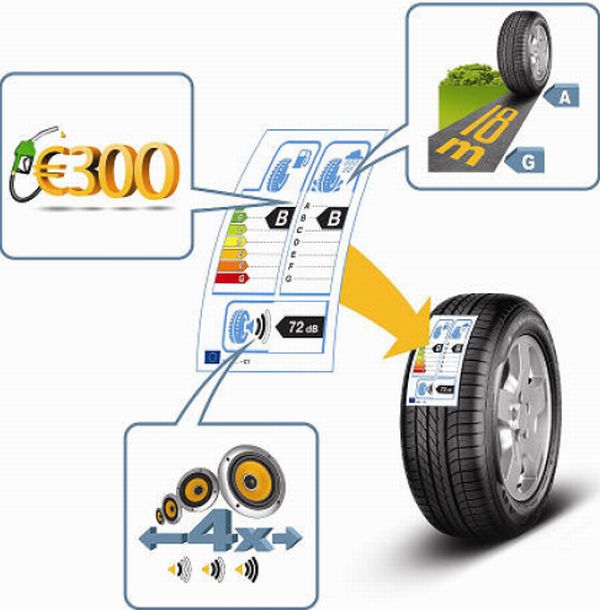
RACE and Goodyear have started a general information campaign to make the new tyre labelling regulation known, which will become mandatory in Europe from November of this year.
The European Union is introducing mandatory tyre labelling this year, with clear information on wet grip, fuel efficiency and external noise. To improve awareness of this labelling in our country, RACE and Goodyear Dunlop are launching an information campaign with educational videos on the Internet and on some social media.
The new tyre label goes a step further than the energy label already in use for major household appliances, as it does not limit itself to providing information on energy efficiency and environmental impact, but also provides information about their safety performance.
Information parameters of the new label
:
Consumption. A rolling tyre deforms and dissipates energy; this is what we know as “rolling resistance”. With lower rolling resistance the tyre uses less energy, less fuel and, ultimately, emits less CO2. Tyres are responsible for the consumption of approximately one in every five tanks, so their performance plays an important role in fuel savings.
The difference in consumption between a car with 4 class A tyres and the same car with 4 class G tyres can reach 7.5%. Following these parameters, if the approximately 15 million passenger car tyres sold each year in Spain were class A for fuel efficiency, up to €1,125 million in fuel consumption could be saved at most.
Grip. The effect may vary depending on the vehicle and driving conditions, but in the case of braking, the difference between class A and class G tyres could reduce braking distance by up to 30%. At 80 km/h this represents a reduction of 18 metres, equivalent to four times the length of a vehicle, which means a reduction of approximately 3 metres as the consumer moves up from category G to A.
External noise. The external noise rating of a tyre is expressed in decibels (dB). Three waves is the current limit, two comply with future legislation, and one wave is 3 dB below the future legal limit. A tyre with three waves emits four times more noise than one with a single wave. The quieter a tyre is, the better it is for the environment. A difference of 3 dB means that the noise from the tyre-road contact INCREASES by 100%.
Source | RACE


 Peugeot E-208 GTi: a battery-powered toy that revives the spirit of the 1980s sports cars
 New Lexus ES: luxury grows and goes electric
 First contact with the Dacia Sandero Hybrid 155: power and efficiency from €19,890
Deja un comentario