Lexus Hybrid Cars Photos Tests SUV
Lexus RX400h and Lexus RX450h, retro comparison (III)
 Diego G. Moreira
10 July 2012
4 min.
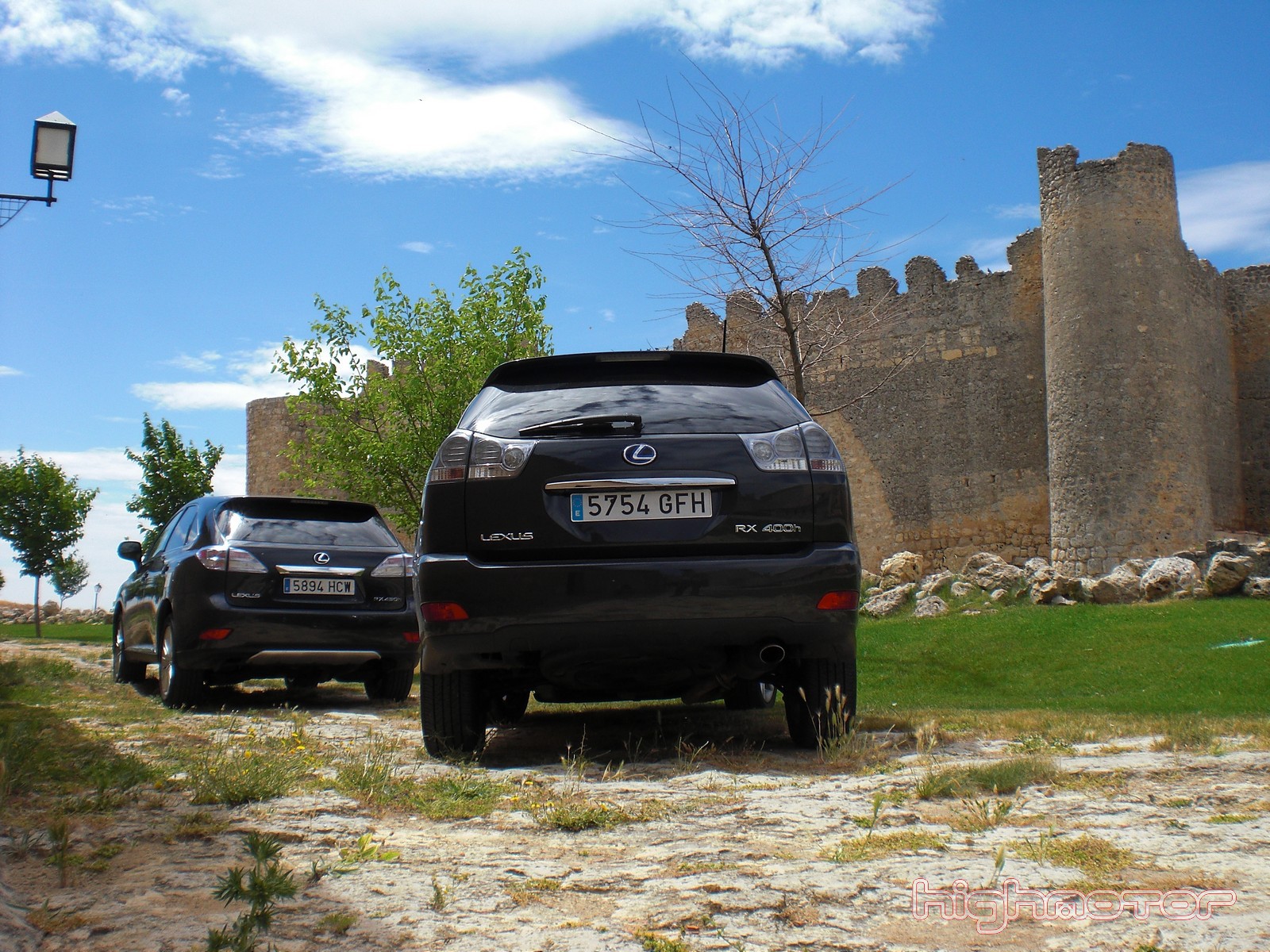
We now reach the final part of this special comparison, special because one of the subjects is a car with around 200,000 km on the clock, as well as being the previous version of the other contender (if we can even call it a contender in this comparison).
We are talking about the Lexus RX400h, on sale since 2005, and the Lexus RX450h, on sale since 2009. Over these past few days we have looked at the details of the older unit, the build quality and even the differences in design and interior. But there is one very important section left: the engine. Both are hybrids, but the RX400h is the first generation, while the RX450h features several significant changes, both in the hybrid system and in the powertrain.
3.3 V6 with 272 CV versus a 3.5 V6 with 300 CV
As the title of this section makes clear, the Lexus RX400h is powered by a set consisting of a 3.3-litre V6 petrol engine and two electric motors (one on the front axle and another on the rear) that together produce a total of 272 CV.
Meanwhile, the Lexus RX450h updates the petrol engine, now featuring a more powerful 3.5-litre V6 which, combined with the two electric motors, reaches 300 CV. But the differences are not just in power, as we also noticed a different behaviour in both cars.
On the one hand, the earlier model has a more aggressive delivery, that is, a more immediate response when we press the accelerator. That said, its consumption is quite high (it is hard to get below 10 litres per 100 km). The RX450h, by contrast, feels somewhat more relaxed and calm in operation, unless we floor the accelerator, at which point it responds with greater ferocity. That said, with the RX450h we can get close to 8.5 litres on the open road.
Another detail the RX450h incorporates is the fully electric mode, the EV mode, which is not available on the earlier model. We can select it from the on-board computer to drive just 2 km in fully electric mode, depending on battery charge or power demands. The hybrid system runs for much longer in the new model, something that is also reflected in the final consumption figures.
That said, it is still surprising that in a car with 200,000 km on the odometer, its 272 CV V6 engine keeps running without any problem, responding strongly to our commands and covering kilometres as if it were a brand-new vehicle.
General Assessment
First of all, we must talk about our protagonist from 2005, the Lexus RX400h. After testing a fairly well-worn unit, we were struck by the quality of the materials and how well it has aged, in addition to the fact that the car was in almost perfect condition, with only a few noises and creaks typical of regular use.
This comparison has also served to show how much progress has been made in the field of hybrids, and above all what Lexus has achieved. We are not talking about just any hybrid, but a large off-roader weighing around 2 tonnes with 300 CV, and in a vehicle of this type, achieving a consumption of 8.5 litres per 100 km surpasses diesel alternatives of similar power.
Technology has also advanced in the service of comfort. Air suspension is a clear example, a highly recommended extra for the Lexus RX, as it improves and raises interior comfort to outstanding levels in a car that is not aiming for sportiness.
We hope that in time we will have the chance to test another used car, as it is a good way to get an idea of details such as reliability, finish and more, which matter greatly to those who, like you or me, want to buy a car that lasts and ages well over time.
Thanks to the Press Department of Lexus Spain for collaborating on this test.
Photos | David Taboada and Diego G. Moreira


 Peugeot E-208 GTi: a battery-powered toy that revives the spirit of the 1980s sports cars
 New Lexus ES: luxury grows and goes electric
 First contact with the Dacia Sandero Hybrid 155: power and efficiency from €19,890
Deja un comentario