Grandland Opel Electric Cars SUV Technology
The new prototype based on the Opel Grandland communicates with pedestrians through a light-based system
 Victor Alós Yus @sepelaci
24 September 2025
3 min.
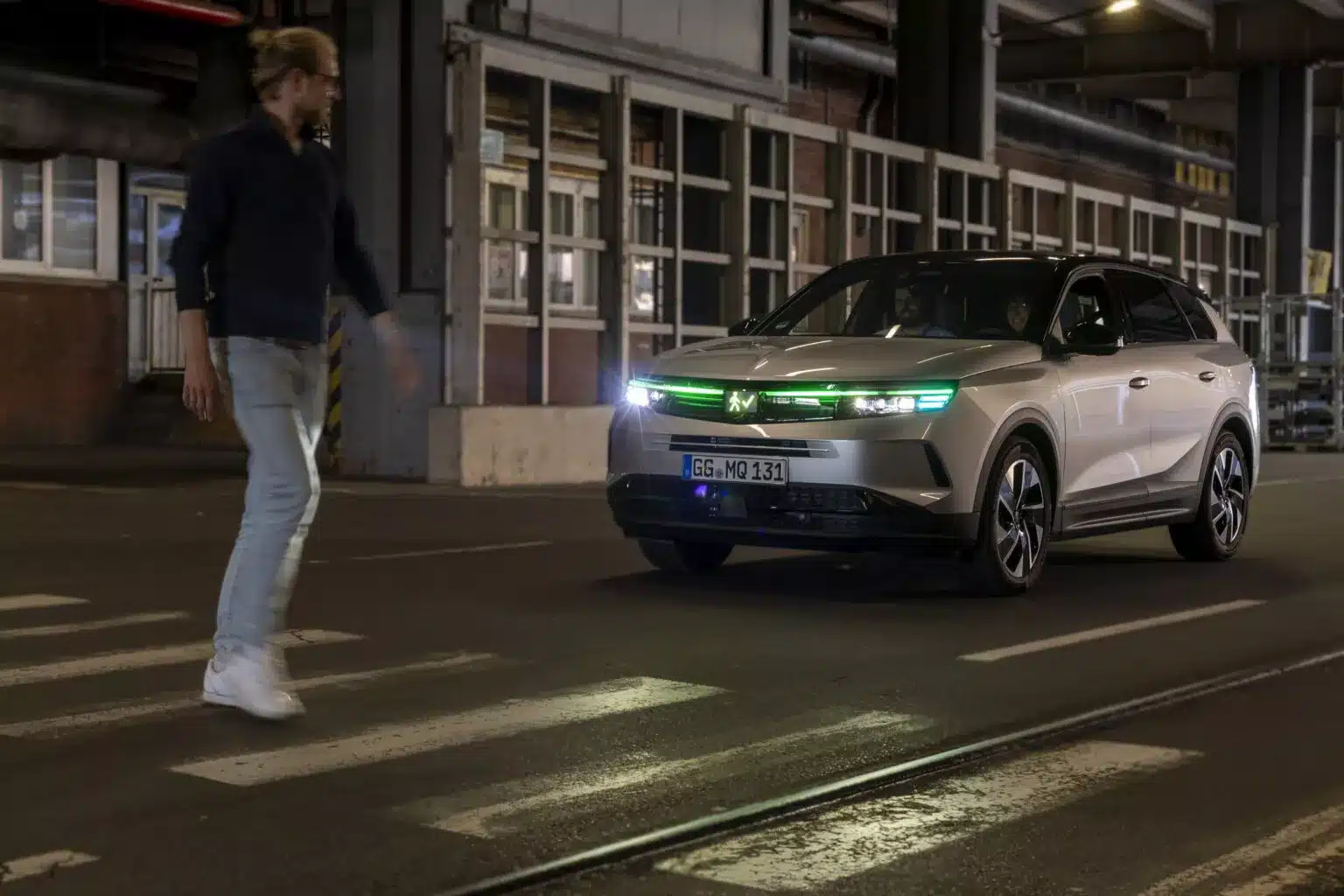
The new prototype of the Opel Grandland features a lighting system designed to communicate with pedestrians when using autonomous driving.
New models use many ways to stay connected, not only with passengers but also with their surroundings. Communication with pedestrians has become important, since it allows the vehicle to warn passers-by of its intentions and avoid risks while driving. The new prototype based on the Opel Grandland features a clever light-based system to do precisely that: communicate with pedestrians.
This unit is equipped with a level 3 autonomous driving system, and a screen has been placed on the front of the car that displays messages aimed at pedestrians. The LED headlights are also part of the system and emit light in colours other than white depending on the message they want to convey, always with the aim of increasing pedestrian safety.
A safety system for when the car drives autonomously
This vehicle is capable of moving autonomously, and at that moment the warning lighting becomes active, to alert pedestrians to every manoeuvre it is about to perform. A camera detects the movements taking place around it, and the AI it carries allows it to anticipate risks with a pedestrian movement prediction function.
Galería de fotos -
OPEL GRANDLAND LIGHTING SYSTEM
When the car operates in level 3 or higher autonomous driving mode, the indicators change their light from white to cyan, to warn pedestrians that it is operating this way. If the camera detects an obstacle in front of the vehicle, it starts braking and the light turns magenta.
The screen placed in the car’s grille normally shows the well-known Opel Blitz, but in these cases it can display a light message, such as a stationary pedestrian and a hand signalling that the car must stop. As soon as the car comes to a halt, the light turns green and shows a walking figure, giving way to the pedestrian. If the situation is more complex, the system asks the driver to take control and carry out the necessary manoeuvres.
Why these colours
These colours were chosen because they have been studied and cyan and magenta are perceived very easily, yet they are not used in any traffic-related situation, unlike red. This makes them identifiable and suitable for use in these situations to show that the vehicle is operating in autonomous driving mode.
This system was developed by Stellantis and presented at the International Symposium on Automotive Lighting (ISAL) in Darmstadt. It is the result of collaboration between the Opel Concept Workshop and students from the Technical University of Darmstadt. This partnership began in 2022 and works by offering lighting solutions for very specific moments during driving.


 Peugeot E-208 GTi: a battery-powered toy that revives the spirit of the 1980s sports cars
 New Lexus ES: luxury grows and goes electric
 First contact with the Dacia Sandero Hybrid 155: power and efficiency from €19,890
Deja un comentario