This is how the McLaren F1 broke the speed record
 David Lopez @espacionblanco
6 February 2017
2 min.
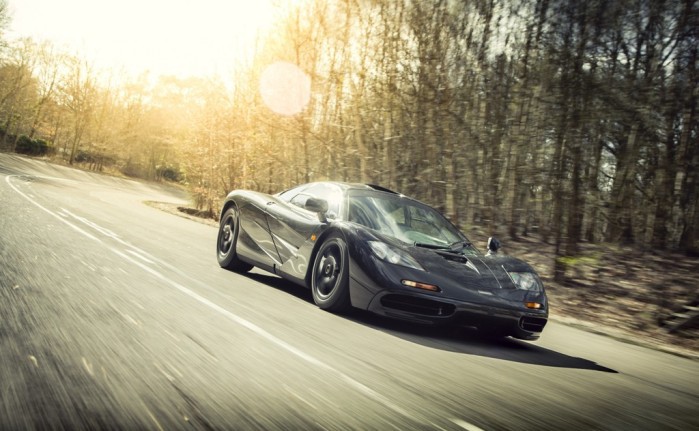
While the successor to the McLaren F1, codenamed BP23, is taking shape in the Woking workshops, and has also got us dreaming of new triumphs following the announcement of the agreement with BMW to develop new engine technology, the English firm is in the middle of celebrating 25 years since the start of production of one of its greatest icons.
The legend of the McLaren F1 began to take shape in 1992, when the design by Gordon Murray and McLaren, started a couple of years earlier, first saw the light of day. Its first kilometres on the road confirmed that under its bonnet, and surrounded by gold to insulate the cabin occupants from the heat, its BMW-sourced engine was a true beast. It was a naturally aspirated V12 engine of 6,100 cc with an output of 634 CV.
But now we go back to 1998, specifically to March 31 at the circuit in the town of Ehra Lessien, a circuit you will surely know as the place where the Bugatti Veyron, among others, has managed to take some records. But earlier, on that date, a McLaren F1 was going to attempt to beat its own record, which it had already previously taken from the Jaguar XJ220.
Behind the wheel of the McLaren F1 was a young Andy Wallace, winner of Le Mans and a driver who had already taken the F1-GTR to the podium of the French race. Wallace knew perfectly well what the F1-GTR was capable of, but the mission that day was completely different: to sit in a road-going McLaren F1 and put the pedal to the floor to extract the car’s maximum potential.
And so he did. On the first attempt, the McLaren F1 beat its own record, reaching a top speed of 388 km/h. They could have stopped there, but Andy Wallace knew perfectly well that there was still something held back that could be unlocked with a few small adjustments. Back out onto the track, he reached 388, 389, 390… and 391 km/h top speed, the car’s limit, and he managed to do it again in the opposite direction to certify the record. In the end, an average top speed of 386 km/h, a mark that would not be taken from it until 2004 by the Koenigsegg CCR, but which it still holds as the fastest naturally aspirated road vehicle.
Now you can enjoy that moment with an unreleased video, which has been revealed thanks to the celebration of the McLaren F1’s 25th anniversary. Sit down, turn up the volume and relive the moment.
[jwplayer file=”https://youtu.be/93CjrQDC0Ic” autostart=”false” mute=”off”]
Source | McLaren


 Peugeot E-208 GTi: a battery-powered toy that revives the spirit of the 1980s sports cars
 New Lexus ES: luxury grows and goes electric
 First contact with the Dacia Sandero Hybrid 155: power and efficiency from €19,890
Deja un comentario