Toyota Coches hidrógeno Comerciales
Toyota and its fuel cell truck begin road tests with real transport operations
 David Lopez @espacionblanco
25 October 2017
2 min.
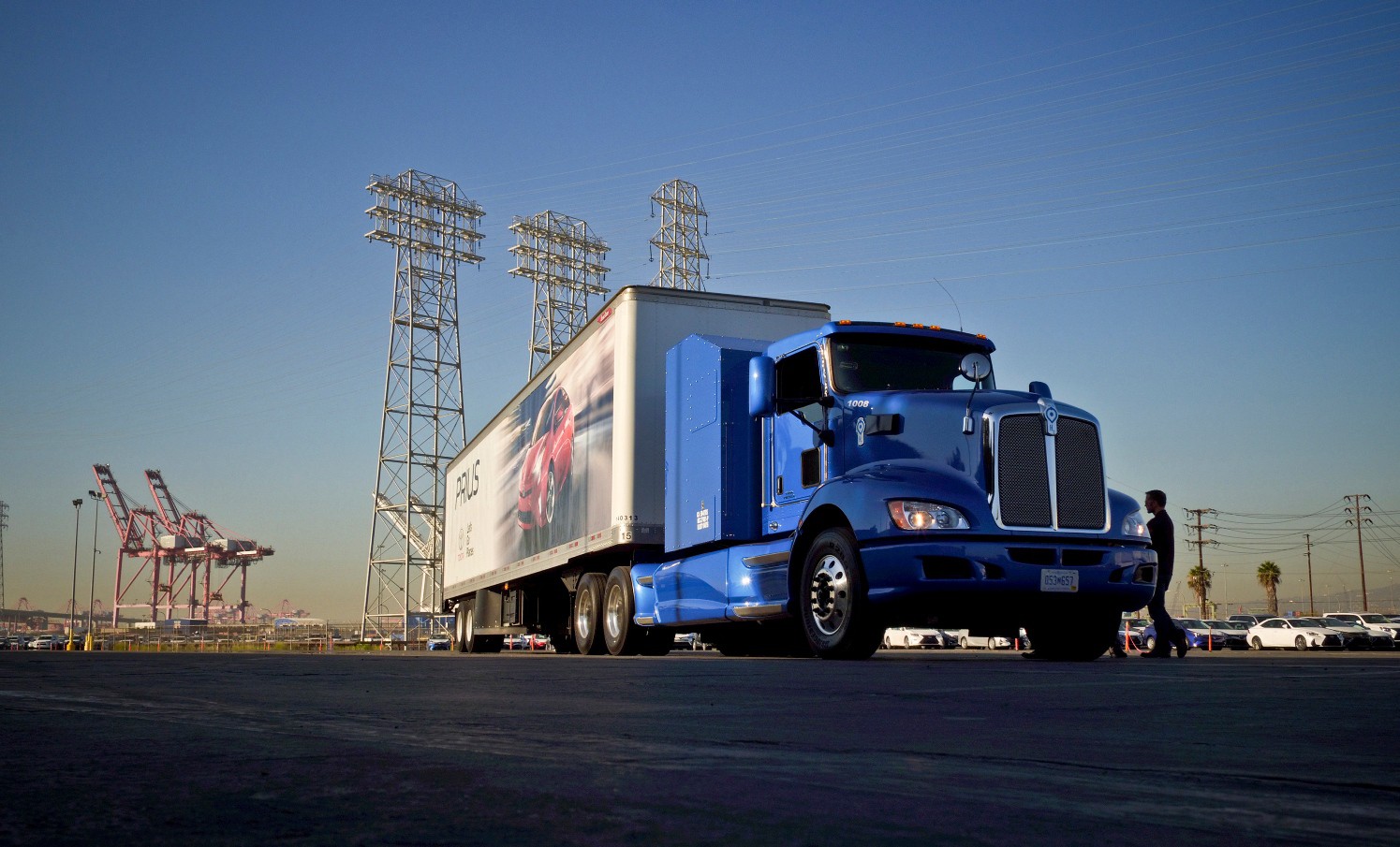
Toyota has decided to take action with its Project Portal fuel cell truck, carrying out real transport runs of around 320 kilometres a day
Although its application in the heavy-goods transport sector is progressing more slowly, this does not mean that manufacturers are not developing electric vehicles for their trucks. One example, among others, is Tesla and its Semi Truck, which is due to be presented in mid-next month, provided that it does not once again delay the launch date for the third time, a situation caused by the delays encountered with its Model 3.
There are also other manufacturers developing their own prototypes using hydrogen fuel cells: Nikola and Bosch plan to launch a model in 2021, while Toyota is also carrying out research in this area, which, after a 6,500-kilometre test period on the roads, is now set to become a reality.
In this way, the so-called Project Portal, developed by Toyota Motor North America in collaboration with the company Southern Counties Express for the transport of goods, will run from the ports of Los Angeles and Long Beach to nearby warehouses and marshalling yards. These routes will serve to gather data during these demanding short-haul transport cycles, in which the trucks are expected to cover 320 kilometres a day, with distances subsequently increasing as the study progresses.
If the Project Portal succeeds, it will mean not only a point in favour of hydrogen fuel cell technology, but also another victory in the effort to reduce polluting emissions. And, as you may well guess, heavy-goods vehicles bear considerable responsibility in this respect, especially at cargo ports where the use of these vehicles is widespread and entirely necessary.
Do not think that the proposal from Toyota uses a specific technology for these vehicles, or that it is something entirely revolutionary. In fact, it uses two fuel cell stacks like those of the Toyota Mirai, needed to deliver the 670 CV and the 1,796 Nm of torque required for transporting goods, accompanied by a 12 kWh battery for charging operations. Its combined payload capacity is 36,000 kg, and its range is expected to exceed the 320 km planned for these transport runs.
The development of the Project Portal will need close monitoring, mainly because it has already become a reality and may also represent a new level of development for hydrogen fuel cell technology.


 Peugeot E-208 GTi: a battery-powered toy that revives the spirit of the 1980s sports cars
 New Lexus ES: luxury grows and goes electric
 First contact with the Dacia Sandero Hybrid 155: power and efficiency from €19,890
Deja un comentario