We test Opel OnStar: what it is, how it works and how much it costs
 Diego G. Moreira
9 December 2016
8 min.
The Opel range comes standard with the OnStar system, a technology that allows the vehicle to be located in an emergency or accident. What is it and how much does it cost?
For several months now, the Opel range has included a standard feature in its equipment, the Opel OnStar. It is not an exclusive feature of the car but rather a whole technology that many brands incorporate into their models, but which the German firm has wanted to take further with more functions and services that not everyone knows about.
Precisely after testing it on several occasions and asking all kinds of questions, we wanted to analyse the Opel OnStar in depth.We tell you everything about how this unique equipment works, its functions and even its price after the trial period.
What is the Opel OnStar?
Essentially a technology – a module, an antenna and an integrated SIM – that keeps the vehicle located at all times and automatically alerts the emergency services if we have an accident (nothing new so far, since the PSA Group also has its own technology, among other brands), but what stands out is that it incorporates a range of services that are not common. The OnStar system gives us a 24-hour assistant we can call (free of charge and from the car) for any mishap, sending routes to the navigator or remotely analysing the condition of our vehicle (for those parameters monitored by the car’s control unit), in addition to having Wi-Fi in the car and a mobile app with which we can lock the vehicle remotely, for example.
Functions of the Opel OnStar
Location in an emergency
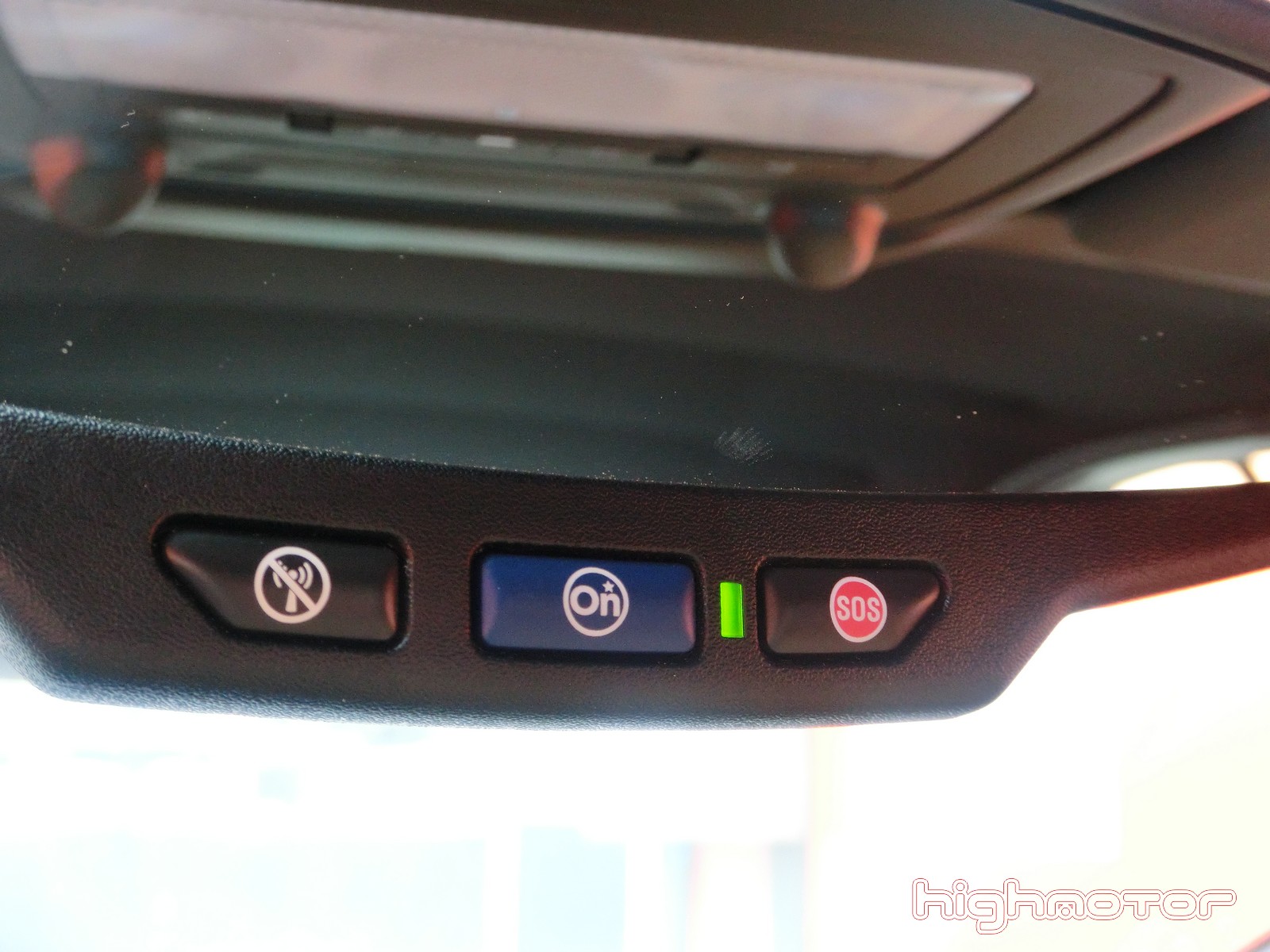
The Opel OnStar system tracks the car via satellite at all times; if the airbags are deployed, it automatically connects to the OnStar centre (in Luton, where there are Spanish-speaking staff) and from the OnStar centre they contact the vehicle automatically through the car’s hands-free system. After analysing the situation, and if necessary, they connect with the 112 Centre (national emergency services), giving them the detailed position of the crashed vehicle.
This system can also be used in the event of an emergency involving one of the occupants, you simply press the “SOS” button and communication with the OnStar centre is established automatically, and if necessary they connect with the 112 Centre (emergencies). It is also useful in case of a breakdown: just pressing the “OnStar” button contacts the OnStar centre, and they can send a tow truck to the location of the breakdown. The last of this technology’s features is that if the vehicle is stolen, once the theft has been reported to the police, OnStar works to locate the car via satellite in direct communication with the police.
And if I don’t want to be so located? Satellite geolocation can be disconnected at any time from OnStar itself, although it will automatically become operational again if the airbags deploy, the emergency button is pressed, or it is activated by the OnStar team in emergency situations (theft of the car, for example).
Wi-Fi hotspot in the car
One of the OnStar’s star functions is Wi-Fi in the car, allowing up to 7 devices to connect (from a smartphone to a laptop). This is possible thanks to an agreement between Opel and Vodafone, which provides the coverage so that both the Wi-Fi and the various communication functions of the OnStar system work. This service is free for the first three months of use or until 3GB of mobile data is consumed and allows up to 7 devices to connect to the internet at 4G speed, depending on coverage.
One of the most interesting features of internet in the car is that it can be used on roaming in several neighbouring countries (such as Portugal or Italy) without any additional cost. Once the three-month trial period ends or we consume the 3GB of data, we will have to purchase a data plan (provided by Vodafone).
Vehicle diagnostics
It is not new that cars coming onto the market are equipped with modern sensors that measure and analyse almost the entire car. This brings greater technical complexity – which we could discuss in another article – but on the positive side, most faults can be detected by the vehicle itself. Until now this information was only available to the workshop, but thanks to the OnStar system, if a problem occurs we can contact the OnStar centre and they will access the “car’s computer” to verify the fault and tell us how to proceed (which in most cases will be to go to the workshop).
If you request it, OnStar will send you a monthly email with information such as: oil level, tyre pressure and the status of the vehicle’s most important systems.
Mobile app
The OnStar app for your smartphone offers several curious functions that are not usually available in mainstream brands. Among the functions we have on our phone: car diagnostic information, opening and locking doors – via OnStar -, locating the car if we can’t find it in a car park, and, if we are nearby, sounding the horn and flashing the indicators. It has one final, very interesting function: if you leave the keys inside and the car locks, you can call OnStar from the app and, after verifying that you really are the owner, they will unlock the car.
Sending routes to the GPS navigator (if our vehicle has a navigator)
Operating the GPS while driving is prohibited and dangerous, so this OnStar feature is interesting and innovative. If you want to set a destination in the navigator, you just have to call OnStar, tell them the destination you want, and they automatically send the route to the car’s navigator. It is an interesting function when looking for a very specific destination, a hotel for example, or a place that is hard to find in the navigator.
Other curious facts about OnStar
To make all these services work, in addition to Vodafone’s mobile technology, Opel has a call centre in Luton (United Kingdom) that receives all OnStar calls in Western Europe. As a curiosity, the call centre staff speak at least three languages in order to have an agile response team according to the usage demands of the different countries. We tested it by sending navigation destinations to the navigator, on a weekday and at the weekend, by day and by night, and OnStar’s response was always quick (just a few seconds of ringing).
In Spain (since November 2015) the emergency accident location system has been activated 22 times, there were 16 theft alerts and 188 roadside assistance calls. The most in-demand service in Spain is locating the car and locking or unlocking the doors (with more than 100,000 operations since November 2015).
How much does OnStar cost?
To start using OnStar you need to register to activate the service, but a distinction must be made between the OnStar service itself and the Wi-Fi hotspot. OnStar is free for one year, while the Wi-Fi hotspot is only free for 3 months or 3GB of data (whichever comes first). Once the free OnStar period ends (not the Wi-Fi hotspot) you have to pay €9.95 per month or €99.50 per year (the second option being cheaper). If we don’t pay, we will not have the OnStar services or the mobile app functions, except for the vehicle status analysis by email for 4 years (if you requested it).
To have Wi-Fi in the car, once the 3 months have passed or the 3GB of free data is used up, you need to purchase a Vodafone plan. Currently there are two options: a 24-hour usage plan or 1 GB of data costing €7, and a monthly plan (28 days) with 5 GB of data for €15 or 10 GB of data for €25. Personally I consider the daily usage plan to be good value for a trip abroad, where data roaming is much more expensive (approximately €6 per 100 MB), while the monthly plan makes sense for intensive data use via a computer or tablet, since 10 GB for €25 is below what the mobile phone market currently offers.


 Peugeot E-208 GTi: a battery-powered toy that revives the spirit of the 1980s sports cars
 New Lexus ES: luxury grows and goes electric
 First contact with the Dacia Sandero Hybrid 155: power and efficiency from €19,890
un comentario
Deja un comentario
Donde lleva la tarjeta sim en el coche