Almussafes embraces the future: Ford workers use exoskeletons for lifting
 Guillermo Lopez
5 February 2018
4 min.
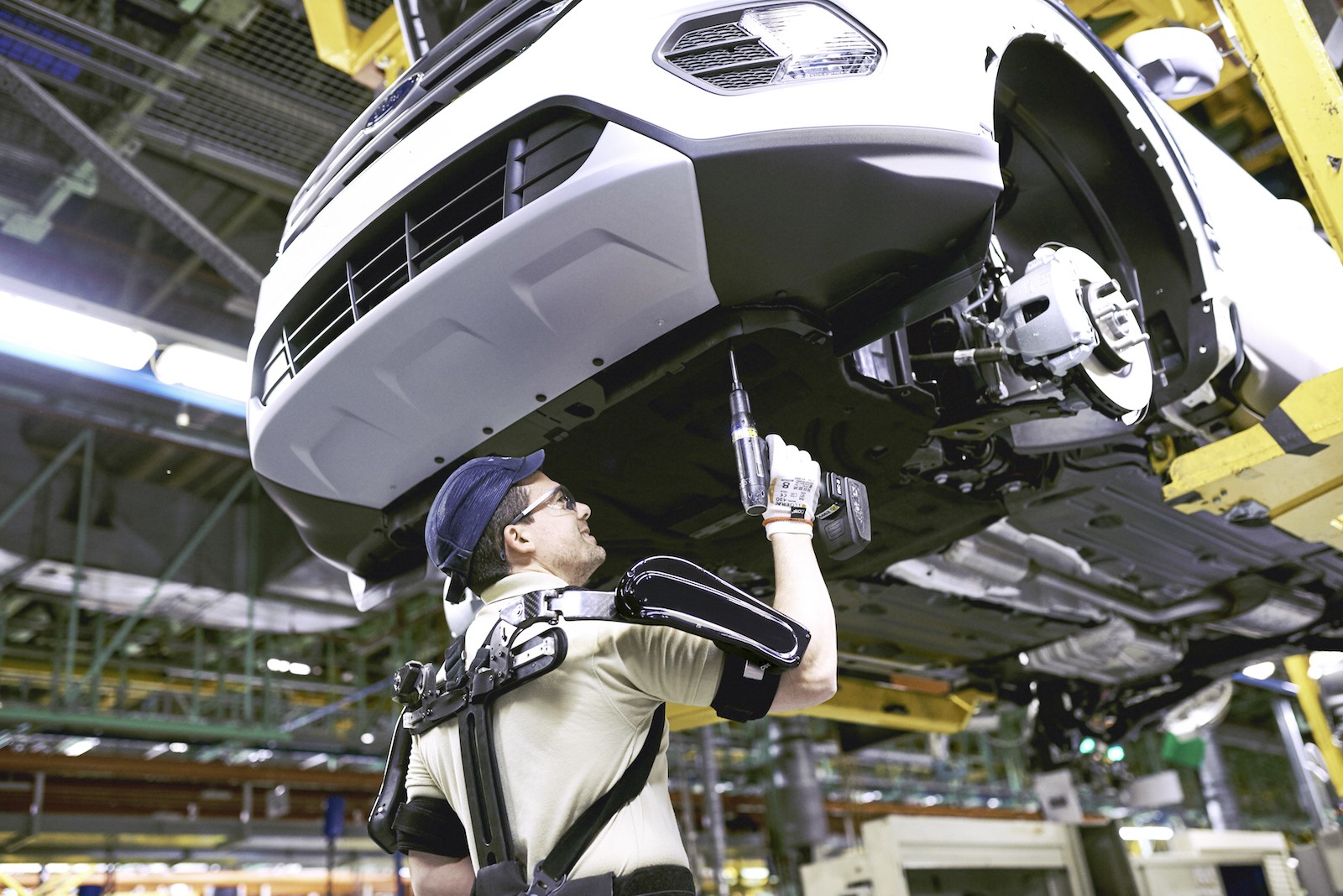
Ford workers at the Almussafes plant use exoskeletons to make loading tasks easier and prevent musculoskeletal injuries
They are not like the ones Lieutenant Ripley used in Alien(*), but they serve the same purpose. The Ford plant in Almussafes, Valencia, is the first factory in the world to introduce the use of exoskeletons to make material loading tasks easier for operators and to avoid, as far as possible, back and other injuries during their work. Exoskeletons allow workers to handle and lift heavy objects more easily. A few days ago we reported that Audi wanted to introduce them, but it has not yet done so across a factory as a whole.
Especially when it comes to routine and repetitive tasks such as those carried out on assembly lines, workers’ shoulders, backs and joints are subjected to considerable strain and wear, as are their muscles. Exoskeletons provide significant reinforcement that minimises the risk of injury by spreading the load of effort, as they transfer weight to the hips, which are stronger and more resistant, thereby reducing the possible risk of work-related injuries.
“Working on the assembly line requires knowledge and skill, and can be physically demanding. It may seem that exoskeletons are something out of a science fiction film, but the truth is that these devices can help reduce stress on our employees and make physically demanding work easier to carry out,” says Dale Wishnousky, Vice President of Manufacturing for Ford Europe. The Ford plant in Almussafes is the first to use them and to integrate this technology into its production process. At Almussafes, Ford produces the Kuga, the Mondeo, the S-Max, the Galaxy and the Transit Connect.
Just as in society as a whole (it is forecast that by 2020, 25 per cent of Europeans will be over 60), older workers and those with mobility problems or musculoskeletal disorders will become more numerous than before. They will be the ones who benefit from the use of these exoskeletons. It should be remembered that 61 per cent of all occupational illnesses are due to musculoskeletal disorders.
Thanks to exoskeletons, operators can lift, move or load any part weighing more than three kilos with hardly any effort Exoskeletons are made from highly resistant materials , such as titanium and carbon fibre. Thanks to them, assembly line operators can lift, move or load any vehicle part weighing more than three kilos while standing and in an awkward posture, without effort. By reducing strain and effort from repetitive movements, exoskeletons offer protection and support against fatigue and help eliminate potential injuries that could take a long-term toll on operators’ bodies.
To implement this technology, Ford relied on the help of its workers. 200 of them were asked for their opinion on how one of these suits could improve their work. 100 of them, those considered most likely to benefit from this technology, worked directly with the suit designers on developing these devices. Currently, there are already 9 workers using them, and before April their number will have risen to 20.
“My job can be like going to the gym. You really have to be fit to carry out some of the tasks. The exoskeleton makes a big difference and I feel much fresher at the end of the shift,” says Ramón Navarrete, a Ford assembly line operator at Almussafes, where he works fitting car interiors, a task for which he now uses the exoskeleton.
For some time now, alongside the introduction of new models on its production lines, Ford has been implementing a whole series of new ergonomic technologies on its manufacturing lines which, besides achieving a significant reduction in the accident rate suffered by employees, have also cut ergonomic problems among its operators by 90 per cent, especially those affecting workers who perform repetitive movements and heavy tasks.
https://www.youtube.com/watch?v=e6CnP69OjQY
(*) Examples of exoskeleton use in cinema are numerous and varied. In Aliens, Lieutenant Ripley used an exoskeleton-crane to load heavy, bulky objects and also to “defend” herself against the attack of the queen mother of the hive. Similar exoskeleton-cranes have also appeared in films such as Avatar or The Matrix, which says a great deal about where the future of this kind of device is heading. But the closest to the approaches used by Ford at Almussafes is undoubtedly the “armour” of Batman or the one worn by Iron Man, although obviously without all the weaponry technology that both contain.


 Peugeot E-208 GTi: a battery-powered toy that revives the spirit of the 1980s sports cars
 New Lexus ES: luxury grows and goes electric
 First contact with the Dacia Sandero Hybrid 155: power and efficiency from €19,890
Deja un comentario