At the wheel of the new Audi Q3: here's what's changed and how the compact SUV from Audi stacks up
 Antonio Roncero @roncero_antonio
29 November 2025
11 min.
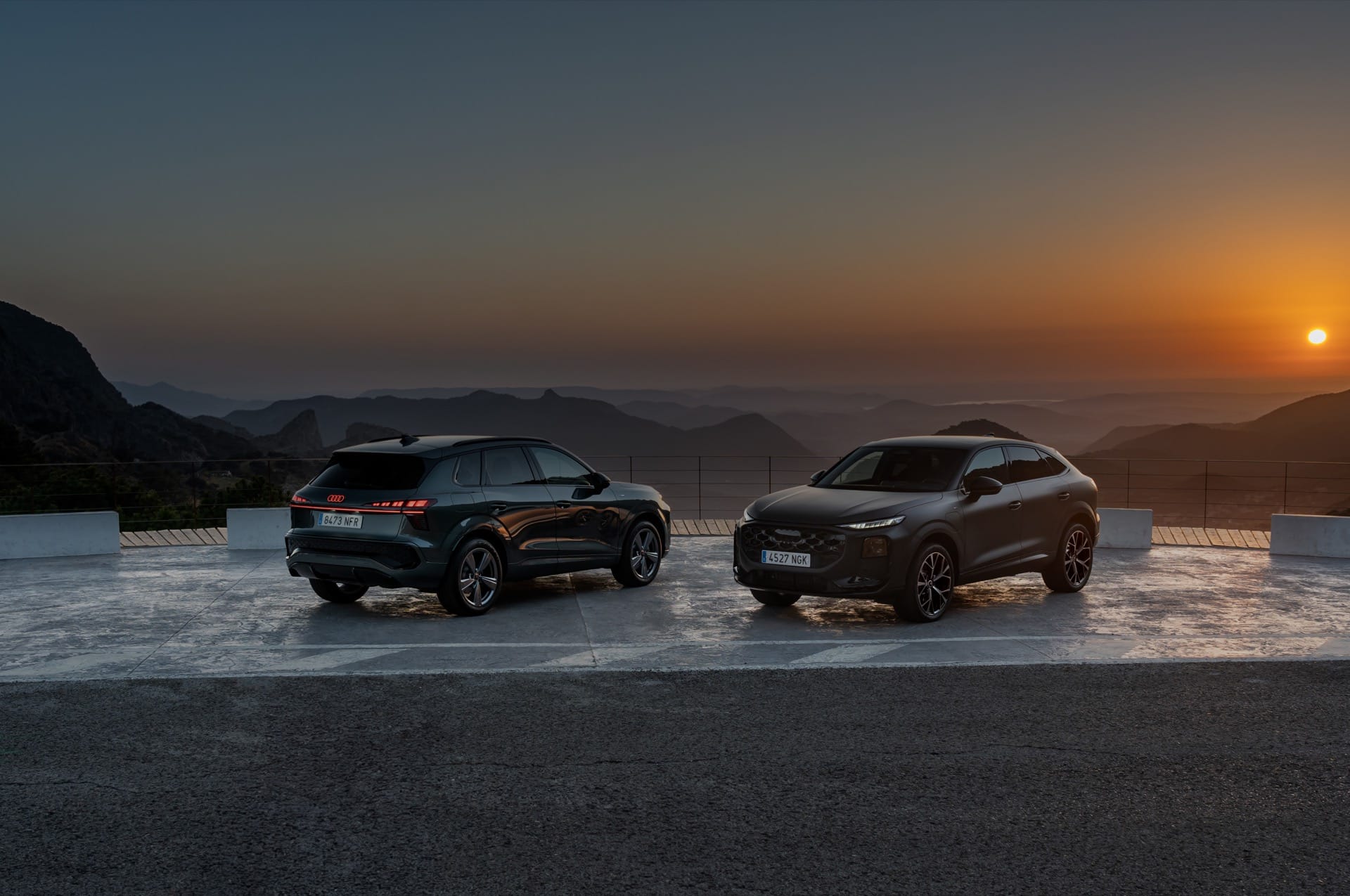
We analysed the changes to the new Q3 after a first drive in which we tested every version of the compact SUV from Audi, and these are our first impressions after getting behind the wheel.
The Audi Q3 is the best-selling model from the four-ring brand in our market, and this third generation comes loaded with reasons to keep it at the top of the sales charts in Spain and a global success. To achieve this, Audi hasn’t limited itself to a simple “facelift”: beyond the design, the new compact SUV boosts everything related to the on-board experience, built on a great deal of technology. We drove it during the national press presentation, and I can already tell you that we loved it.
Q3 exterior design from Audi: more muscle
Externally there are no significant changes in size compared with the outgoing Q3 generation, although the design is completely new, with a front end whose features align closely with the brand’s latest models, especially the Audi Q5. The enormous Singleframe grille takes centre stage, largely thanks to increasingly slim light clusters that can now feature the latest evolution of Matrix LED digital technology. Personally I find it a little hard to get used to the split design of the rear light clusters, which can also include digital OLED technology.
But there’s no denying the brand achieves what it sets out to do: conveying the impression of a more muscular, emotional car without giving up the characteristic SUV look. A strip of light runs horizontally across the tailgate from side to side, and the Audi rings can be illuminated, creating a very eye-catching effect. Depending on the lighting system chosen, the digital daytime running signatures can also be personalised, a feature Audi is incorporating across all its new models.
The range still offers two bodystyles, the Q3 SUV and the Q3 Sportback with its sloping roofline and coupé-like silhouette, a variant that the latter enjoys strong acceptance in our market, and that carries a premium of 1,900 euros. Both measure 4.53 metres long and 1.86 metres wide, while height is 1.59 metres for the SUV and 3 centimetres less for the Sportback. Audi has worked particularly hard on aerodynamics, which in the best case brings the Cx down to 0.30, two points less than the previous model. The new Q3 also boasts being the first Audi in the compact segment to allow front windows with acoustic glazing.
There are new wheel designs, starting at 17 inches and going up to 20 inches. And among the eleven body colours available the range adds some very striking, spectacular tones, such as Sage Green or Madeira with a matt finish. Prices for these paint finishes start at 1,010 euros for metallics and go up to 5,290 euros for matt effects.
Special mention goes to the Matrix LED headlights with micro-LED technology, a far superior option to the LED Plus headlights, which pair with the digital OLED rear light clusters. It isn’t a cheap option, but it provides much more precise lighting and is especially useful when driving at night or in adverse weather. Among its many functions, it can project lane guidance, graphic warnings, such as an ice alert, selectively adjust the beam, guide us through roadworks… The result is incredible, like driving on a true carpet of light that, moreover, communicates with you.
Among its main rivals in the premium compact SUV segment, the Audi Q3 still targets the BMW X1 and its “coupé” variant, the X2, and the Mercedes-Benz GLA. Other alternatives would be the Volvo XC40 or the Mini Countryman.
Audi Q3 SUV image gallery
Interior design: technology and equipment
The driving position of the new Audi Q3 features the Digital Stage, which is already a hallmark of every new model from the brand. It includes the 11.9-inch screen for the digital instrumentation and the curved 12.8-inch MMI display, to which the optional head-up display can be added. The novelty here is that the Q3 debuts Android Automotive OS as its software platform, and it really does work wonderfully. We won’t be long before we see it in other Audi models.
The brand with the rings has also wanted to innovate on the hardware side with a new steering wheel control unit that integrates two modules on the steering column: on the right the gear selector, and on the left a second block with rocker switches for the indicators and a wheel on the edge for the windscreen wipers. It adds functionality because it frees up space on the centre console, although they need a short adaptation period at first; but these new controls end up being very practical in use.
In terms of space, the Q3 has a well-used interior, but bear in mind the lower headroom available in the rear seats of the Sportback compared with the SUV if you’ll be travelling with adult passengers. In the boot there are no differences, with 488 litres of capacity in both bodystyles in the TDI and TFSI versions, which drops to 375 litres in the case of the Q3 e-hybrid. The option to slide the rear bench extends luggage space up to 575 litres, and almost 1,400 litres with the rear seatbacks folded down.
Engine range: petrol, diesel and plug-in hybrid
This is where we find the fewest novelties in the Q3 range, since all the engines are already known from the previous generation or from other Audi models, such as the A3. You can choose between petrol, diesel or an interesting plug-in hybrid version. These are the engines available at launch:
- 1.5 TFSI MHEV 110 kW (150 CV): Four-cylinder 1,498 cm³ petrol with 48-volt mild-hybrid technology, DGT ECO label. Features selective cylinder deactivation, S tronic dual-clutch gearbox with 7 speeds. Front-wheel drive.
- 2.0 TDI 110 kW (150 CV): Four-cylinder 1,968 cm³ turbodiesel, no hybridisation, C label, S tronic gearbox. Front-wheel drive. 2.0 TFSI quattro 150 kW (204 CV) and 195 kW (265 CV): two variants of the 1,984 cm³ petrol engine, no hybridisation, with C label. S tronic gearbox and four-wheel drive.
- e-hybrid 200 kW (272 CV): plug-in hybrid with DGT 0-emissions label. 177 CV 1.5 petrol engine, 115 CV electric motor and a 19.7 kWh net-capacity battery. WLTP electric-mode range of up to 119 km. Front-wheel drive.
We’ll come back to driving impressions and prices later, but it’s worth highlighting that Audi matches the starting price of the Q3 with the entry-level 150 CV petrol and diesel engines. Another interesting point is that the 272 CV e-hybrid with the ZERO label starts at 56,120 euros, around 4,000 euros more than the 204 CV TFSI quattro with the C label. But Audi says the plug-in hybrid can qualify for electric car purchase grants, which would cancel out that price difference and even make the e-hybrid cheaper than the TFSI quattro.
Behind the wheel of the Audi Q3
On the road, the changes made to the chassis let the new Q3 gain ride comfort without losing the dynamic character that Audi wants to keep as a hallmark of the brand. In other words: it conveys that Audi feel, but now it is more refined and comfortable day to day. Especially in versions equipped with damper-controlled suspension, which now includes two-valve dampers and offers greater differentiation between the Audi drive select driving modes, where the “auto” mode gives way to the new “balanced” programme, which will ultimately be the most used.
As for the engines, the three alternatives available at launch are genuinely well balanced. The most interesting is the 150 CV 1.5 TFSI petrol with mild hybridisation, thanks to its restrained consumption, good performance levels, how well it works with the S tronic dual-clutch gearbox, and the benefits of holding the DGT ECO label.
The 2.0 TDI with the same power output is not as smooth in operation, but it is an option to consider for those who do a lot of motorway mileage and are looking not so much for the lowest cost per kilometre as for the assurance that consumption stays restrained regardless of driving style, something the TFSI is more sensitive to.
The Q3 e-hybrid, meanwhile, is the best in the range if price is no obstacle. With a combined output of 272 CV, a WLTP homologated range that now reaches 119 km thanks to the 25.7 kWh battery, which accepts 50 kW fast charging, it delivers exceptional performance both when running in fully electric mode and in hybrid mode, where the new 1.5 engine and the electric motor combine to offer pleasant driving and performance.
It is, therefore, smoother than the TFSI and much more pleasant in electric mode thanks to its instantaneous pull and the absence of noise and vibration, and the cost per kilometre is lower than the TDI’s if you charge the car at home and make use of its real-world range of around 75-80 km between charges. Not forgetting the advantages of the DGT ZERO-emissions label.
Price, versions and equipment of the Audi Q3
The current Audi Q3 range is built around the four available engines, which are combined with the Business, Advanced, S line and Black line trim levels. Every engine and trim combination is available with either SUV or Sportback bodystyle, which carries a premium of 1,900 euros.
List prices start at:
- Q3 SUV TFSI 110 kW (150 CV): 46,620 euros
- Q3 SUV TDI 110 kW (150 CV): 46,620 euros
- Q3 SUV TFSI quattro 150 kW (204 CV): 52,030 euros
- Q3 SUV e-hybrid 200 kW (272 CV): 56,120 euros
These prices are for the Business versions. Stepping up from Business to Advanced adds 1,650 euros to the price, and 2,850 euros to go from Advanced to S line. Moving from S line to Black line costs between 5,130 and 7,850 euros, depending on the engine.
The Advanced premium is worth paying, as it includes significant improvements in comfort equipment and presentation, notably 18-inch alloy wheels, three-zone climate control and heated front seats. S line brings a sportier touch, with 19-inch wheels and S line exterior and interior styling. On Black line models the wheels grow to 20 inches in diameter, and darkened details are added to the grille, roof bars, badges and mirror casings, as well as the Confort Vision package. The latter, which for the other trim levels starts at 3,125 euros, includes LED Plus headlights, illuminated Audi rings at the rear and personalisable light signatures.
Among the most interesting options, which are also available grouped into different packs, are the digital Matrix LED headlights (from 1,830 euros), the panoramic roof (from 1,630 euros), the dynamic pack with sport chassis (from 895 euros) and various ambient lighting packages.
A package worth considering is the Confort Plus Pack, priced from 4,620 euros, which includes, among other elements, the following:
- rear-view camera
- comfort key
- assisted parking system
- adaptive cruise control
- lane departure assist
- electric folding exterior mirrors
- LED Plus headlights
- lane change warning
- obstacle avoidance assist
- progressive steering
Conclusion: one of the best Audi models in the range
The new Audi Q3 keeps the virtues of the previous generation in terms of versatility and space, now with a more attractive look, more technology and an engine line-up that covers every type of user, standing out for the balance of the 1.5 TFSI MHEV with ECO label, and the Q3 e-hybrid for its generous electric range and the performance and driving pleasure delivered by the plug-in hybrid system.
Audi Q3 Sportback image gallery
Technical specifications of this car

 Peugeot E-208 GTi: a battery-powered toy that revives the spirit of the 1980s sports cars
 New Lexus ES: luxury grows and goes electric
 First contact with the Dacia Sandero Hybrid 155: power and efficiency from €19,890
Deja un comentario