At the wheel of the Zeekr 7GT: the electric grand tourer that takes aim at premium brands
 Rafa Guitart @GuitartRafa
22 June 2026
6 min.
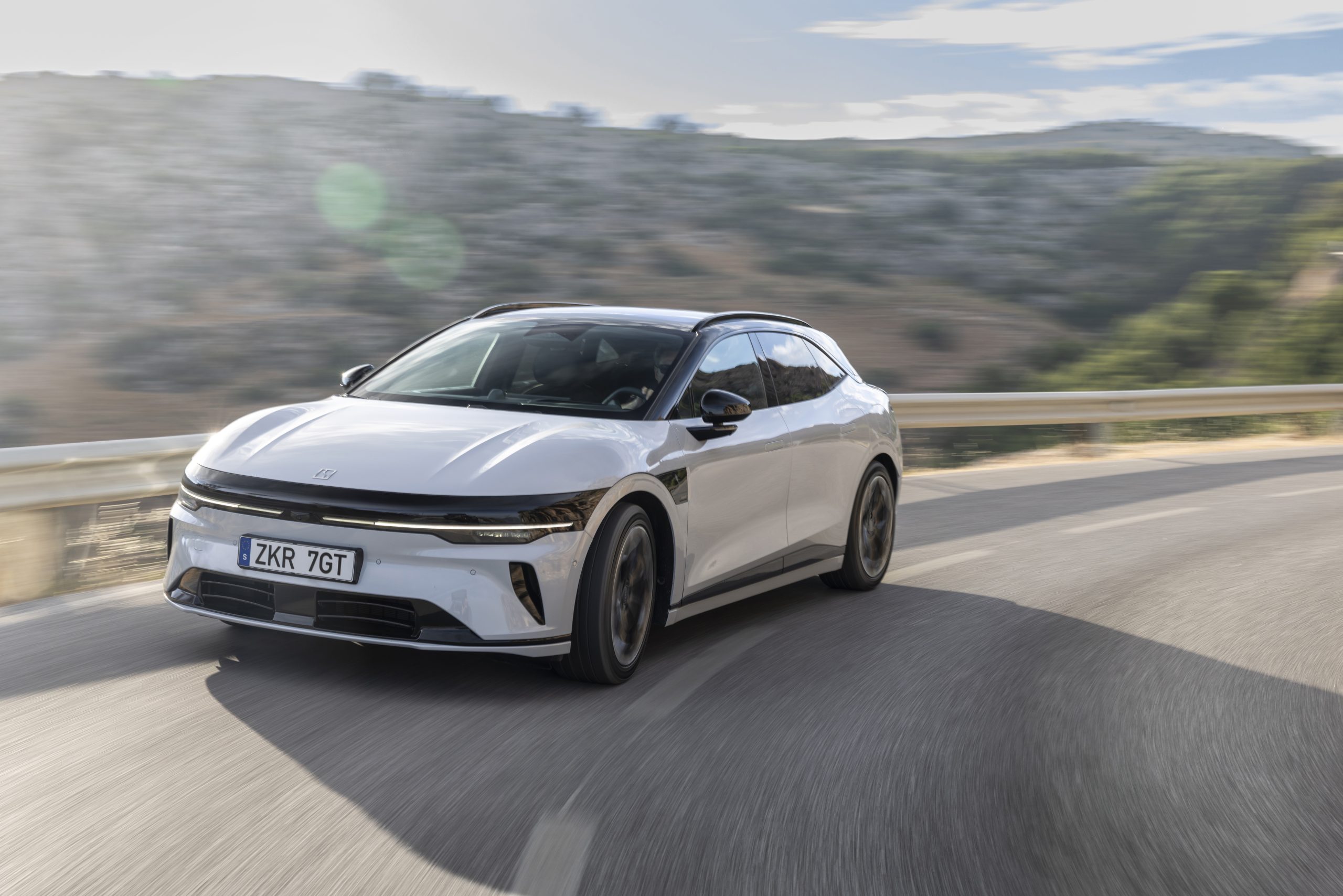
Zeekr, the new Chinese brand with a European soul, is expanding its offensive in the Old Continent with a high-performance estate that combines up to 655 kilometres of range, ultra-rapid charging and a clearly driver-focused approach.
The battle for the premium electric segment in Europe has a new contender. Zeekr has officially unveiled the new 7GT, a model that seeks to stand out from the growing range of electric vehicles by pursuing an unusual formula: that of a grand tourer designed to be enjoyed behind the wheel without giving up practicality.
Developed in Gothenburg (Sweden), the 7GT becomes the fourth model the brand has launched in Europe in just three years. Its arrival also represents an important step within Zeekr’s European expansion strategy, which already operates in 16 European markets and aims to cover around 90% of the continent before the end of 2026.
A GT design with plenty of personality
At first glance, the Zeekr 7GT departs from the SUV silhouettes that currently dominate the market. Its shooting brake styling combines a very low roofline, a long bonnet and a sporty rear that recalls traditional European grand tourers.
With a length of 4.82 metres, a wheelbase of 2.90 metres and a height of 1.46 metres, the 7GT projects an athletic image reinforced by features such as frameless doors, alloy wheels of up to 20 inches and carefully engineered aerodynamics that deliver a drag coefficient of 0.25. Its kerb weight ranges from 2,265 kg to 2,405 kg for the AWD, and the towing capacity of all versions is 1,600 kg.
Beyond its looks, Zeekr has ensured the 7GT retains a significant degree of practicality. The boot offers 456 litres of capacity, expandable to 1,390 litres with the rear seats folded, while under the front bonnet there is an additional compartment for storing cables or small objects (+65 litres in the front frunk, -32 litres in the AWD variant).
Technology and comfort at premium-segment level
The interior follows a philosophy clearly centred on the driver. Highlights include a 13-inch digital instrument cluster that keeps the shapes of a traditional dial display, a 15-inch central OLED screen and a Head-Up Display with augmented reality on the higher trims.
The technology package includes a Qualcomm Snapdragon 8295 processor, over-the-air remote updates, compatibility with Apple CarPlay and Android Auto, as well as a multimedia ecosystem based on Android Automotive.
The manufacturer has also paid particular attention to perceived quality. The front seats feature electric adjustment, heating, ventilation and massage function, while the rear seats offer especially generous space for passengers up to 1.90 metres tall. Adding to this is a 1.73 m² glass panoramic roof that provides a strong sense of openness and light.
Up to 646 hp and 655 kilometres of range
The 800-volt electric platform is one of the main selling points of the new model. Zeekr offers three distinct variants. The entry-level Core version features a 421 hp rear motor powered by a 75 kWh LFP battery, with a homologated range of up to 519 kilometres. Above it sits the Long Range RWD, which keeps the same power output but increases battery capacity to 100 kWh (NMC) to achieve 655 kilometres of WLTP range.
The most performance-oriented variant, the Privilege AWD, uses two electric motors to produce 646 hp and 710 Nm of torque. This allows it to accelerate from 0 to 100 km/h in just 3.3 seconds, while maintaining a range of up to 558 kilometres.
Ultra-rapid charging
Another aspect Zeekr wants to make a hallmark is charging speed. The 7GT supports charging power of up to 450 kW on direct current, allowing it to go from 10% to 80% battery in just 13 minutes on versions equipped with the LFP battery, and in 16 minutes on the 100 kWh variants.
Also noteworthy is the 22 kW alternating current charging, available on all versions, regardless of battery type and capacity. The brand insists performance is not limited to figures. The tuning has been carried out specifically for European roads and includes front suspension with double wishbones, a multi-link rear axle and, on the most equipped version, active air suspension with adaptive damping.
According to Zeekr, the goal has been to combine the comfort of a saloon
with the agility and precision that European drivers expect from a vehicle with sporty sensations and aspirations.
A price that makes a difference
One of the factors that will generate most interest in the European market will be its positioning. The Zeekr 7GT Core RWD, with a 75 kWh battery and 421 hp, starts from 45,675 euros, an especially competitive figure considering its power, range and technology equipment. It announces a maximum combined range of 519 km with a homologated consumption of 16.6 kWh/100 km.
The rear-wheel-drive Long Range variant (100 kWh NMC battery) with the same power and consumption figures increases its maximum range to 655 km. Its price is 52,890 euros.
The top of the range, the Privilege AWD, thanks to its two motors, increases its maximum power to 646 hp and maximum torque to 710 Nm, while consumption rises to 19.8 kWh/100 km. In this case, range reaches 558 km and the price rises to 59,325 euros.
It is available in six different colours, depending on the trim level, and with 19- or 20-inch alloy wheels. As an option, a Nappa leather interior is offered for the Privilege AWD variant.
Good handling
We had the opportunity to drive the top-of-the-range 646 hp AWD variant, equipped with air suspension. The model’s approach makes clear its sporty character, with quick responses and precise movement on all kinds of roads.
There is a clear difference between normal and sport modes, where performance reaches a superlative level. The acceleration it delivers allows lightning-fast overtaking with maximum safety and precision. It features quick steering, suspension that adapts perfectly to the driving style you wish to adopt, and tireless brakes that stop the car with extreme ease.
We were left wanting to carry out a charging session to test the charging power, since 450 kW is a figure that stands far above the average. Although the route driven during the presentation did not involve very high speeds, the average consumption – on winding roads with considerable gradients – did not reach 22 kWh/100 km, which suggests it will achieve very interesting averages in normal use.
However, what surprises most is the charging time, as it promises to go from 10 to 80% at 360 kW DC in 13 minutes for the 75 kWh battery and 16 minutes for the 100 kWh batteries, times comparable to a typical refuelling stop in a combustion-engine vehicle.
Image gallery


 Kia offers an electric range of 10 models, 50 versions and 400 possible combinations
 The seven finalists for the 2027 European Car of the Year (COTY) are exclusively electric
 Peugeot E-208 GTi: a battery-powered toy that revives the spirit of the 1980s sports cars
Deja un comentario