Citroen Xantia Coches clásicos Curiosities
Classic Cars: Citroën Xantia
 Fernando Alvarez
9 December 2012
2 min.
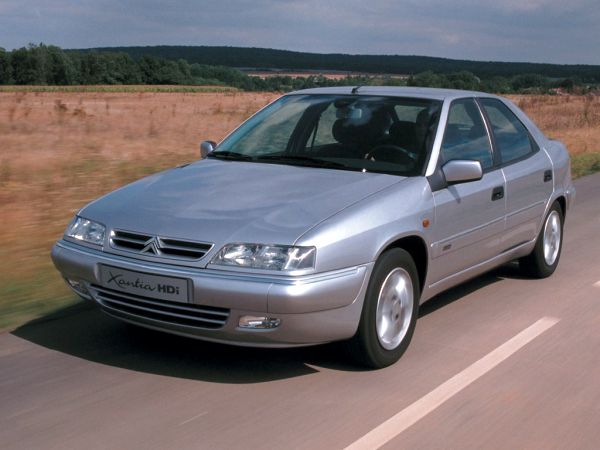
The Citroën Xantia, one of the most beautiful saloons Citroën has produced in recent years, is our guest today in our Classic Cars section.
The Citroën Xantia made its debut on the European market in 1993, replacing the BX. A car with a design by Bertone, offering a reliability, practicality and ride comfort that many users came to appreciate, as shown by the large number of units Citroën sold in just 8 years on sale.
In the early years, the Xantia was fitted with engines ranging from 1.6 to two 2 litres. The 1.6-litre had 90 horsepower, while the rest delivered from 121 to 147 horses, depending on the model. Among the diesels there were several 1.9-litre units until 1996, when both petrol and diesel engines received improvements.
As a feature, the Xantia included a self-steering rear axle that allowed the wheel alignment to change by up to 3º, noticeably improving cornering manoeuvrability. It also had one of the most traditional Citroën features, the hydropneumatic suspension (Hydractive II), fitted with an anti-roll system in corners.
Sales in the early years were very good and would be even better with the new 1996 engines: there was a 2-litre 16-valve engine producing 132 horsepower and a turbo with 147 horses, plus a V6 as the top of the range. The 2.1 turbo was added among the diesels. But almost at the same time as this engine generation change, a new member joined the family: an estate model.
In 1998 the first facelift arrived: the bonnet, lights, rear light clusters, instrument panel, everything was redesigned, and it was improved with new passive safety systems. By 1998 the diesel engine line was joined by the HDi turbo, and the Xantia became wider and longer.
The last Xantia was produced in 2001, being replaced by the more modern, but somewhat bland, Citroën C5.
Source | Xantia Club España, Citroën

 Peugeot E-208 GTi: a battery-powered toy that revives the spirit of the 1980s sports cars
 New Lexus ES: luxury grows and goes electric
 First contact with the Dacia Sandero Hybrid 155: power and efficiency from €19,890
Deja un comentario