Driving in Madrid: new speed limits for vehicles and permitted manoeuvres for bicycles and e-scooters
 Guillermo Lopez
9 October 2018
6 min.
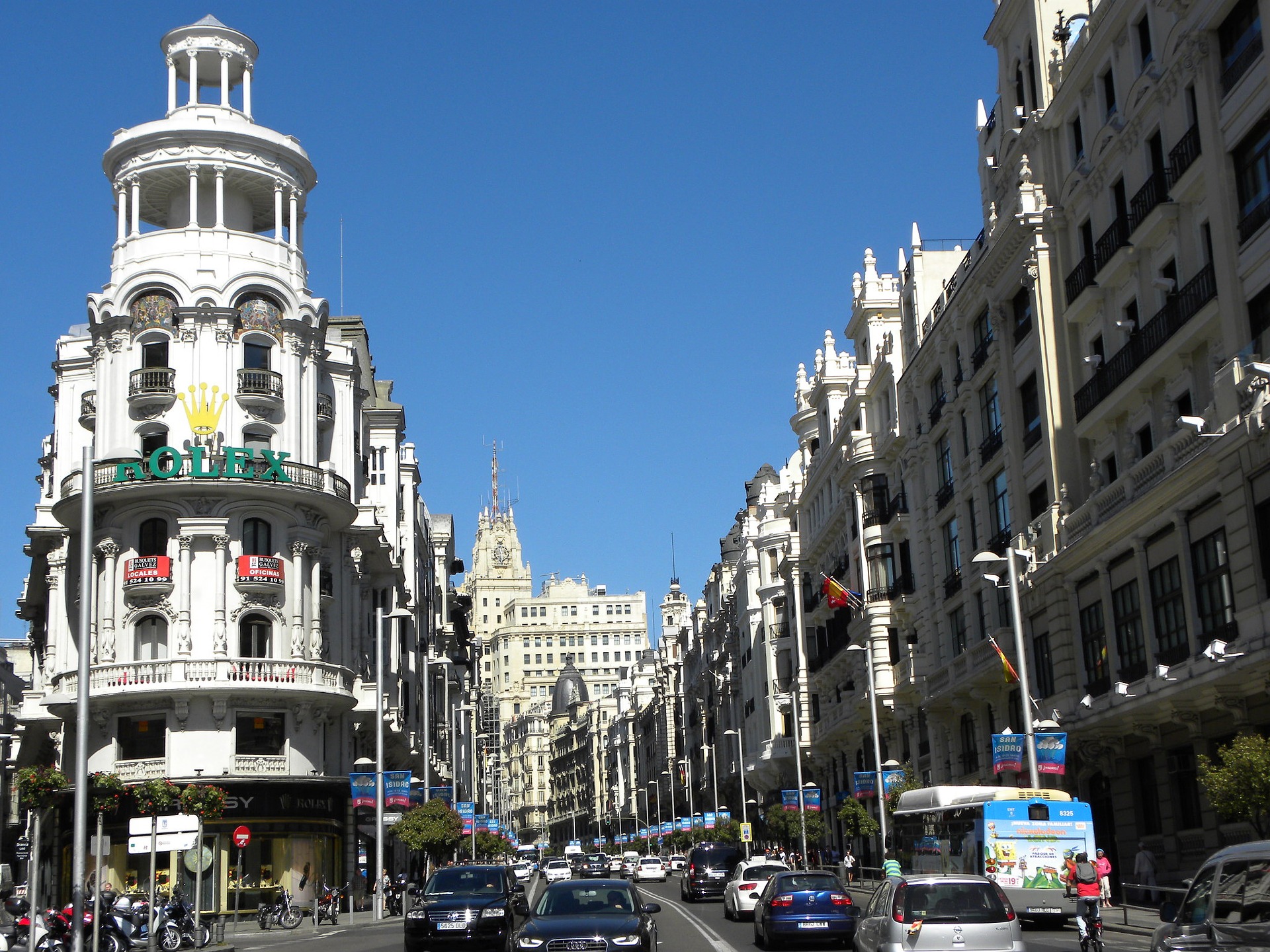
Driving in Madrid is no longer going to be simple: vehicles will face access restrictions and new speed limits, and manoeuvres for bicycles and e-scooters are now prohibited
“Calming traffic and increasing road safety for pedestrians and drivers of all types of vehicles” are the reasons the Madrid City Council cites for introducing new regulations on how motorists may use its streets which, together with the previous measures, make it increasingly difficult to use a private car in the capital.
Every day almost five million cars circulate through Madrid, of which around 1.5 million come from outside the city. There are roughly 53 cars for every 100 inhabitants in the capital. For the city council, the car has become the main enemy to tackle, since its large number of vehicles on the road is “preventing citizens from enjoying their city in a healthy way”, say officials from the Mobility and Transport department of the Madrid council.
Madrid City Council is tightening its grip on car use with a new Sustainable Mobility Ordinance that adds new restrictions which will be very hard to comply with. The council wants to “give back” the city to its citizens and has therefore proposed legislating in such a way as to limit car use to a minimum within the city. In practice, the objective may seem reasonable, but are the measures adopted? Let us look at what they are and analyse whether they are appropriate.
What is the point of limiting speed to 30 km/h on virtually all of Madrid’s streets when the average daily traffic speed on them is below 25 km/h, and up to 10 km/h lower in the centre and historic quarter?
New Madrid sustainable ordinance: speed limits
| VEHICLES | ||
|---|---|---|
| AREA | LIMIT | REMARKS |
| General for all vehicles throughout the city | 50 km/h | |
| Single-lane streets | 30 km/h | Pedestrians may cross wherever they like provided there is no risk and it does not obstruct traffic |
| Streets with one lane per direction | 30 km/h | |
| Neighbourhoods with a shared surface (pavements and carriageway at the same level) | 20 km/h | Pedestrians have priority |
| M-30 | 70-90 km/h | According to protocols |
| M-40 | km/h | According to protocols |
| City access roads | >50 km/h | According to protocols |
| 30 zones | 30 km/h | Pedestrians may cross wherever they like provided there is no risk and it does not obstruct traffic |
| BICYCLES | |
|---|---|
| MANOEUVRE | REMARKS |
| Turning right at a red light | Permitted where the manoeuvre is signalled by the traffic light |
| Riding against the flow of traffic | Only in shared-surface neighbourhoods, bike lanes and cycle streets |
| E-SCOOTERS | |
|---|---|
| MANOEUVRE | REMARKS |
| Riding on pavements and pedestrian areas | Only without motor |
| Riding in bike lanes and cycle streets | Only without motor |
Quite apart from the endless roadworks that motorists have been suffering in Madrid for years (inexplicably, the pavement renovation works on Gran Vía and Atocha are lasting as long as, or longer than, the construction of the M-30 tunnels), the new Madrid Sustainable Mobility Ordinance limits the maximum speed inside the city to 50 km/h, the same limit that already existed, but adds a new 30 km/h limit for single-lane streets and for streets with one lane per direction, which is equivalent to limiting the speed of traffic to 30 km/h on up to 83 per cent of the city’s streets. This limit drops to 20 km/h on streets where the carriageway is at the same height as the pavements.
Making the free movement of pedestrians on its streets safer and helping to reduce exhaust emissions are the main reasons the council gives for adopting these new speed limits on its streets.
Average speeds on Madrid’s streets barely reach 25 km/h under the current limits. For the Madrid Association of Car Distributors (AMDA), this measure will not solve the city’s traffic problems, nor its air pollution problems, nor the road safety issues the council refers to. On the contrary, its adoption may make them worse.
According to AMDA, “the main causes of pedestrian knockdowns in cities are pedestrian carelessness, poor street lighting, and distractions for both pedestrians and motorists (according to DGT studies)”. AMDA notes that of the 4 pedestrian knockdowns that occurred daily in Madrid in 2017, a large part of the responsibility lies with pedestrians themselves, who move around the city “paying more attention to their smartphones than to their surroundings as they walk”, walking with “their ears plugged while listening to music through headphones” and “crossing streets in prohibited places… against the red light and not using pedestrian crossings”. A problem which the progressive increase in the use of electric vehicles will “increase, since these vehicles are very quiet and have no engine noise“, so that they do not “make their presence more audible to pedestrians”.
As regards speed, AMDA says “it has been proven that driving at a speed of 30 km/h or lower is not suitable for a city like Madrid“. Furthermore, it points out that “driving so slowly, below 30 km/h, can make traffic worse, producing more hold-ups and jams”.
AMDA also states that the measure adopted may be counterproductive, since “Madrid City Council is taking for granted that drivers will know how to drive below 30 km/h without over-revving their engines. On the contrary, driving in first or second gear means a more revved engine, which entails greater emission of harmful gases” caused by the higher fuel consumption produced when driving in low gears, this being one of the first basic points that the IDAE advises avoiding in efficient driving practice.
And, further elaborating on the council’s conceptual error, it is precisely diesel engines, those that the city council has attacked most irrationally and without much reflection, that can more easily “maintain a low speed with the engine working at a lower rev range, the opposite of a petrol engine”.
According to AMDA, “experts recommend changing gear between 2,000 and 2,500 revolutions per minute in petrol cars and between 1,500 and 2,000 rpm in diesels, but this is no use if we change gear within those ranges and go so slowly that the car practically stalls, the engine then overexerting itself to avoid stopping, which makes consumption and therefore emissions soar”.


 Peugeot E-208 GTi: a battery-powered toy that revives the spirit of the 1980s sports cars
 New Lexus ES: luxury grows and goes electric
 First contact with the Dacia Sandero Hybrid 155: power and efficiency from €19,890
Deja un comentario