CR-V Honda Eventos Photos Tests SUV
Honda CR-V 2012, presentation and test drive in Munich (I)
 Diego G. Moreira
21 September 2012
4 min.
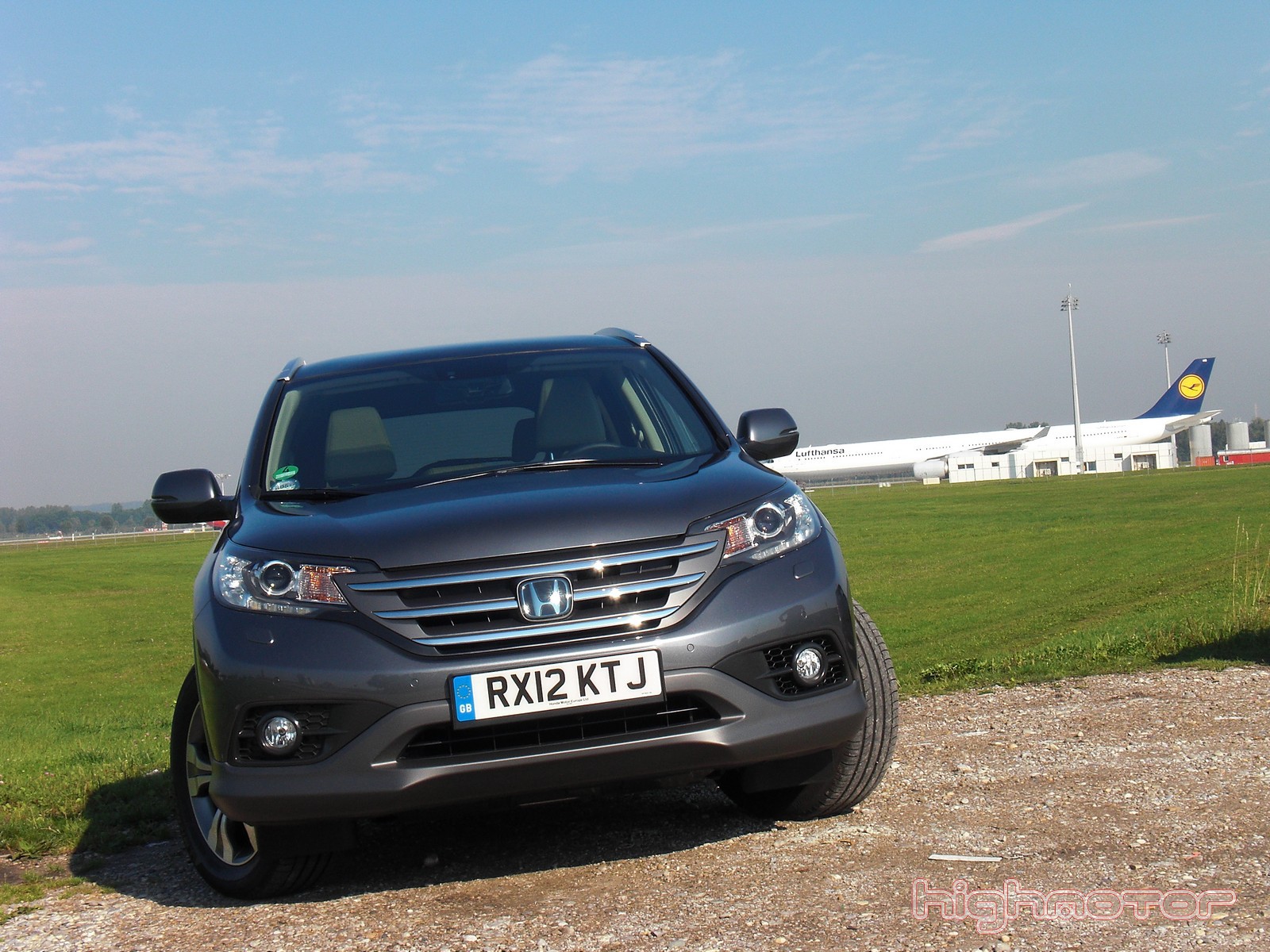
First drive in Munich of the Honda CR-V, the fourth generation of this Japanese SUV.
Back in 1997, when few people knew what an SUV was, the Honda CR-V arrived on the market. The first generation remained faithful to all-wheel drive, petrol engines and, above all, a look more rugged than road-oriented.
But times change, cars get updated, and demand has since shifted towards SUV styling with qualities closer to on-road driving than off-road use. This is precisely one of the changes most noticeable in the fourth generation of the Honda CR-V, which we tested at the European presentation in Munich and which goes on sale next November.
On this first drive we were able to see the Japanese SUV up close, which takes on a premium feel in its handling, equipment and cutting-edge technology. One example is the system that keeps the car automatically within its lane, turning the steering wheel when necessary.
Throughout this article we will discuss in detail the redesigned styling, equipment, engine range and our first drive in the CR-V. A model sold in 160 countries and manufactured in the United Kingdom for the European market.
New interior design and improved interior quality
The Honda CR-V has been redesigned inside and out in this fourth generation, and this is not something we say ourselves: the changes are plain to see. The new exterior design improves aerodynamics and gives the model a more elegant profile suited to European tastes.
The exterior look is one of robustness; the large grille and LED daytime running lights stand out at the front, an element available only in Europe. From the side, the expansive glazing that reaches almost to the boot stands out, creating a silhouette similar to an MPV and letting plenty of light into the cabin.
At the rear, LED technology is once again used for the taillights. The tailgate now offers optional electric operation, an equipment item inherited from the Accord Tourer.
In the interior the changes are also numerous, since the aim was to create a lower driving position, closer to a passenger car. The quality of the dashboard plastics has been improved, with some soft-touch areas; still, there is work to be done in this field (hard plastics on dashboards are typical of Japanese cars). Even so, the perceived quality is high and a sense of space fills the cabin.
Some details remain unchanged from the previous generation, such as the high position of the gear lever (a true success) and the climate control knobs (which keep their circular design). Other practical details have also been added, such as padding on the centre console where passengers’ knees make contact.
Simplicity of controls is the dominant note on the centre console; the steering wheel is the only one under some strain, with a large concentration of buttons.
The rear seat space remains very generous; the legroom in particular is surprising. The boot has also been reworked, with greater capacity (589 litres) and a lower loading lip to make it easier to load heavy objects.
Another novelty: from the boot you can fold the seats down with just a touch of a lever, (this is not new) but the lower seat cushion folds and the upper one slides over it, all with a single lever, is a good innovation.
Engine range and efficiency as a goal
In the new Honda CR-V the brand has managed to reduce harmful emissions by 12%; consumption stays the same but emissions go down. Some improvements have also been made, such as the new electric steering, more efficient than the previous hydraulic system.
The engine range remains intact: on one hand there is the 2.2 i-DTEC diesel engine with 150 CV, and on the other the 2.0 i-VTEC petrol engine, also with 150 CV. The novelty is the upcoming launch in 2013 of a new 1.6-litre diesel with 120 CV. But until 2013 we will not see this engine in either the CR-V or the Civic.
The latest novelty in this section is the ECON button, typical of hybrids, which makes its way into the CR-V, acting on the accelerator and air conditioning to achieve more efficient driving. In addition, to show whether we are driving efficiently or not, the instrument cluster lights up on the side in green or blue (from more eco to less).
In the second part of this first drive in Munich we will talk about equipment, with special attention to technical safety improvements, and we will finish with our first drive in the Honda CR-V.
Photos | Diego G. Moreira
Technical specifications of this car


 Peugeot E-208 GTi: a battery-powered toy that revives the spirit of the 1980s sports cars
 New Lexus ES: luxury grows and goes electric
 First contact with the Dacia Sandero Hybrid 155: power and efficiency from €19,890
Deja un comentario