Atto 3 BYD EV4 EV6 Hyundai IONIQ Ioniq 5 KIA Leaf Nissan Electric Cars Compact Comparisons Tests
Hyundai IONIQ 5 vs KIA EV6: which Korean compact electric car delivers better range and performance
 Iván Navarro
3 September 2026
6 min.
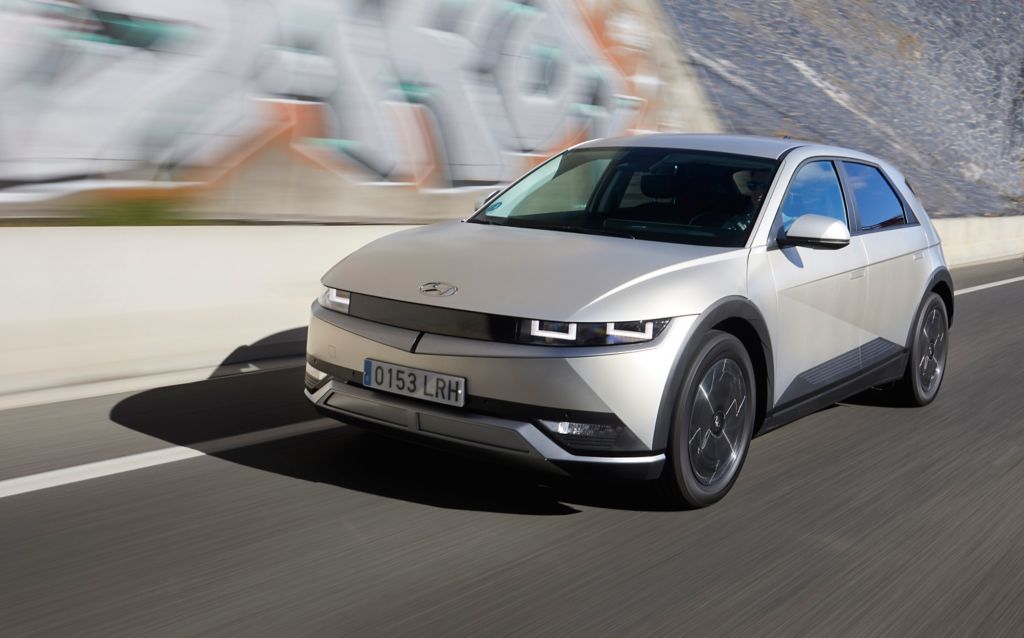
We compare the entry-level versions of the Hyundai IONIQ 5 and the KIA EV6, two siblings on the E-GMP platform with opposing approaches. We analyse range, performance and price to decide which one offers better value.
They share a skeleton, a battery and power output. And yet they barely resemble each other beyond that. The Hyundai IONIQ 5 vs KIA EV6 is one of those comparisons where the engineering leaves the factory with two different design briefs: one looks back with 80s-inspired touches and a crossover silhouette, the other stretches into a coupé-like line almost worthy of an electric grand tourer. The E-GMP platform gives them the same starting point — 800-volt architecture, rear-wheel drive in the entry versions, a 63 kWh battery — but the final result invites debate.
A note before the analysis: in this Korean-versus-Korean comparison we have left out proposals that could have competed in the segment. The BYD Atto 3 is not included because the goal here is not to crown an absolute winner among compact electric cars, but to isolate the internal duel within the Korean house. And the Nissan Leaf, for all it contributed to popularising the electric car, is ruled out in our view because the current generation of EVs has raised the bar on range, charging curve and digital experience to a point where its offer no longer competes head-to-head with what these two provide.
The family duel: two cousins with opposite characters
Sharing the same bones does not mean they walk the same way. Hyundai chose a tall body for the IONIQ 5, almost a modern MPV, with short overhangs and that parametric pixel design language which has aged surprisingly well. KIA went the other way: a lowered roof, a steeply raked rear window, coupé cues and a more laid-back stance on the road. On paper, two cars. In practice, two philosophies of use.
Hyundai IONIQ 5 — from €44,670
The entry version of the IONIQ 5, the 170 63kWh Light, features a rear electric motor of roughly 170 hp powered by a battery of around 63 kWh. The ≈440 km WLTP rated range is not a record figure, but it suits mixed use without anxiety. What is interesting, in my view, is how it makes use of the 3-metre wheelbase: a cabin that feels a segment above, with a flat floor, sliding seats and a movable centre console that turns the interior into something closer to a living room on wheels than a traditional car. It has more going for it than its own spec sheet, and that counts.
| Power kW | Power hp | |||||
|---|---|---|---|---|---|---|
| 125 kW | ≈170 hp | 185 km/h | ≈440 km WLTP | 15.6 kWh/100 km | ZERO | Electric |
KIA EV6 — from ≈€49,000 €48,995
Mechanically, the EV6 Standard Range Air is practically the same car: ≈170 hp, a battery of ≈63 kWh, 185 km/h top speed. Its rated range is 428 km, barely ten less than its cousin. The real difference lies in how it drives. The lower body, the slightly favourable centre of gravity and a slightly firmer suspension tune give it a more sporty feel. It is not an electric GT, let us be clear, but it is enjoyed more naturally on winding roads. That said, you pay for it with less rear space and a boot that is somewhat less generous in usable volume.
| Power kW | Power hp | Top speed | Range | |||
|---|---|---|---|---|---|---|
| 125 kW | ≈170 hp | 185 km/h | 428 km WLTP | 16.4 kWh/100 km | ZERO | Electric |
Real-world range: a technical tie
On rated consumption the difference is marginal. In real use, it will depend more on the right foot and whether the car lives on motorways or in the city than on the brand. Both hover around 16–17 kWh/100 km in a benign mixed cycle; on a motorway at 120 km/h they climb to figures close to 20–22 kWh/100 km, as expected for bodies of this size and aerodynamics.
Fast charging: the shared advantage of 800 V
This is where both cars stand out against much of the competition. The 800-volt architecture allows a charge from 10 to 80% in just over 18 minutes on a charger of sufficient power. For long journeys, it changes the rules. And yes, it remains a differentiating argument in 2024, although Chinese rivals are beginning to close the gap.
Performance and dynamics: the EV6 tips the balance
On paper the figures are virtually identical. On the road they are not. The EV6 feels more planted through fast corners, while the IONIQ 5, with its greater height, conveys a little more body roll. Is the IONIQ 5 quick? Yes, without drama. Is it as enjoyable as the EV6? It depends on what you are looking for. For family trips, the Hyundai. For more spirited driving, the KIA.
Interior space: the IONIQ 5’s territory
Rear seats, boot capacity, sense of space: here the Hyundai wins by a landslide. It is a car designed to be lived in, not just driven. A detail that is by no means minor if the electric car is going to be the household’s main vehicle.
Interior and technology: same software, different staging
Dual 12.3-inch screens in both, infotainment built on the same base, similar quality materials. The IONIQ 5 opts for cleaner, minimalist lines; the EV6 for a centre console that wraps around the driver. A matter of taste. Neither disappoints, and neither dazzles compared with what Chinese rivals are offering in the same price bracket, something already evident when comparing compact electric cars below €45,000.
Price and incentives: the IONIQ 5’s trump card
And we come to the detail that may break the tie. The IONIQ 5 starts at €44,670, the EV6 at €48,995. That is a difference of ≈€4,300 for two mechanically identical cars. Both are eligible under the general framework of the Plan Auto+, whose amounts and conditions should be checked on the official website before signing. A warning to the reader: the prices quoted are the manufacturer’s indicative RRP, without dealer discounts, one-off campaigns or incentives applied.
Summary table and editorial score
| Model | Range | ||||||
|---|---|---|---|---|---|---|---|
| Hyundai IONIQ 5 | ≈440 km | ≈170 hp | €44,670 | 9/10 | 7.5/10 | 8.5/10 | 8.5/10 |
| KIA EV6 | 428 km | ≈170 hp | €48,995 | 7.5/10 | 8.5/10 | 7.5/10 | 8/10 |
Verdict: which Korean compact electric car delivers better
If the decision were purely about numbers, they would tie. It is not. The IONIQ 5 wins on interior space, entry price and that “built-to-last” air that not every electric car manages to convey. The EV6 takes the prize if the driver wants a sportier feel and a more commanding silhouette. In our view, the Hyundai is the rational choice; the KIA, the emotional one. Both are highly competent cars, and choosing between them is already a luxury problem.
Frequently asked questions
Do the IONIQ 5 and the EV6 share the same platform?
Yes. Both are built on the E-GMP platform of the Hyundai-Kia group, with an 800 V electrical architecture and the same fast-charging solutions.
Which one has more real-world range?
In the entry versions analysed, the IONIQ 5 is rated at ≈440 km WLTP and the EV6 at 428 km. The real-world difference on the road is practically negligible and depends more on driving style than on the model.
What is the difference in starting price?
The IONIQ 5 starts at around €44,670 and the EV6 at about €48,995, roughly €4,300 apart. Indicative RRP prices, without discounts or incentives applied.
Are they eligible for the Plan Auto+?
Both fall under the general framework of purchase incentives for electric vehicles in force in Spain. The specific amounts and requirements should be checked on the plan’s official website before making the purchase.
Technical specifications of the cars in this article


 Peugeot E-208 GTi: a battery-powered toy that revives the spirit of the 1980s sports cars
 New Lexus ES: luxury grows and goes electric
 First contact with the Dacia Sandero Hybrid 155: power and efficiency from €19,890
Deja un comentario