Hyundai Sedans Electric Cars Range / versions
Hyundai Lafesta EV, the new South Korean electric saloon set to conquer China
 Victor Alós Yus @sepelaci
4 December 2019
2 min.
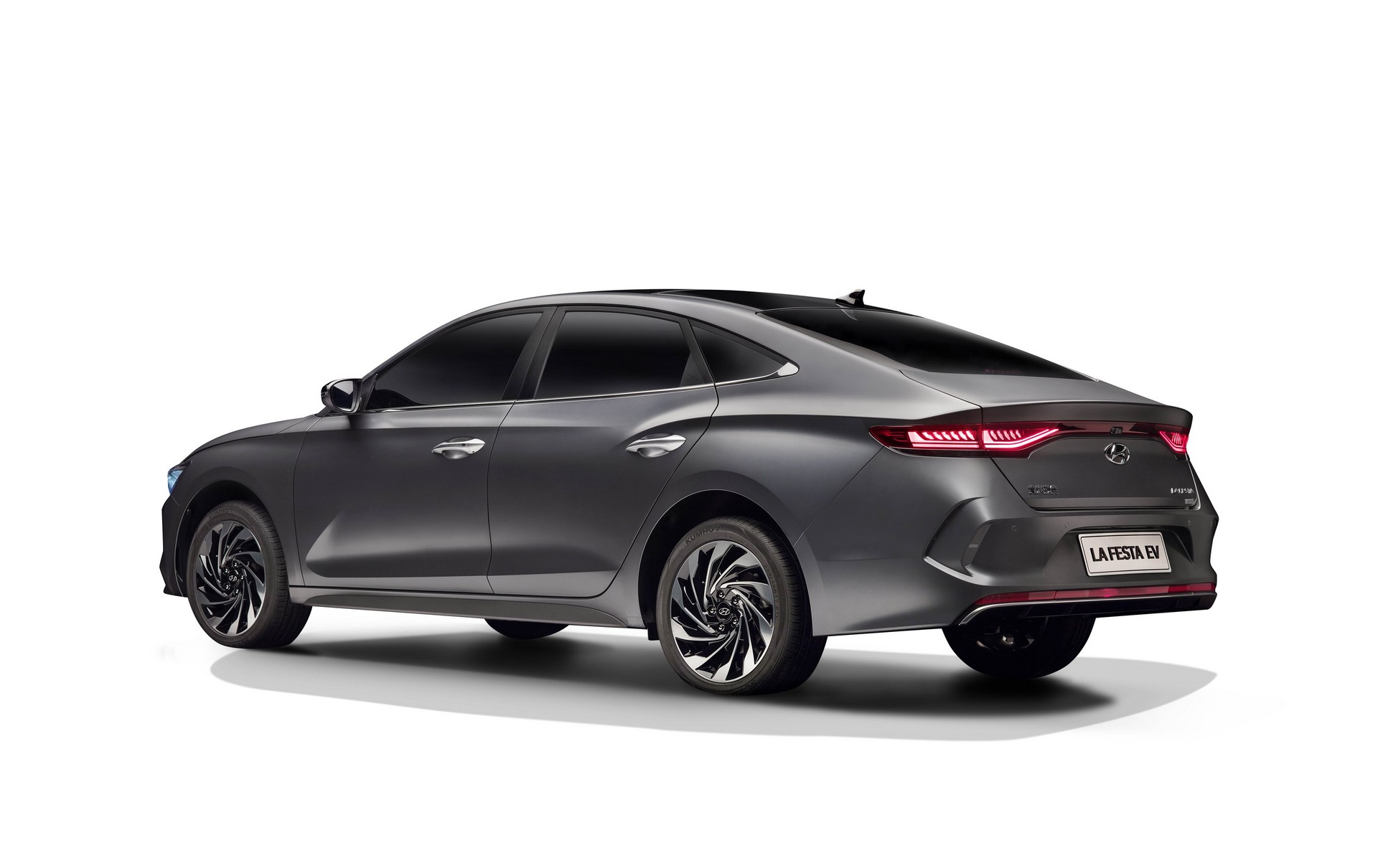
The South Korean manufacturer has unveiled a new version of its saloon aimed at the Chinese market, featuring a fully electric powertrain, which will go on sale in 2020
China is always a market to keep in mind, and in recent years a good number of electric cars have been launched in that country to compete strongly in the field of zero-emission vehicles. Hyundai is one of the brands daring to take this on, and that is why it has presented the fully electric version of the Hyundai Lafesta.
The Hyundai Lafesta EV is a saloon with sporty lines that reached the Chinese market in 2018 and will now have a fully electric version. The launch of this variant will take place next year and it features some quite interesting characteristics.
Exterior of the Hyundai Lafesta EV
The main difference with the combustion engine variant lies mainly in the front. It features a closed grille flanked by slim headlight units. The Hyundai logo is centred beneath a black trim. The styling keeps the look of the brand’s new design language, called Sensuous Sportiness, which the previous versions of the model also followed.
Moving on with the exterior, at the front we can also see LED daytime running lights and wheels designed to improve aerodynamics. At the rear it has a redesigned bumper and, as it has no exhaust, a new diffuser has been added.
Technological interior
The new Hyundai Lafesta EV has an interior where technology predominates. The instrument cluster is digital and sits on a digital display, which shares space with a 10.25-inch central multimedia screen. The navigation system shows the charging points closest to the car’s position, among other features. Driver assistance systems are also present in the model so that driving is not only environmentally friendly but also safer and more efficient.
Powertrain of the Hyundai Lafesta EV
As for the powertrain driving this version of the Hyundai Lafesta EV, it consists of a 56.5 kWh lithium-ion battery, which powers an 150 kW electric motor, the equivalent of 204 CV. The maximum torque this motor delivers is 328 Nm, which provides plenty of power and torque from the very start.
The battery will offer a range of 490 km on a single charge and allow drivers to enjoy the drive without emission concerns, which is very important in China. For the time being, it is a car that will only be sold in China, but it is very likely that its mechanics and other characteristics will be replicated in some model we enjoy in Europe.


 Peugeot E-208 GTi: a battery-powered toy that revives the spirit of the 1980s sports cars
 New Lexus ES: luxury grows and goes electric
 First contact with the Dacia Sandero Hybrid 155: power and efficiency from €19,890
un comentario
Deja un comentario
Es realmente hermoso!