New mobility: should cyclists have to obtain a licence to ride through the city?
 Guillermo Lopez
30 October 2018
7 min.
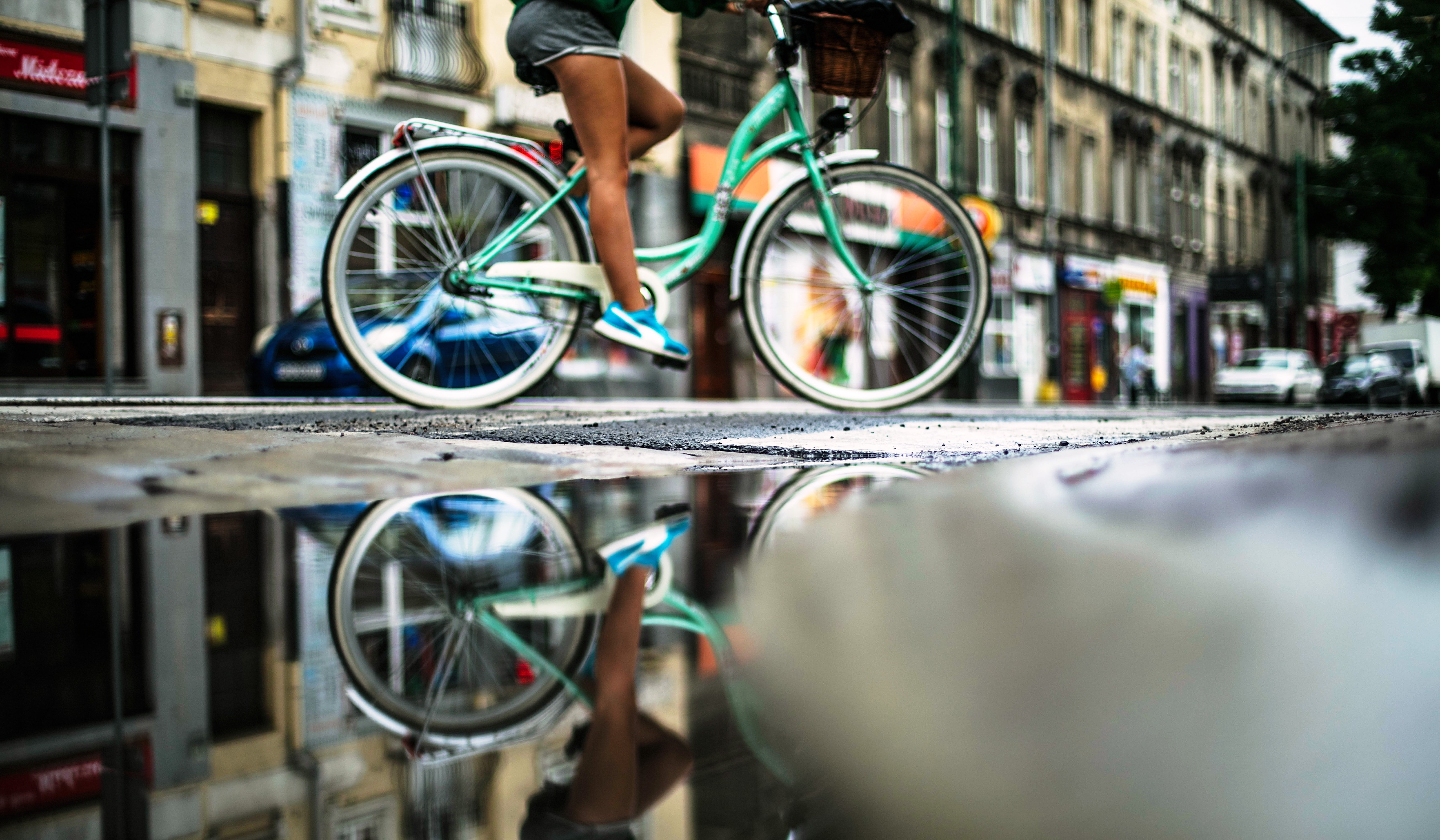
Any vehicle travelling on public roads should be subject to a minimum set of rules and safety guarantees, yet bicycles and e-scooters get off scot-free.
The new mobility regulations of city councils such as Madrid’s are favouring the development of pedestrian and cycle mobility on its streets and roads, allowing these groups free use of them with equal rights—if not priority—over motor vehicles. However, although it promotes the use of bicycles and scooters on equal terms on the city’s streets, it does not, on the contrary, require even the slightest competence or knowledge of road signs from those who venture onto them. Is this logical?
Riding a bicycle or e-scooter through the streets of Madrid or Barcelona requires nothing more than courage and access to the aforementioned vehicles in order to do so. Cyclists and e-scooter users need only the will to take on the risk of riding between cars in the dense traffic that usually fills our city streets. And while car, lorry and motorcycle users must first demonstrate that they have acquired a minimum theoretical knowledge of the basic traffic rules that should be required of all vehicles, cyclists and e-scooter users are exempt from such a requirement.
Number plates for bicycles: equality before drivers and motorcyclists
Any vehicle travelling on a road open to motor traffic is capable of causing an accident, especially if its driver does not know the normal behaviour required to avoid possible collisions or rear-end impacts between the different vehicles on the road, or the basic traffic and conduct rules that all drivers—whether or not of motor vehicles—must observe at all times in order to try to ensure road safety as far as possible. And just as a car, lorry or motorcycle driver must demonstrate a minimum of knowledge and skill before getting behind the wheel, should this not also be required of those who ride bicycles or e-scooters on the streets?
And just as motor vehicles must be identifiable, should cyclists and e-scooter users not also be identifiable through a clearly visible badge or plate? And, going further still, if the users of these last two vehicles are responsible for or cause any traffic incident, should they not have insurance that would cover the damage their vehicles might cause?
At present, there is no register of bicycles or e-scooters that would allow each individual unit we pass in the street to be identified, just as their users are not required to demonstrate that they have the knowledge needed to correctly interpret the signs and markings on the streets they use, nor the responses they should give in the traffic situations they may find themselves in.
Road safety regulations: for cyclists too
Neither pedestrians nor cyclists are required to apply any knowledge beyond what common sense dictates, but by allowing them to travel on equal terms along the city’s roads and streets, new situations are being created that clearly breach the traffic rules that all other vehicles must observe.
When a motor vehicle goes through a green traffic light, the last thing expected is to encounter a vehicle that has run a red light; likewise, when a motor vehicle drives along a one-way road, the last thing expected is to meet a vehicle travelling in the opposite direction. Unfortunately, these situations are becoming increasingly common on the streets of cities such as Madrid and Barcelona, and the ones most often involved are cyclists and e-scooter users.
Similarly, drivers of motor vehicles are required to show the utmost respect by leaving a minimum distance of one and a half metres when overtaking a cyclist, so as not to disturb the cyclist’s progress; yet cyclists—like many motorcyclists—do not keep such distances when overtaking cars in traffic. A growing number of cyclists “overtake” cars on the right in critical situations, for example when cars are looking for a parking space on their right. In most cases, this ends with cyclists or motorcyclists hitting the car as it turns.
Car drivers are required to be able to stop their vehicle in all circumstances to avoid hitting the vehicle in front, whatever manoeuvre it makes. To do so, they must always adjust their speed and keep their full attention on traffic conditions. This is taken to the extreme when establishing liability in incidents where insurance must step in: generally, the driver behind is considered “at fault”, since their duty was to be able to stop at all times had they maintained an appropriate speed and distance from the car ahead. No such responsibility is ever required of cyclists or e-scooter users.
Car drivers may not wear earpieces or small earphones inserted in their ears to listen to the radio or navigation instructions or to talk on the phone while driving. Likewise, cyclists and e-scooter users may not do so either, yet the number of them riding with large headphones in their ears is growing (when they are not simply ear-warmers to protect against the cold).
Accident victim: the cyclist flees with no responsibility
The other night, driving through a narrow, dark street in the centre of Madrid, a bicycle with no lights to warn of its presence, with a cyclist wearing dark clothing and no reflectors of any kind, suddenly turned a corner, travelling in the opposite direction to the flow of my street. I am still wondering how we both managed to avoid colliding. I am clear that I swerved my car immediately, which caused a serious impact on my side door against a bollard, the kind the council installs to stop cars parking on the pavements. What I am not at all clear about is how the cyclist managed it, because by the time I wanted to get out of the car, they were already riding at full speed to the end of the street, fleeing and without even showing their face to take responsibility. If, as a driver, I fled the scene of an accident without showing my face or facing my possible responsibility for what happened, I could end up arrested and facing serious charges, because a number plate makes my car identifiable. The cyclist fled without being identifiable in any way.
For many, requiring that bicycles and e-scooters have insurance (whose price could in many cases exceed that of the vehicle itself) or that their users obtain a permit or licence to use them on roads open to motor traffic may prove counterproductive and run counter to the administrations’ current policy of promoting their use on city streets. However, a growing number of users of those roads—including pedestrians—warn of the serious risks this creates. The road safety of everyone is at stake, especially that of cyclists and e-scooter users who, as the weakest link in traffic, also need protecting. And their greater protection must also come from greater knowledge of, and respect for, the rules of the game.
And what do you think about this?


 Peugeot E-208 GTi: a battery-powered toy that revives the spirit of the 1980s sports cars
 New Lexus ES: luxury grows and goes electric
 First contact with the Dacia Sandero Hybrid 155: power and efficiency from €19,890
Deja un comentario