5 OMODA Hybrid Cars SUV Technology
Omoda 5 SHS-H: the hybrid that redefines the relationship between design and efficiency
 Óscar Sanz
16 December 2025
5 min.
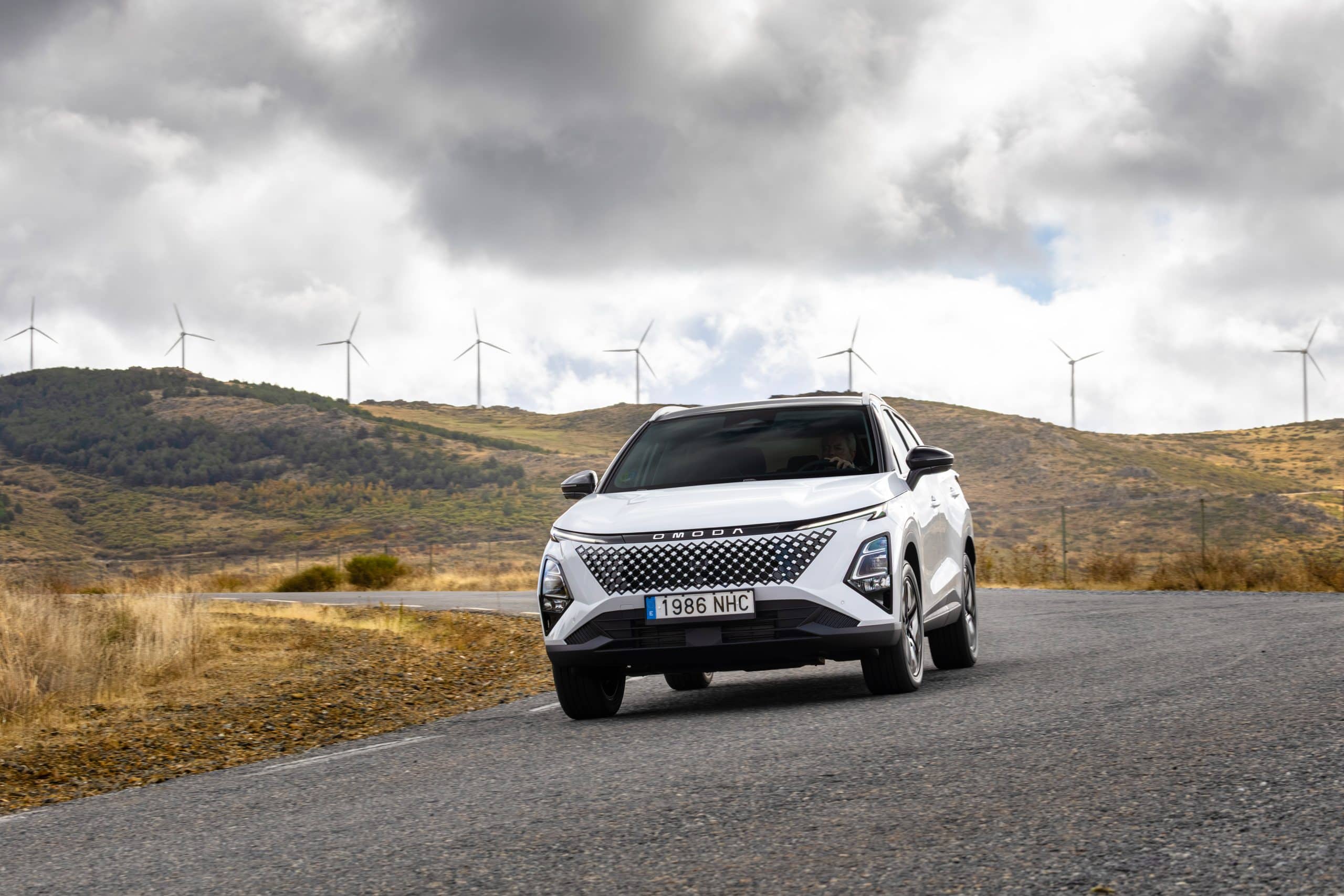
An SUV hybrid in which every design decision — exterior, interior and structural — is aimed at reducing consumption, improving comfort and maximising the efficiency of the hybrid system in real-world use
In the segment of non-plug-in hybrid SUVs, efficiency no longer depends solely on the mechanical system. Factors such as aerodynamics, airflow management, structural design, material choice or even interior architecture increasingly play a key role in consumption, comfort and the overall performance of the vehicle.
The Omoda 5 SHS-H is a clear example of this new approach: a hybrid designed from the outset so that form and function work together in favour of efficiency. Its design — exterior, interior and structural — has been conceived as an active tool to reduce consumption, improve comfort and maximise the use of electric propulsion.
What efficiency means in the Omoda 5 SHS-H
Before analysing the design, it is worth defining the concept. In the Omoda 5 SHS-H, efficiency is not limited to the homologated consumption of 5.3 l/100 km (WLTP) or its 120 g/km of CO₂, but is understood as a set of simultaneous objectives:
- Reduce the energy needed to move the vehicle.
- Maximise the use of electric propulsion.
- Minimise aerodynamic and acoustic losses.
- Optimise comfort without penalising weight or consumption.
This comprehensive approach is directly reflected in its exterior, interior and structural design.
Exterior design: aerodynamics applied to a compact SUV
The design of the Omoda 5 SHS-H is not merely aesthetic. Every element of its bodywork responds to specific aerodynamic criteria aimed at reducing drag and, therefore, energy consumption.
The borderless parametric grille reduces front turbulence and improves the airflow towards the sides of the vehicle. Unlike traditional grilles with prominent frames, this solution favours a more controlled air intake, especially relevant in a hybrid where system cooling must be efficient but not excessive.
The side profile, with clean surfaces and smooth transitions between panels, contributes to a more stable airflow along the bodywork. The hatchback-style sloping roofline not only provides visual dynamism but also reduces the aerodynamic wake at the rear, one of the most critical points in terms of drag.
At the rear, the full-width LED lights and the functional twin spoiler help manage airflow separation, improving stability at constant speed and reducing small energy losses that, accumulated, influence final consumption.
The result is a compact SUV that, despite its dimensions (4,447 mm long, 1,824 mm wide and 1,588 mm high), maintains an effective balance between visual presence and aerodynamic efficiency.
Interior design: efficiency also means quietness and comfort
In the Omoda 5 SHS-H, the interior design also plays a direct role in efficiency, especially regarding acoustic comfort and the perception of quality during electric driving.
The soundproofing work — double-layer acoustic glass, specific insulation in the bonnet and structural points, hydraulic mounts — allows interior noise to be reduced by up to 20 dB at certain frequencies. This has a direct effect:
- It favours longer use of electric mode by improving the experience in urban driving.
- It reduces the need for sudden acceleration to “feel” the vehicle’s response.
In addition, the choice of lightweight, well-fitted materials in the cabin helps keep weight under control, a key aspect in any hybrid system. The T1X multi-energy platform makes it possible to integrate battery, electric motors and transmission without sacrificing space or unnecessary mass.
The clean dashboard design, dominated by the 12.3 + 12.3 inch dual curved display, reduces structural complexity and concentrates functions in a single digital module, cutting down physical components and additional wiring.
Energy efficiency from structural design
Beyond what is visible, the structural design of the Omoda 5 SHS-H also contributes to efficiency. The bodywork uses 78% high-strength steel, which allows a rigid and safe structure without resorting to excessive reinforcements that would increase weight.
A stiffer structure:
- Improves suspension precision.
- Reduces parasitic vibrations.
- Optimises the work of the hybrid system by minimising mechanical losses.
All of this translates into more stable and efficient driving, especially on interurban journeys and at constant speed.
Design and hybrid system: a direct relationship
The Super Hybrid System (SHS-H) of the Omoda 5 benefits directly from the overall design of the vehicle. Aerodynamic management and contained weight allow the 1.83 kWh LFP battery, capable of delivering up to 85 kW of instantaneous power, to be used more frequently in low and medium load phases.
This translates into:
- A higher proportion of electric driving in the city.
- Less dependence on the combustion engine during cruising phases.
- Optimal use of the 44.5% thermal efficiency of the 1.5T DHE engine.
The design does not act in isolation, but as an enabler of the hybrid system’s performance as a whole.
In a segment where many hybrids merely adapt existing systems, the Omoda 5 SHS-H stands out for a comprehensive approach: design in the service of efficiency, without sacrificing identity, technology or driving enjoyment.
Key data of the Omoda 5 SHS-H
| Key feature | Omoda 5 SHS-H |
|---|---|
| Vehicle type | Compact non-plug-in hybrid SUV (HEV) |
| Hybrid system | Super Hybrid System (SHS-H) |
| Combustion engine | 1.5T DHE high-efficiency |
| Electric motors | 2 (traction + generator) |
| Combined power | 165 kW / 224 CV |
| Combined maximum torque | 295 Nm |
| Transmission | Automatic DHT (Dedicated Hybrid Transmission) |
| Battery | Lithium iron phosphate (LFP) |
| Battery capacity | 1.83 kWh |
| Maximum electric power | 85 kW |
| 0–100 km/h acceleration | 7.9 s |
| Top speed | 175 km/h |
| Combined WLTP consumption | 5.3 l/100 km |
| CO₂ emissions | 120 g/km |
| Environmental label | ECO (DGT) |
| Length | 4,447 mm |
| Width | 1,824 mm |
| Height | 1,588 mm |
| Wheelbase | 2,610 mm |
| Boot capacity | 372 litres (up to 1,079 l with seats folded) |
| Platform | T1X multi-energy |
| Percentage of high-strength steel | 78% |
| ADAS systems | Up to 20 driver assistance features |
| Vehicle warranty | 7 years / 150,000 km |
| Battery warranty | 8 years |
Technical specifications of this car


 Peugeot E-208 GTi: a battery-powered toy that revives the spirit of the 1980s sports cars
 New Lexus ES: luxury grows and goes electric
 First contact with the Dacia Sandero Hybrid 155: power and efficiency from €19,890
Deja un comentario