Charger Dodge Electric Cars Muscle cars
Stellantis integrates a solid-state battery into a development unit of the Dodge Charger Daytona
 Javier Cantagalli
15 June 2026
2 min.
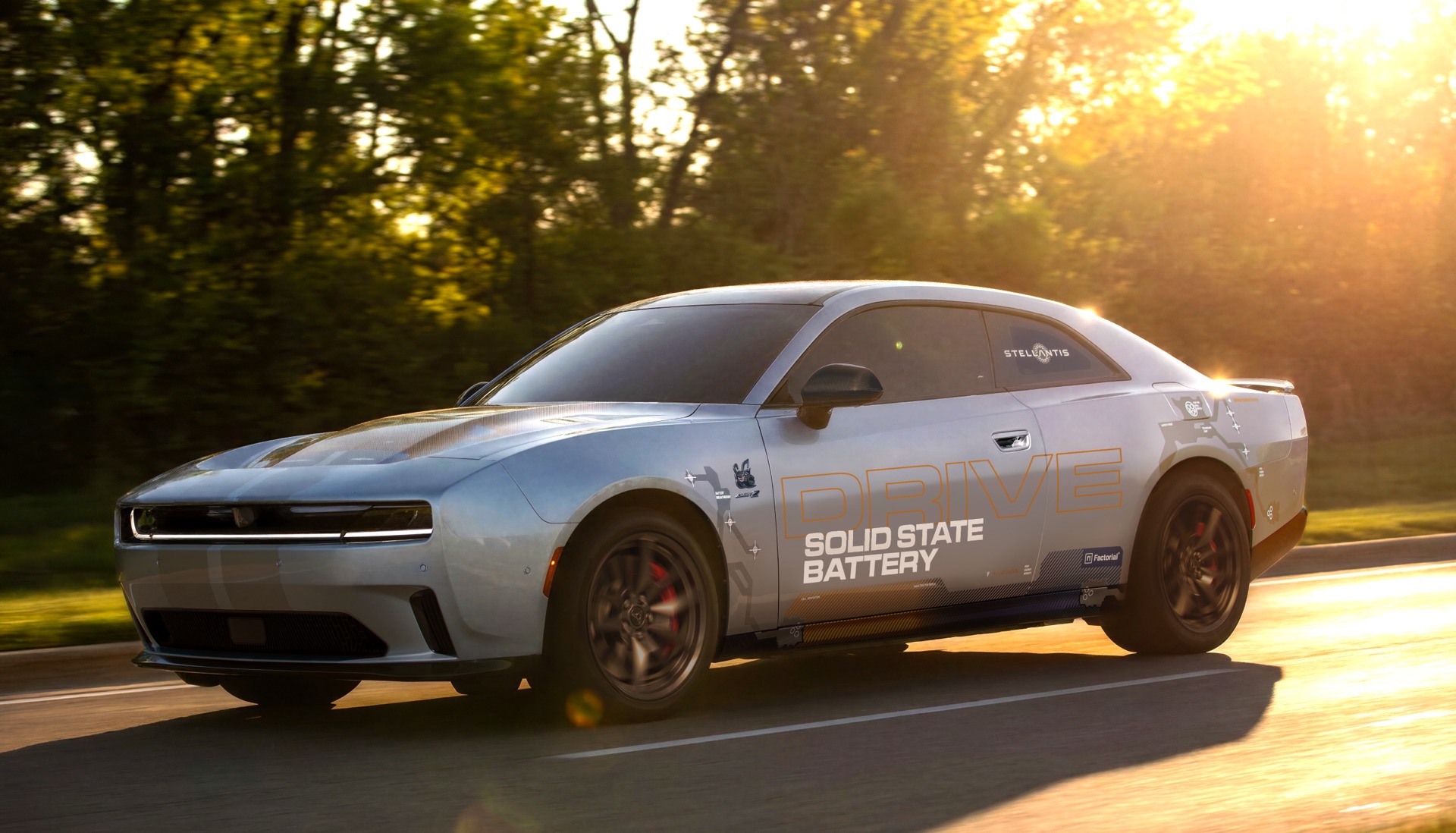
This road-testing programme marks an advance of extraordinary significance towards making the commercialisation of solid-state batteries a reality, which promise to transform the future of electric vehicles.
Stellantis has taken an innovative step in the development of electric mobility by integrating solid-state cells from its partner Factorial Energy into the battery pack of a test vehicle. The company has launched a research programme using a Dodge Charger Daytona equipped with this technology, with the aim of evaluating its performance, safety and reliability in real-world conditions.
This initiative represents the first integration of solid-state cells in a Stellantis vehicle. The programme focuses on the FEST technology –Factorial Electrolyte System Technology– of the American company Factorial. This technology stands out for combining a lithium-metal anode with a polymer separator. The B-samples cells, with a capacity of more than 106 Ah, began to be distributed in June 2024. During 2025, Stellantis and Factorial had already demonstrated remarkable fast-charging capability of these cells, being able to increase their state of charge from 15 to 90 per cent in just 18 minutes. These cells also stand out for their high energy density, which reaches 375 Wh/kg.
Factorial Energy has strong backing not only from Stellantis but also from other major manufacturers such as Mercedes-Benz or Hyundai-KIA, which work in parallel with the American company on other projects. In the case of Mercedes-Benz, the German manufacturer is driving the joint development of Solstice cells -currently in A-sample phase-, characterised by their higher energy density using a dry cathode coating process. The company has indicated that these cells could reach up to 450 Wh/kg, which could potentially increase the range of electric vehicles by up to 80 per cent.
Unity is strength
For this integration into the Dodge Charger Daytona, an electric muscle car based on the STLA Large platform, the engineers at Stellantis and Factorial have been collaborating closely. Stellantis has developed a new patented mechanical architecture to incorporate the cells into the existing battery pack, while Factorial has adapted the control systems and pack design to maximise the potential of the solid-state cells in all kinds of conditions.
“Optimising a single metric is not enough. We need a system that delivers real benefits in a real vehicle. The goal is to bring these batteries closer to customers, offering greater range, faster charging times and lower costs, all while maintaining good compatibility with current lithium-ion battery manufacturing processes. What we have built together, from the cell chemistry to the pack architecture, is exactly the kind of deep and complete collaboration that solid-state technology has always required”
.


 Peugeot E-208 GTi: a battery-powered toy that revives the spirit of the 1980s sports cars
 New Lexus ES: luxury grows and goes electric
 First contact with the Dacia Sandero Hybrid 155: power and efficiency from €19,890
Deja un comentario