The Honda Prologue bids farewell to the North American market
 Javier Cantagalli
19 July 2026
3 min.
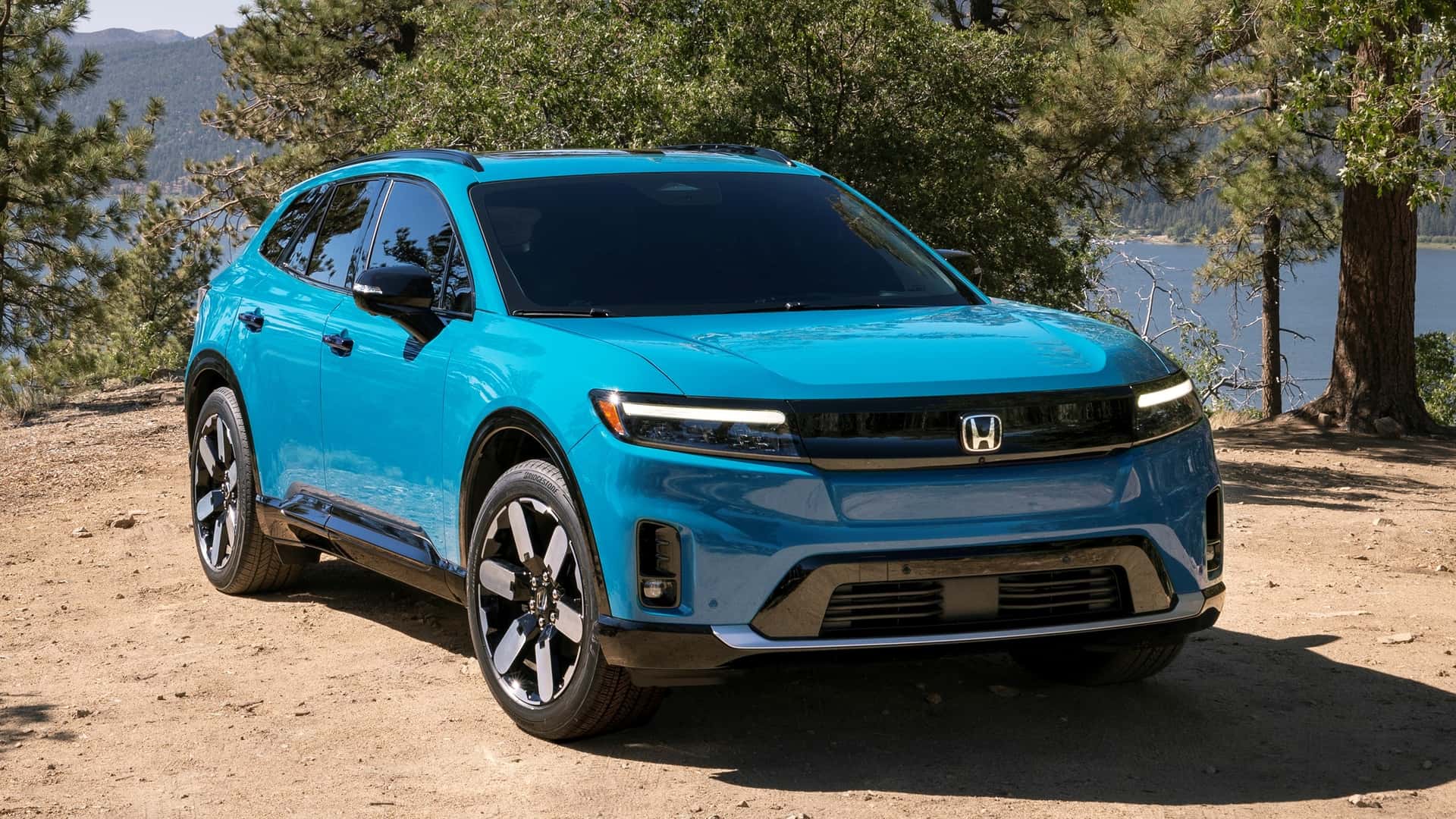
With this decision, Honda is temporarily left without any fully electric vehicle offering in the North American market.
Honda has officially confirmed that it will stop selling the 2026 model year Prologue at the end of the year. The Japanese manufacturer will thereby end its alliance with General Motors, through which it has so far been developing battery electric vehicles based on the Ultium platform.
With the end of Prologue sales in North America, Honda will no longer have any battery electric model in its lineup for this market.
According to a company spokesperson, sales of the 2026 model year of this electric SUV will end at the end of this year, as planned, but no 2027 model year will follow. The Japanese manufacturer has nevertheless assured that owners of one of these vehicles will continue to receive the usual support through its dealer network.
Launched in March 2024, the Prologue was the first mass-produced electric vehicle that Honda offered in the North American market. Developed in collaboration with General Motors, this model is based on the Ultium platform and is built at the Mexican Ramos Arizpe plant, whose assembly line also produces the Chevrolet Equinox EV and the Cadillac Optiq.
Honda is holding back from making the full leap to electrification
Removing the Prologue from Honda’s North American lineup is the result of a deep restructuring of the company’s electrification strategy in the region. The brand had already cancelled several electric vehicle projects, among them the models of the Honda 0 series – an SUV and a saloon – and the Acura RSX EV, which were to be built at its electric vehicle centre in Ohio. Likewise, in 2025 production also ended for the Acura ZDX, another electric model developed with General Motors.
Despite its short commercial life, the Prologue achieved notable success. In its first full year on the market it ranked among the best-selling electric vehicles in the United States. By mid-2026, Honda had delivered more than 80,000 units. However, in the first half of 2026 sales fell sharply, by 48 percent compared with the previous year, although the model still ranked among the ten best-selling in its segment.
Dealers will continue to sell the units in stock, which according to some estimates still number around 100,000. To speed up their sell-off, the brand is offering attractive leasing promotions and other deals.
In the short and medium term, the Japanese manufacturer plans to focus all its efforts on promoting hybrid technology in this market. It recently announced the launch of 15 new hybrid models globally by 2030, and the company is also set to expand its hybrid range in North America, with particular attention to larger vehicle segments.


 Peugeot E-208 GTi: a battery-powered toy that revives the spirit of the 1980s sports cars
 New Lexus ES: luxury grows and goes electric
 First contact with the Dacia Sandero Hybrid 155: power and efficiency from €19,890
Deja un comentario