Hyundai Tucson Hybrid Cars SUV
The Hyundai Tucson earns the ECO label alongside its diesel engines and its 48V mild-hybrid system
 Javier López @jlopezbryan96
1 March 2019
3 min.
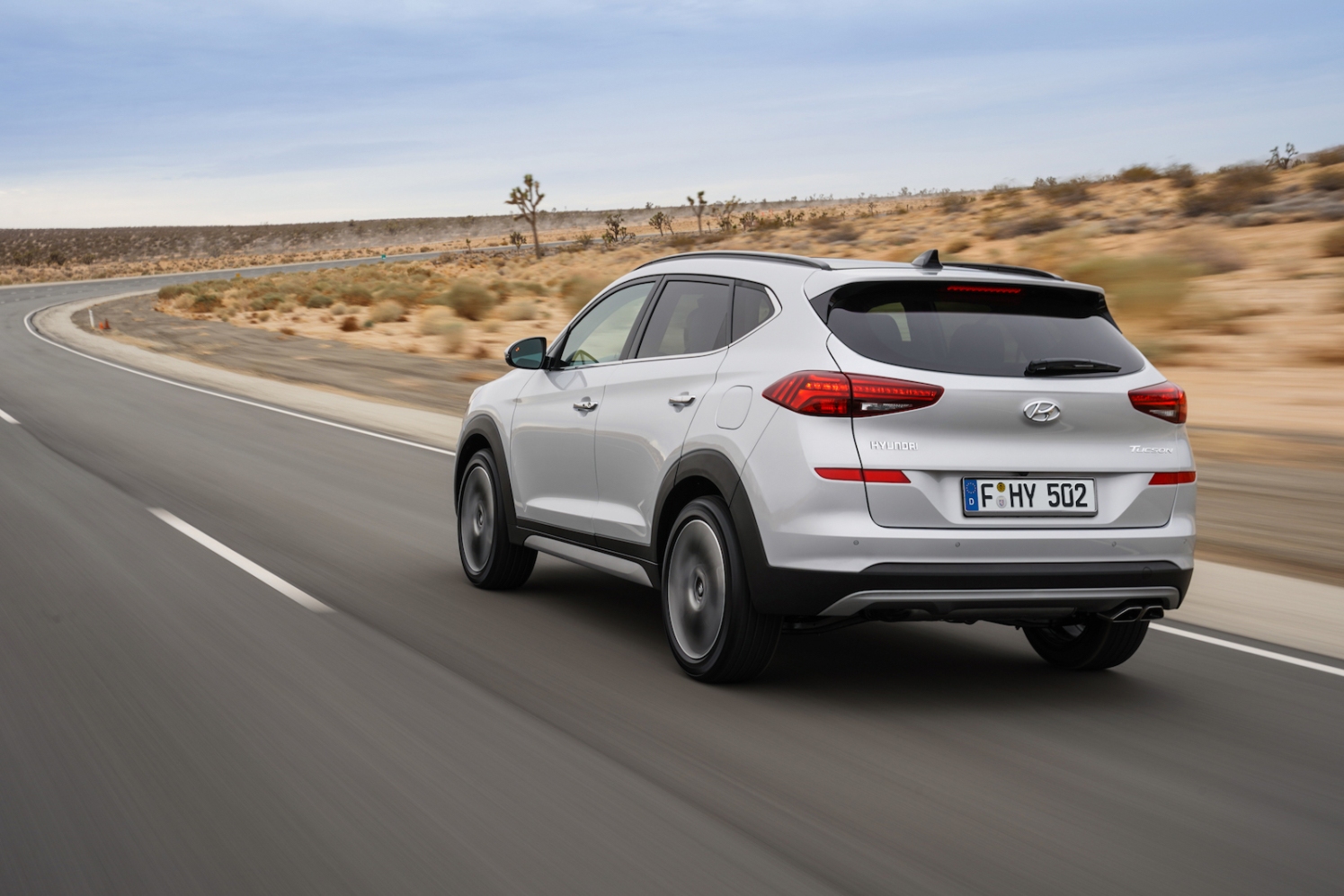
The Hyundai Tucson receives the ECO label on its diesel variants thanks to a mild-hybrid system powered by a 48V battery that reduces emissions.
The phase-out of diesel could be about to be halted thanks to the stance of some brands such as Hyundai, which still firmly believes in this fuel. Despite the company’s clear intention to prioritise petrol, hybrid and electric vehicles, it has chosen to stand its ground and fight for this acclaimed lifeline, which has been generating so much controversy lately. To keep its status intact and retain it among its options, the South Korean firm has turned to what is known as mild hybridisation, a system that uses a small electric motor to assist various mechanical components and that has been fitted to the Tucson.
A few weeks ago we told you about the arrival of the N Line trim for the Korean SUV, which also hinted at the possibility of a sportier version of the Tucson. However, Hyundai also believes it is possible for the diesel engines of one of its most successful models to coexist peacefully and harmoniously with the other alternatives, which is why they have applied mild hybridisation to these.
Specifically, two diesel engines in the Hyundai Tucson will feature this system, and it offers significant advantages as well as helping it avoid falling foul of the strict anti-pollution rules. The 1.6 CRDi and 2.0 CRDi have been chosen to incorporate that additional 48V battery and, although it will not allow 100% electric driving as is the case with other models from the brand, it will provide extra power and reduce CO2 emissions.
The smaller-displacement diesel engine comes in two power outputs, the more modest at 116 CV and the more powerful at 136 CV. In the case of the 2.0 CRDi, we find an engine capable of delivering 185 CV, a figure more than sufficient to enjoy considerable performance and to move the Tucson with enthusiasm and ease.
Thanks to the 48V battery, the Hyundai Tucson can enjoy an additional 12 CV of power, which will help both when overtaking and in any slightly tricky situation. The battery recharges itself through regenerative braking and coasting, and it is located in the spare wheel well, where a puncture repair kit is also housed so that storage capacity is not lost.
With a starting price of 30,315 euros, the Hyundai Tucson with the 48V battery keeps the price of the 100% combustion variants intact, which is due to the mild-hybrid category exempting it from the registration tax. Alongside this important advantage, it also comes with the DGT’s ECO sticker, which will allow the Korean SUV to enter the heart of cities such as Barcelona or Madrid.
Technical specifications of this car


 Peugeot E-208 GTi: a battery-powered toy that revives the spirit of the 1980s sports cars
 New Lexus ES: luxury grows and goes electric
 First contact with the Dacia Sandero Hybrid 155: power and efficiency from €19,890
Deja un comentario