The new Maxus 7 is now available in Spain to offer transport solutions
 Victor Alós Yus @sepelaci
26 March 2026
2 min.
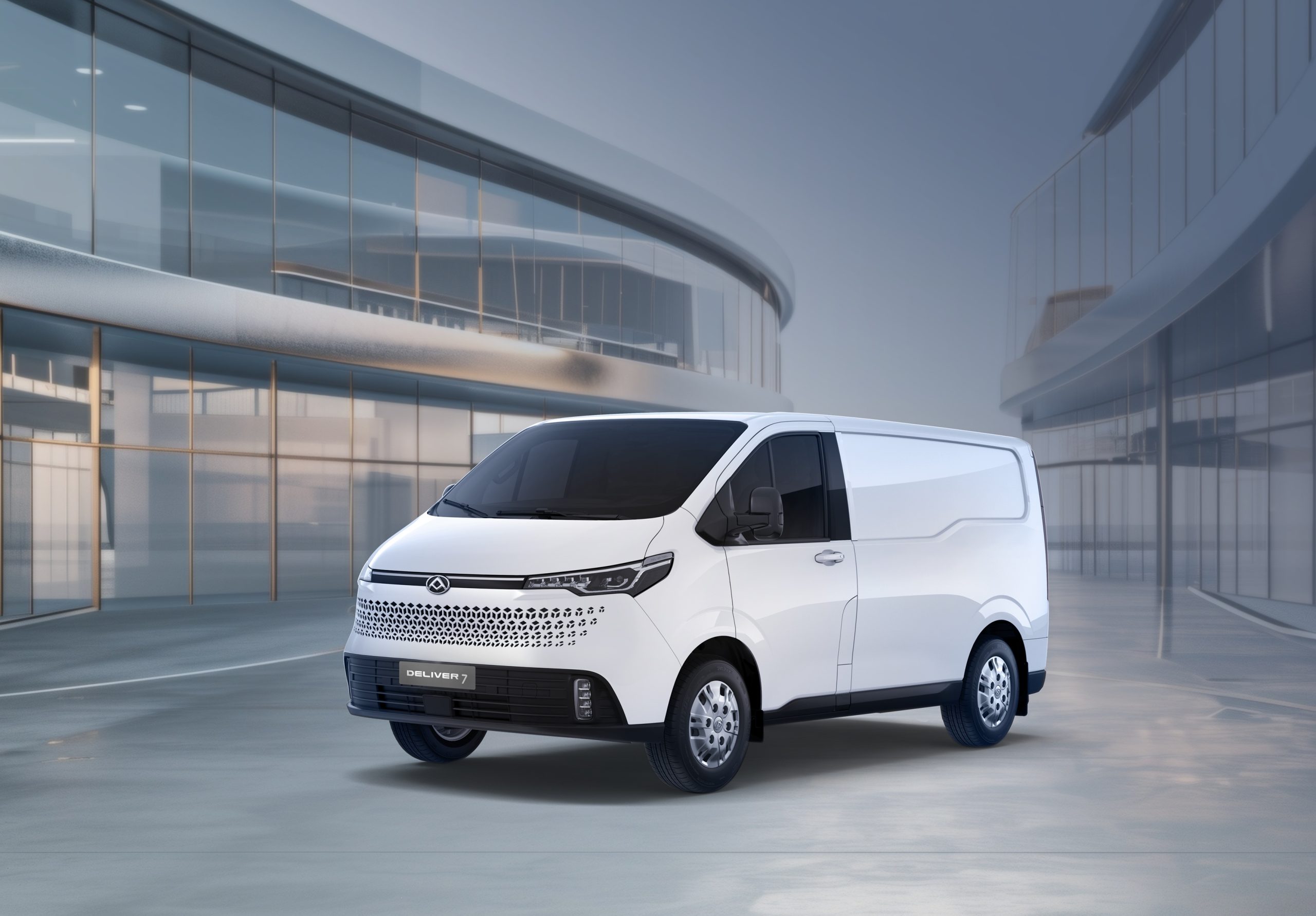
The Maxus Delivery 7 van has received an update that improves the van’s features and adds a new, shorter body.
Vans also receive a mid-life update, just like passenger cars. The Maxus Delivery 7 has received several changes, aiming to make it even more efficient and useful for users. This update will offer this model improvements in safety, load capacity and equipment. In addition, they are going to introduce a new body, to complete the model’s range.
The range of body styles is expanded with the inclusion of the L2H1 variant, which joins the L1H1 body variant. This new body offers a load capacity of 6.3 m³ and a compact length of 4,998 millimetres. With these dimensions, this model stands above other models in the same category.
Working capacities are also increased with a maximum authorised mass (MAM) of 3,370 kg. The maximum payload is 1,300 kg, thanks to the reduction in kerb weight. The towing capacity has been increased to 2,500 kg, which is 500 kg more than in the previous version.
As for technology and comfort equipment, this update to the Maxus Delivery 7 has more standard equipment. This equipment includes a heated windscreen, the new 8.8-inch digital instrument cluster and connectivity with Android Auto and Apple CarPlay. The cargo area has a rubber floor, and the steering wheel can be adjusted for height and reach.
Safety is enhanced by new safety systems, in line with the GSR 2.3 regulation. This will come into force next July, so the model is getting ahead of its application.
Diesel engines for the Maxus Delivery 7
The range continues to focus on diesel engines, which remain very important for many transport companies. Progress is also being made in sustainable mobility with 100% electric models, although diesel remains dominant in commercial vehicles.
The current 2.0 turbodiesel engine now delivers 170 CV and 390 Nm of torque, an increase of 20 CV and 15 Nm thanks to improvements in engine management. These improvements benefit not only power but also performance, consumption and emissions.
The short-body version (L1H1) starts at 20,819 euros, while the long-body version (L2H1) costs 21,365 euros, with the brand’s commercial discounts and excluding VAT.
Technical specifications of this car


 Peugeot E-208 GTi: a battery-powered toy that revives the spirit of the 1980s sports cars
 New Lexus ES: luxury grows and goes electric
 First contact with the Dacia Sandero Hybrid 155: power and efficiency from €19,890
Deja un comentario